


Iran’s president urges Americans to question ‘misinformation’ amid ongoing war
Masoud Pezeshkian appeals directly to US citizens as tensions deepen and conflicting claims emerge over ceasefire and origins of the conflict
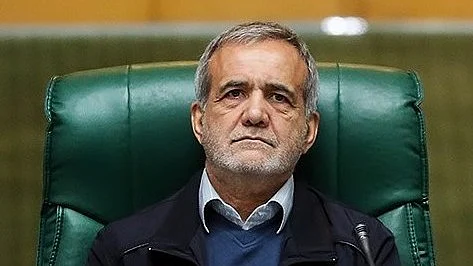


Iran’s president Masoud Pezeshkian has issued a direct appeal to the American public, urging them to look beyond what he described as a “machinery of misinformation” surrounding the ongoing war involving the United States, Israel and Iran.
In an open letter shared on social media on Wednesday, Pezeshkian challenged the portrayal of Iran as a threat, arguing that such narratives are shaped by political and economic interests rather than reality. He suggested that the image of Iran as an adversary is constructed to justify military influence, sustain defence industries and maintain control over strategic regions.
The letter comes just over a month after US and Israeli forces launched initial strikes against Iran, triggering a broader conflict. Later on Wednesday, US President Donald Trump was expected to address the American public with an update on the situation.
Earlier in the day, Trump claimed on social media that Iran’s “new regime president” had sought a ceasefire. However, Iran’s foreign ministry rejected the assertion, describing it as unfounded, according to state media reports cited by the Associated Press.
While Pezeshkian did not directly address Trump’s claim, he emphasised that Iran harbours no hostility towards ordinary citizens of other nations, including those in the United States and Europe. He maintained that Iran has not pursued aggression in its modern history, instead portraying the country’s military actions as defensive responses to external threats.
He also criticised the presence of US military forces near Iran, arguing that recent strikes launched from regional bases highlight the risks posed by such deployments. Under these conditions, he said, strengthening Iran’s defence capabilities was both natural and justified.
The Iranian leader questioned whether the conflict serves the interests of the American public, accusing Washington of acting in alignment with Israeli objectives. He further alleged that Israel has exaggerated the Iranian threat to shift global attention away from its actions in relation to Palestinians.
In a direct appeal, Pezeshkian encouraged Americans to seek alternative perspectives, including engaging with people who have visited Iran or observing the contributions of Iranian professionals abroad. He pointed to the achievements of Iranian academics and technologists working in leading institutions and companies as evidence that contradicts negative portrayals.
Meanwhile, both Washington and Tel Aviv have offered varying explanations for the military action since the conflict began. Officials from both countries have framed the strikes as defensive or pre-emptive, though no public evidence has been presented to support claims that Iran was on the verge of launching an attack.
Speaking shortly after the initial strikes, Trump said he authorised the action because he believed Iran might strike first, suggesting that the decision was intended to prevent escalation.
Public opinion in the United States has remained largely opposed to the war. Polling indicates that a majority of Americans have disapproved of the conflict since its outset, with scepticism persisting even as it continues into its second month.
With PTI, IANS inputs
Join our official telegram channel (@nationalherald) and stay updated with the latest headlines