


Israel used white phosphorus in civilian areas of Lebanon: Human Rights Watch
Rights group says incendiary munitions caused fires in homes; calls for halt to use
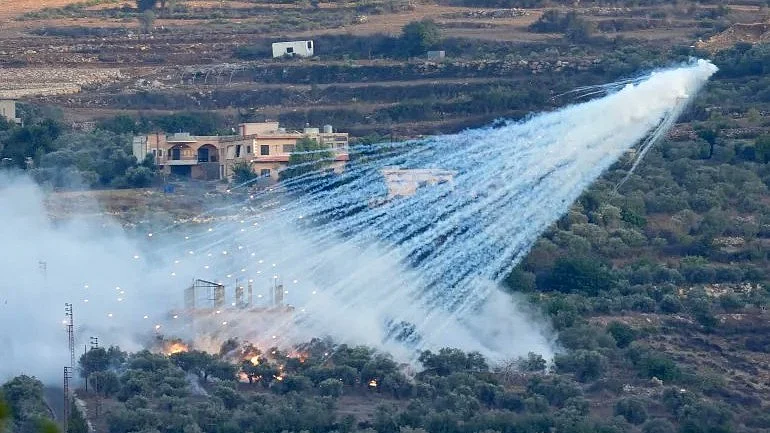


Human Rights Watch (HRW) has alleged that Israel used white phosphorus munitions over residential areas in southern Lebanon earlier this month, warning that the use of such incendiary weapons in populated areas could violate international humanitarian law.
In a report released Monday, the New York-based rights organisation said it verified the authenticity of seven photographs that it said showed white phosphorus munitions being fired over the town of Yohmor in southern Lebanon on 3 March.
According to HRW, the images show airburst munitions detonating over a residential neighbourhood, with fires breaking out in at least two houses.
Ramzi Kaiss, Lebanon researcher at HRW, described the alleged use of the weapon in civilian areas as alarming.
“The Israeli military’s unlawful use of white phosphorus over residential areas is extremely alarming and will have dire consequences for civilians,” Kaiss said.
“The incendiary effects of white phosphorus can cause death or cruel injuries that result in lifelong suffering,” he added.
Evidence examined by HRW
The organisation said it verified and geolocated an image shared online by Lebanese media on the morning of 3 March, which it said showed two artillery-delivered white phosphorus munitions detonating above a residential neighbourhood.
HRW said the shape of the smoke clouds seen in the image was consistent with the “knuckle” pattern produced when M825-series 155mm artillery shells containing white phosphorus burst in the air.
The group also said it verified photographs posted on Facebook by a civil defence team affiliated with the Islamic Health Committee in Yohmor, which appeared to show workers extinguishing fires on rooftops and inside a vehicle.
HRW concluded that the fires were likely caused by felt wedges soaked with white phosphorus, which are dispersed when such artillery shells explode in the air.
White phosphorus ignites upon contact with oxygen and can burn intensely, setting fire to buildings, vegetation and other objects. Because of its incendiary effects, its use in populated areas is widely considered indiscriminate under international humanitarian law.
Calls for suspension of arms sales
HRW said the munitions were allegedly used over an area where civilians were present, leading to damage to homes and other civilian property.
The organisation called on Israel to immediately stop using white phosphorus in residential areas.
It also urged countries supplying weapons to Israel, including the United States, the United Kingdom and Germany, to suspend arms transfers if such weapons are used in violation of international law.
“Israel should immediately halt this practice and states providing Israel with weapons, including white phosphorus munitions, should immediately suspend military assistance and arms sales and push Israel to stop firing such munitions in residential areas,” Kaiss said.
Escalating conflict in Lebanon
The report comes amid intensifying fighting between Israel and Hezbollah, with Israeli strikes reported in several parts of Lebanon.
Lebanon’s National News Agency reported Monday that Israeli forces carried out airstrikes in Beirut’s southern suburbs, including areas between Ghobeiry and Haret Hreik as well as the Safir district.
Israeli authorities have said their military operations are aimed at Hezbollah positions in the Lebanese capital and other areas.
According to Lebanese authorities, at least 394 people have been killed and more than 1,000 injured in Israeli attacks across Lebanon since the escalation began.
The conflict has also triggered a large displacement crisis. More than 500,000 people have been registered as displaced, according to Lebanese officials and humanitarian agencies.
HRW also said Israel had previously used white phosphorus in southern Lebanon between October 2023 and May 2024, warning that such incidents place civilians at serious risk.
Israel has not publicly responded to the specific allegations in HRW’s latest report.
Join our official telegram channel (@nationalherald) and stay updated with the latest headlines