


Israeli strikes hit Beirut hotel, residential building in eastern Lebanon
The strike come without warning, sparking speculation it targeted a specific individual
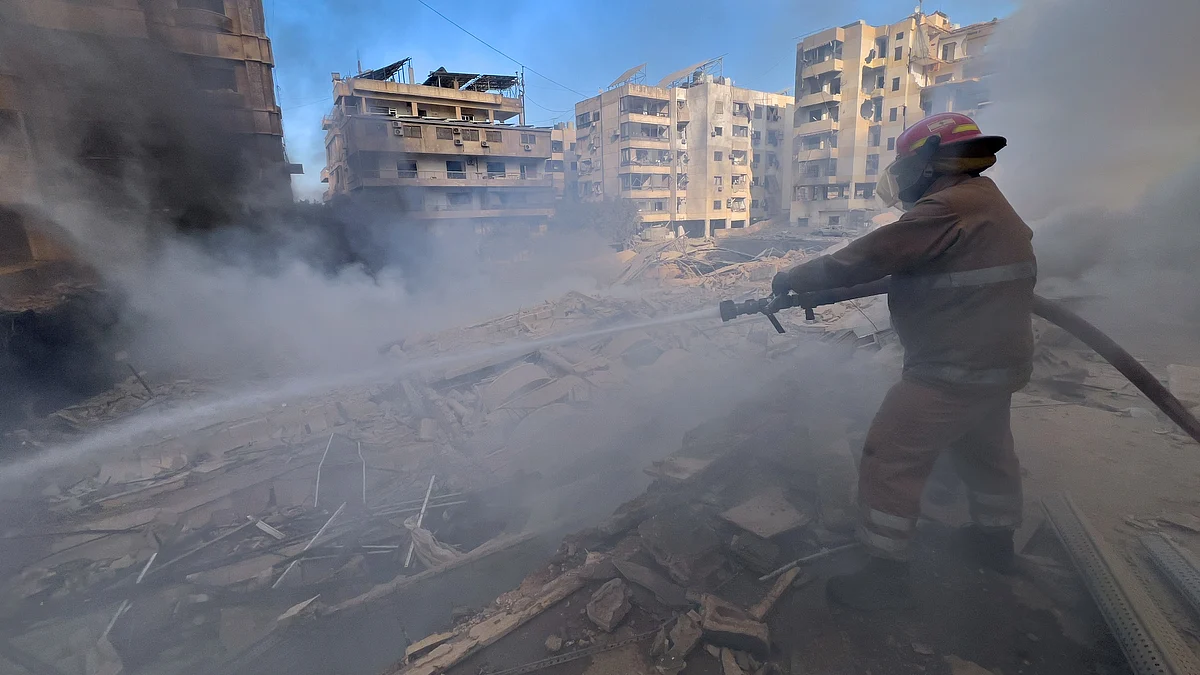


The skies over Lebanon once again roared with the sound of war as Israeli air strikes pounded targets in Beirut and the country’s east, widening a conflict that now appears to be spiralling with little sign of restraint or resolution.
In the Lebanese capital, Israeli forces struck the Comfort Hotel on the border of Hazmieh and Baabda, districts that form part of greater Beirut. Lebanese state media reported the bombing early Wednesday, while footage later verified showed a shattered façade — windows blasted out, walls torn open, and rubble carpeting the street below.
The strike came without warning — an unusual and ominous development that has fuelled speculation the attack may have been aimed at a specific individual. The Israeli military has not clarified who or what it intended to target, the Al Jazeera reported.
Further strikes rattled Beirut’s southern suburbs through the day. Israel maintains it is targeting Hezbollah infrastructure embedded within densely populated civilian neighbourhoods. The Israeli military said it was continuing operations against what it described as Hezbollah “infrastructure in Beirut.”
The toll is mounting. More than 40 people have now been killed in Lebanon since this front of the war ignited, according to local reports. Lebanese army officials said at least four people were wounded in the hotel strike alone, one of them critically.
As bombs fell, evacuation orders followed.
The Israeli military’s Arabic-language spokesperson issued new forced displacement directives for residents of Haret Hreik, a neighbourhood in Beirut’s southern suburbs. A map of the capital was released with buildings marked in red, accompanied by warnings that the sites were “affiliated with Hezbollah” and that residents should flee immediately.
The warnings extended beyond Beirut. Sixteen towns in southern Lebanon were placed under urgent evacuation orders, followed later by an additional 13. These came on top of earlier directives affecting more than 50 towns across the south — a move widely interpreted as part of Israel’s effort to carve out an expanded buffer zone along the border.
In eastern Lebanon, the city of Baalbek — near the Syrian frontier — also came under fire. A strike on a residential building in the al-Matraba neighbourhood killed at least four people and wounded 11 others. Verified footage from the scene showed a multistorey structure reduced to twisted concrete and dust, as rescue workers clawed through the debris in search of survivors.
Elsewhere in Mount Lebanon, air raids on Aramoun and Saadiyat reportedly killed at least six people and wounded eight more, according to local television.
Hezbollah responded in the early hours of Wednesday, claiming it had launched rockets toward Israeli forces in the northern Israeli town of Metulla after carrying out a missile strike on a naval base in Haifa. The Israeli military said it detected several projectiles fired from Lebanese territory, most of which were intercepted. One reportedly fell in an open area.
In a sharply worded escalation, the Israeli army also declared it would “not tolerate any presence” of representatives of the Iranian regime in Lebanon, giving them 24 hours to leave or face potential attack — a statement that has raised alarm among observers.
Human Rights Watch swiftly condemned the rhetoric, warning that targeting individuals not directly participating in hostilities would violate international law. “The suggestion that Israeli forces will target Iranian government officials who do not leave Lebanon is deeply disturbing,” the organisation said, describing it as an apparent admission of intent to commit a war crime.
Al Jazeera described a conflict rapidly intensifying with no visible front lines and no diplomatic channel in sight. “There is no mediation, no clear effort to contain it,” she said.
As rockets arc across borders and air strikes ripple through city streets, Lebanon once again finds itself at the heart of a widening confrontation — one in which civilian neighbourhoods, displacement orders and mounting casualties are becoming grim markers of a conflict with no clear endgame.
Join our official telegram channel (@nationalherald) and stay updated with the latest headlines