


Israeli strikes kill 32 in Lebanon, threatening fragile US-Iran talks
Lebanon's health ministry says Israeli attacks since 2 March have killed at least 4,057 people and wounded 12,121 others
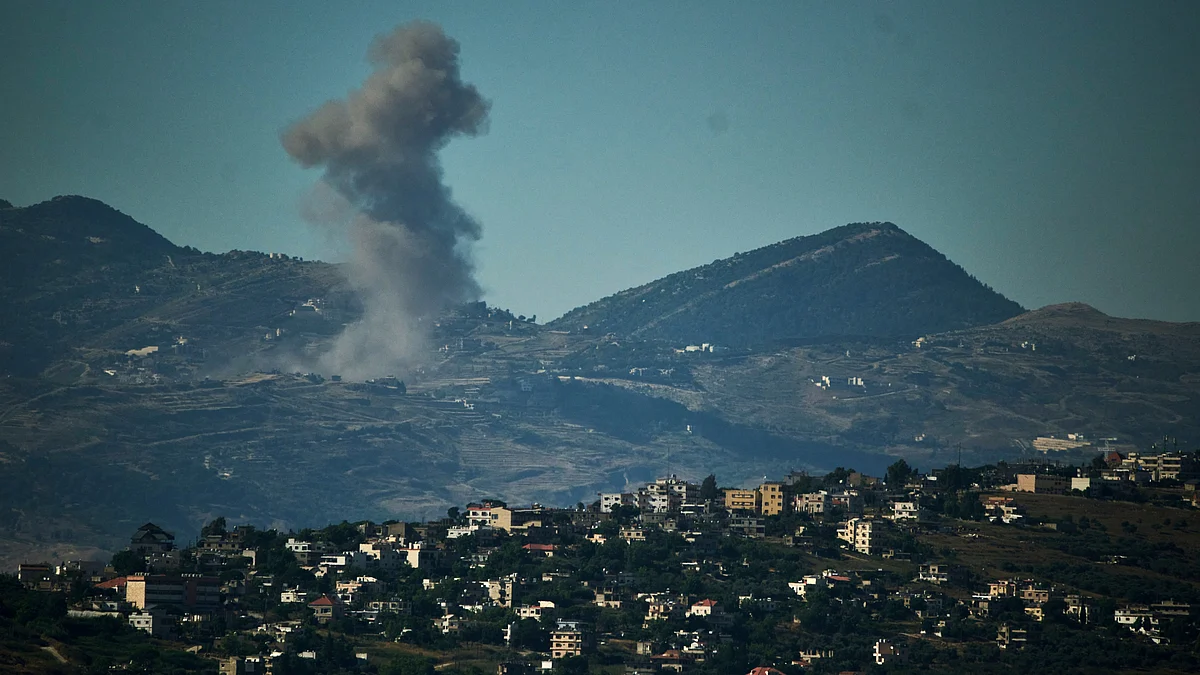


A newly forged diplomatic opening between the United States and Iran is facing its sternest challenge yet, as relentless Israeli strikes across southern Lebanon threaten to shatter a fragile ceasefire and cast a shadow over crucial talks scheduled in Switzerland on Sunday.
The violence has emerged as a major obstacle to the next phase of negotiations, with Lebanon increasingly becoming the focal point on which the broader peace effort may hinge.
At least 32 people were killed on Saturday alone as Israeli warplanes and drones pounded towns and villages across southern Lebanon, despite a ceasefire that came into effect just a day earlier, the Al Jazeera reported.
The violence has deepened fears that the broader peace process, anchored by a memorandum of understanding (MOU) signed this week between Washington and Tehran, could collapse before it gains momentum.
Follow-up talks on the agreement will take place in Burgenstock, Switzerland, with US and Iranian officials joined by mediators from Pakistan and Qatar. Yet even before delegates arrive at the negotiating table, the continued bloodshed in Lebanon has emerged as a major stumbling block.
For Tehran, a sustained ceasefire in Lebanon is not merely a side issue but a cornerstone of the diplomatic effort. Iranian officials have signalled that stability on the Lebanese front could ultimately "make or break" the negotiations.
The human toll continued to mount throughout Saturday.
Lebanon's civil defence agency said Israeli strikes killed 16 people and wounded 12 others in the Nabatieh district. A Lebanese soldier was also killed in an attack on the village of Kfar Reman, according to the National News Agency (NNA).
In Tyre district, tragedy struck an entire family when an Israeli strike on the village of Barish killed a father, mother and their two children. Another raid on a home in Sohmor in western Bekaa left four dead and one injured.
Further south, an attack on Qanarit in Sidon district killed at least seven people and wounded 13, according to Lebanon's Health Emergency Operations Centre.
The latest casualties came a day after an even deadlier wave of attacks. Lebanon's Ministry of Public Health reported that 83 people were killed and 141 wounded in Israeli strikes on Friday, shortly after the renewed ceasefire was announced.
Lebanon's health ministry says Israeli attacks since 2 March have killed at least 4,057 people and wounded 12,121 others.
The stakes are particularly high because Article 1 of the US-Iran MOU explicitly links ending the conflict in Lebanon to the wider ceasefire framework covering multiple regional fronts.
The Lebanese army accused Israel of attempting to sabotage efforts to restore stability.
In a statement, it said the continuation of Israeli attacks was aimed at obstructing attempts to bring calm back to the country.
Lebanese MP Najat Aoun Saliba voiced the exhaustion felt by many citizens after months of conflict.
"People are tired and have had enough of the killing and destruction," she told Al Jazeera.
"It's also costing us a lot of money and a lot of pain," she added, arguing that both Israel and Hezbollah had used Lebanese territory as leverage in the wider confrontation involving Iran.
Meanwhile, Hezbollah claimed responsibility for attacks on Israeli troops that had advanced near Nabatieh overnight.
The Israeli military responded by accusing Hezbollah of violating the ceasefire, saying the group launched more than 50 projectiles at soldiers operating in southern Lebanon.
Israel also announced that another soldier had been killed in operations in southern Lebanon, bringing the number of Israeli troops killed since the US-Iran deal was reached to five.
The current tensions come despite a ceasefire agreement signed between Israel and Lebanon in November 2024. Since then, Beirut has pursued a US-backed roadmap aimed at disarming Hezbollah and stabilising the country, while simultaneously demanding a full Israeli withdrawal from southern Lebanon.
An agreement reached earlier this month required Hezbollah fighters to move north of the Litani River but stopped short of calling for a complete Israeli withdrawal — a key point of contention that continues to fuel friction.
The diplomatic clock is now ticking.
The US State Department has announced fresh Israel-Lebanon talks in Washington on 23 and 25 June, aimed at advancing what it called a path toward "a lasting peace".
US secretary of state Marco Rubio told Lebanese President Joseph Aoun that bilateral negotiations with Israel represented "the only feasible path to reconstruction, economic recovery and ending recurrent cycles of violence."
Yet the absence of Hezbollah from the negotiating process continues to raise doubts about whether any agreement can produce lasting stability on the ground.
On Saturday, Hezbollah parliamentarian Ali Fayyad dismissed the prospect of a ceasefire while Israeli troops remain on Lebanese territory.
"The position of the resistance is clear, unambiguous, non-negotiable and without retreat," he said.
"A ceasefire while the enemy continues its targeting and assassinations is meaningless. The right to self-defence is established for us and is not subject to bargaining or negotiation."
As diplomats prepare to meet in Switzerland, the sound of explosions continues to echo across southern Lebanon — a stark reminder that peace on paper remains far more fragile than peace on the ground.
Join our official telegram channel (@nationalherald) and stay updated with the latest headlines