


Lula wins historic fourth term in Brazil as Bolsonaro challenges result
Leftist president overturns first-round deficit with record vote haul after campaign dominated by living costs, sovereignty and digital influence
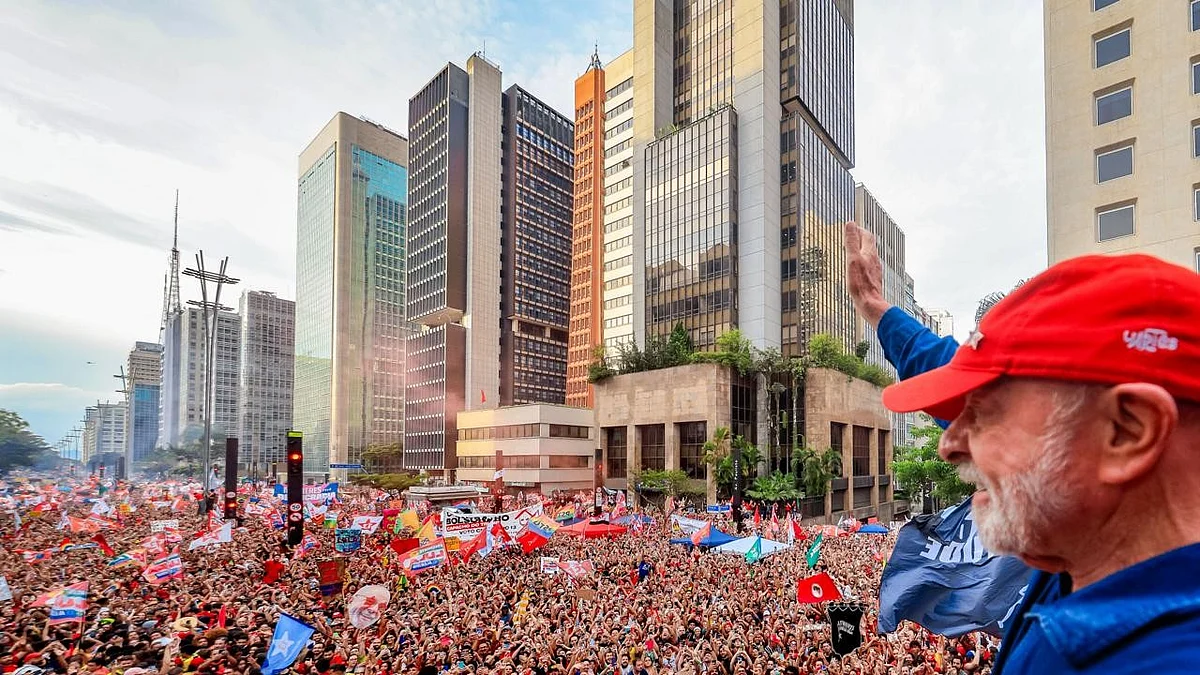


Lula won an unprecedented fourth presidential term, defeating Flávio Bolsonaro with 51.79 per cent of the vote after trailing in the first round
Bolsonaro refused to concede and said he would seek annulment, questioning a court-ordered extension of polling hours
Street mobilisation and a renewed digital campaign helped Lula recover ground, but a divided electorate and a conservative Congress await him
Brazilian President Luiz Inácio Lula da Silva secured an unprecedented fourth term on Sunday, overcoming a first-round defeat to beat right-wing challenger Flávio Bolsonaro, who rejected the outcome and announced plans to seek the election’s annulment.
Final figures released by Brazil’s Superior Electoral Court gave Lula 64,256,232 votes, or 51.79 per cent, against Bolsonaro’s 59,826,041 votes, or 48.21 per cent — a winning margin of approximately 4.43 million.
The result extended the left’s hold on Latin America’s largest economy after a bruising contest over household finances, public security, democratic institutions and Brazil’s relationship with the United States.
Addressing supporters on São Paulo’s Avenida Paulista, Lula promised to govern for all Brazilians and defended the country’s independence. He credited women, older voters and young campaigners with helping deliver his victory, pledging greater public participation in government.
His recovery broke new electoral ground. No candidate who finished behind in the first round had subsequently won a presidential run-off since Brazil introduced the system in 1989, when direct presidential elections resumed after military rule.
Lula had entered the second round with 45.16 per cent of valid votes, behind Bolsonaro’s 47.03 per cent. The setback prompted a campaign overhaul, larger street demonstrations and a stronger effort to reach voters through digital platforms.
Supporters focused on persuading undecided voters and encouraging those who had stayed away from the first round to participate. Abstention fell from approximately 21 per cent to 19 per cent.
Federal deputy André Janones emerged as a prominent figure in the online mobilisation, coordinating supporters through a WhatsApp channel. Alongside that effort, Lula’s campaign shifted towards proposals on household debt, income support, small businesses and public transport.
The election-day dispute centred on a Supreme Court decision extending voting by two hours after complaints about transport disruptions and severe weather. Some polling stations had already closed when the extension was announced.
Lula had complained that reduced bus services were preventing people from reaching polling stations. Bolsonaro also sought additional voting time in some rain-affected regions, but subsequently condemned the court’s decision and said he would challenge the result.
The confrontation revived concerns about acceptance of election outcomes in a country still marked by the aftermath of the 2022 presidential contest. Flávio’s father, former president Jair Bolsonaro, is serving a 27-year prison sentence for attempting a coup after losing that election to Lula.
Flávio, a senator from the Liberal Party, sought to present a more moderate public image than his father. His campaign appealed both to committed conservatives and voters dissatisfied with living costs and crime.
For Lula, the victory adds another chapter to a political career shaped by trade union activism, electoral success, imprisonment and a return to power.
A former metalworker who rose from poverty, he first became president in 2003 and won re-election in 2006. His early administrations became associated with poverty reduction and expanded social support.
He later spent more than 18 months in prison following corruption convictions that were subsequently annulled on procedural grounds. His victory over Jair Bolsonaro in 2022 returned him to the presidency in January 2023.
During his third term, inflation and unemployment declined and millions escaped hunger. Those improvements, however, did not eliminate dissatisfaction over everyday expenses and public safety.
Digital campaigning became another flashpoint. Lula’s team accused Meta of favouring Bolsonaro through restrictions on campaign content and advertising. Meta denied political favouritism, attributing disruptions to technical errors. After winning, Lula renewed his pledge to regulate large technology platforms.
Sovereignty also featured prominently in Lula’s campaign amid commercial and diplomatic pressure from US President Donald Trump’s administration. His victory preserves an influential left-wing government in a region where conservative leaders have gained ground.
Yet the result leaves substantial challenges. Nearly half of valid votes went to his opponent, and Lula faces a Congress dominated by the right. Turning campaign promises into legislation will require negotiation across the divisions exposed by the election.
With agency inputs
Join our official telegram channel (@nationalherald) and stay updated with the latest headlines