


Rubio calls for US-Europe unity, criticises Europe’s climate, migration policies
Volodymyr Zelenskyy voices cautious hope but admits feeling “a little bit” of pressure from Washington to seize the moment for peace
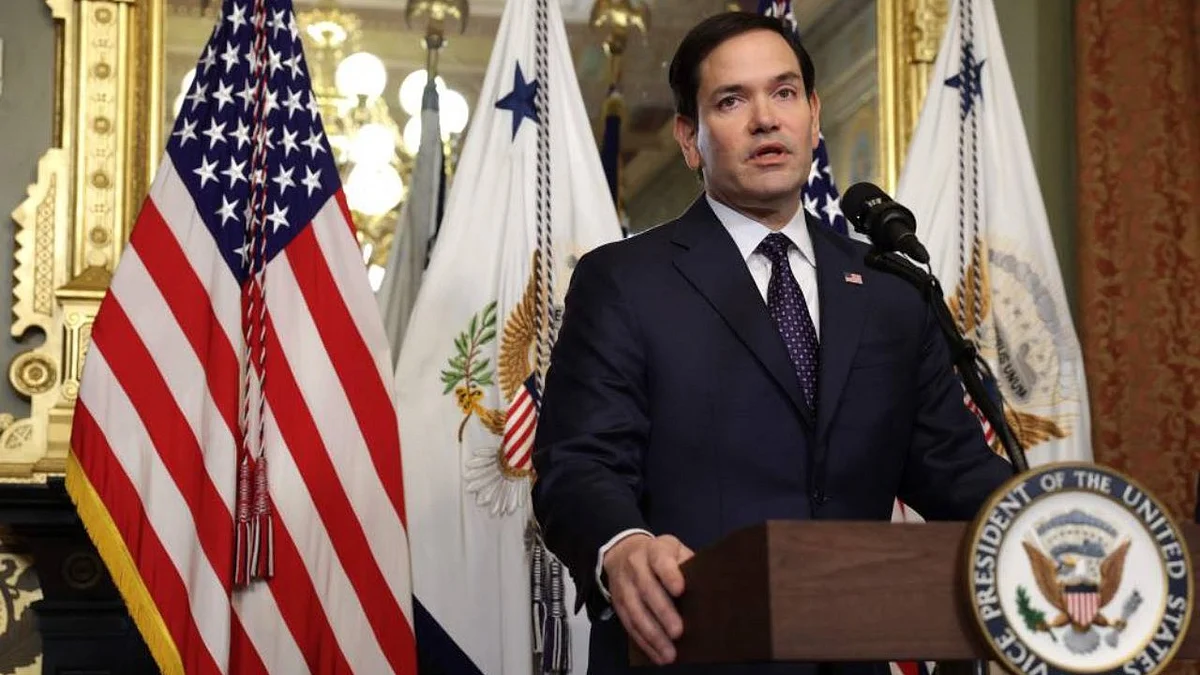


At the annual Munich Security Conference in Munich, US secretary of state Marco Rubio sought to steady a relationship battered by a year of transatlantic turbulence, declaring that Washington wishes to “revitalise” its historic friendship with Europe, the Al Jazeera reported.
To an audience wary after months of sharp rhetoric from the Donald Trump administration, Rubio offered reassurance wrapped in sentiment. “For us Americans, our home may be in the Western Hemisphere, but we will always be a child of Europe,” he said, drawing a standing ovation. “For the United States and Europe, we belong together.”
Yet beneath the lyrical nod to shared civilisation — from Michelangelo to Shakespeare — lay a firm restatement of Washington’s new direction. Rubio’s speech, notably silent on Russia, carried pointed criticism of Europe’s policy choices on migration and climate change. He argued that the West’s post–Cold War “euphoria” had bred a “dangerous delusion” — the belief in an inevitable march toward liberal democracy and a borderless global order.
That vision, he contended, encouraged Western nations to cede sovereignty to international institutions and open their doors to what he described as an unprecedented wave of mass migration, threatening social cohesion and cultural continuity. In equally sharp terms, he condemned what he called a “climate cult,” accusing governments of imposing energy policies that impoverish their own citizens.
“We made these mistakes together,” Rubio said, striking a tone of shared accountability. “And now, together, we owe it to our people to face those facts and move forward to rebuild.”
He reminded the hall of sacrifices borne side by side — from Kapyong to Kandahar — and insisted he had come to Munich to chart “a new century of prosperity,” one that the US hoped to build alongside its “cherished allies and oldest friends.”
Rubio’s appearance came a year after US vice-president J.D. Vance startled the same gathering with a blistering critique of European censorship and governance. Since then, tensions have simmered: tariff threats, disputes over defence spending, and even Trump’s brief proposal to assert US control over Greenland — a semiautonomous territory of Denmark, a fellow NATO ally.
European leaders responded to Rubio with cautious optimism. Ursula von der Leyen described the speech as “very reassuring”, though she acknowledged harsher tones elsewhere within the administration. In her own address, she urged Europe to pursue greater independence — in defence capabilities and in safeguarding its “digital sovereignty”, particularly regarding online hate speech, the Al Jazeera reported.
Others were less convinced. Gabrielius Landsbergis questioned whether Europeans shared Washington’s framing of civilisational decline driven by migration and deindustrialisation. For many in Europe, he argued, the overriding concern remains security.
That concern loomed large over Munich: Ukraine.
As US-brokered peace talks prepare to resume in Geneva, European capitals remain uneasy about the prospect of a settlement shaped by Trump and Russian President Vladimir Putin — one that could compel Kyiv to concede territory to end the war, Europe’s deadliest conflict since World War II.
Addressing the conference, Ukrainian President Volodymyr Zelenskyy voiced cautious hope but admitted feeling “a little bit” of pressure from Washington to seize the moment for peace. He warned that discussions of concessions too often centre on Ukraine alone, rather than on Russia’s responsibilities, the Al Jazeera reported.
The EU’s foreign policy chief Kaja Kallas echoed that unease, cautioning that forcing the victim to yield may promise a quick end to hostilities — but only temporarily. An aggressor, she argued, emboldened rather than restrained, may simply pause before pressing forward again.
Analysts see the challenge not only in policy differences but in coherence. Donald Jensen, a former US diplomat and scholar of Russian foreign policy, observed that Rubio’s conciliatory tone may soften edges but does little to resolve deeper divergences. With varying voices within Washington articulating sometimes inconsistent positions, European partners struggle to discern the durable contours of US strategy.
In Munich’s grand halls, amid applause and apprehension, the message was clear: the Atlantic alliance endures, but its future shape is being renegotiated — tested by ideology, geopolitics, and the war that continues to cast its long winter shadow across Europe.
Join our official telegram channel (@nationalherald) and stay updated with the latest headlines