


Nepal flood death toll rises to 1,127 as search for 4,858 missing continues
Scale of the tragedy continues to emerge as security personnel recover hundreds of bodies from some of the worst-hit districts
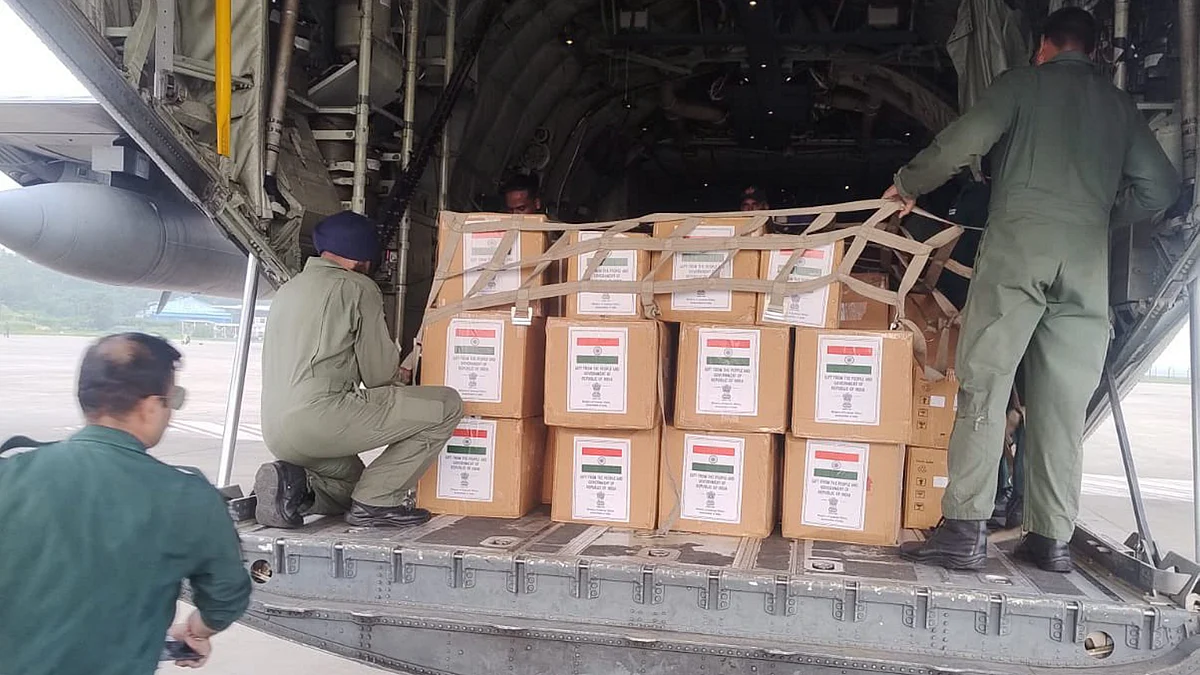


The death toll from Nepal’s devastating flash floods has climbed to 1,127, with rescue teams racing against time to locate 4,858 people still reported missing nearly a week after the disaster struck, Nepal Police said on Wednesday.
The scale of the tragedy continued to emerge as security personnel recovered hundreds of bodies from some of the worst-hit districts. According to police, 348 bodies were recovered in Chitwan, 217 in Nawalparasi East, 190 in Nawalparasi West and 155 in Nuwakot.
Another 66 bodies were recovered in Gorkha, 59 in Dhading, 45 in Rasuwa and 38 in Tanahu.
Authorities said postmortem examinations and legal identification procedures had been completed for 1,113 bodies, while 95 bodies had been handed over to their families.
To assist relatives searching for loved ones, details of 911 unidentified bodies have been uploaded to the Nepal Police website. Officials hope the database will help families match missing persons with recovered victims and accelerate the identification process.
Security forces have so far rescued 6,541 people from flood-affected areas, while thousands of personnel remain deployed across the disaster zone.
A total of 7,912 police personnel have been mobilised for search and rescue operations, relief distribution, traffic and road management, and the handling and transportation of recovered bodies.
Police teams are also evacuating families from areas considered particularly vulnerable, clearing roads buried under mud and debris, and coordinating relief and rescue operations with local administrations and residents.
The emergency response comes after flaash floods devastated parts of northern and central Nepal on 26 August. The disaster was triggered after a collapse or avalanche of ice and rock near the Nepal-Tibet border sent a massive surge of water and debris downstream, sweeping through towns and villages.
Nearly a week after the disaster, weather conditions are adding to the difficulties faced by rescuers.
Continuous rainfall has disrupted search operations in Rasuwa and Nuwakot, two of the areas badly affected by the Bhotekoshi flooding. Meteorologist Rojan Lamichhane of Nepal’s Department of Hydrology and Meteorology said moderate rain was possible in Bhotekoshi-affected areas on Wednesday afternoon.
The forecast also covers nearby districts, including Rasuwa, Nuwakot and Dhading.
The department recorded 60.2 mm of rainfall at the Nosyam Pati weather station in Sindhupalchok during the previous 12 hours. Moderate rain was reported in several parts of Bagmati, Gandaki and Lumbini provinces, while parts of Koshi, Karnali and Sudurpaschim provinces experienced light to moderate rainfall.
Weather conditions were expected to remain generally cloudy across Nepal on Wednesday afternoon, with the possibility of heavy rain in isolated mountainous areas of Koshi, Bagmati and Gandaki provinces during the night.
The search for missing people has become particularly difficult at a hydropower project affected by the Bhotekoshi floods, where workers are believed to be trapped inside tunnels.
Dharma Raj Uprety, executive chief of the National Disaster Risk Reduction and Management Authority (NDRRMA), said overnight rainfall caused water to accumulate inside the project’s tunnel system, creating another major obstacle for rescue teams.
Teams comprising personnel from the Nepali Army, Armed Police Force, foreign technical experts and project employees have been working to locate the missing workers. However, the difficult conditions inside the tunnels have slowed the operation.
Rescue efforts are further complicated by the sheer amount of debris deposited by the floodwaters.
Ganesh Karki, former president of the Independent Power Producers’ Association, Nepal (IPPAN), said transporting heavy rescue equipment to the affected tunnels has been difficult. He said debris carried by the river had covered areas around the tunnel entrances, making even the task of locating the access points challenging.
The continuing rain, unstable terrain, debris and water-filled tunnels have created a race against time for rescuers searching for those still missing.
With more rain forecast in several mountainous regions, authorities remain on alert for further flooding, landslides and renewed disruption.
Rescue teams are continuing searches in affected communities while simultaneously evacuating vulnerable families, reopening blocked roads and distributing relief supplies. Authorities have also urged residents in high-risk areas to remain vigilant and follow evacuation and safety instructions.
As Nepal confronts one of its deadliest recent flood disasters, the focus remains on recovering those still missing, identifying the dead and reaching communities cut off by floodwaters and debris.
With PTI inputs
Join our official telegram channel (@nationalherald) and stay updated with the latest headlines