


Nepal floods leave a hidden wound as survivors grapple with trauma
More than 11,000 people have been rescued, while entire settlements, homes, roads and bridges have been destroyed by the floods
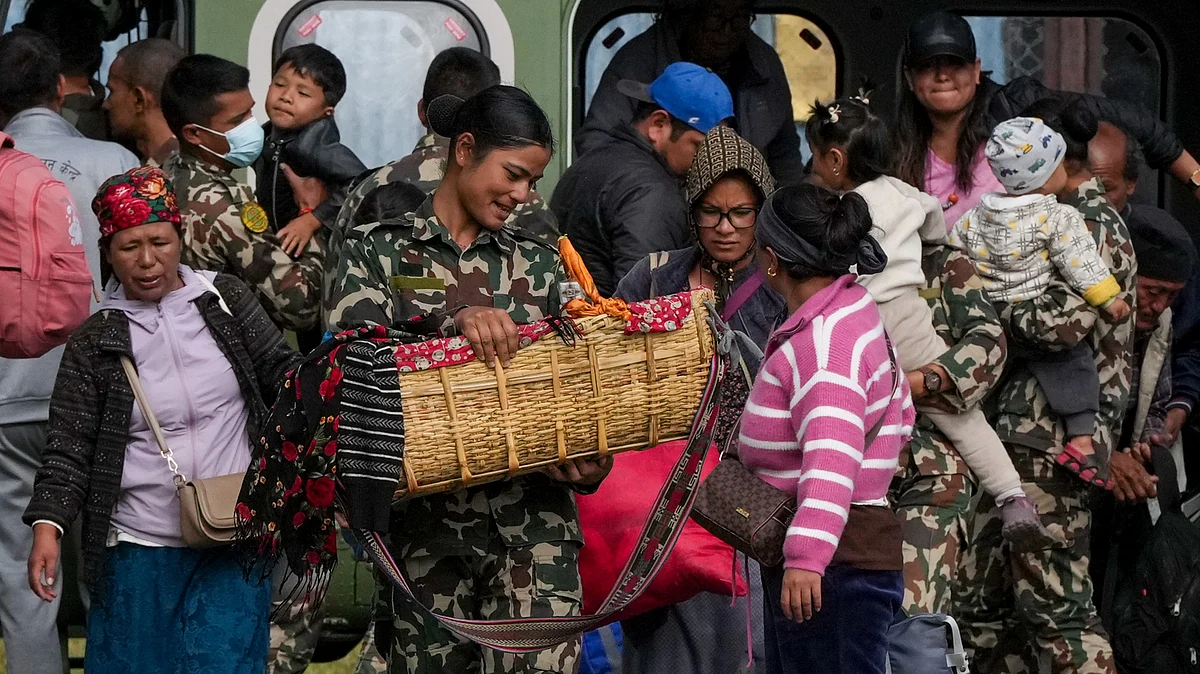


Children wake screaming from nightmares, convinced the floodwaters have returned. Adults flinch at sudden sounds, struggle with anxiety and sleeplessness, while families separated by raging rivers search desperately for missing loved ones.
As Nepal confronts its deadliest floods in a decade, the psychological scars of the disaster are beginning to emerge, adding an invisible layer of suffering to the destruction left across the country.
With the death toll having crossed 900 and nearly 4,000 people still missing, thousands of survivors are now confronting grief, displacement, uncertainty and the trauma of having watched homes and communities swept away.
In response, the government has deployed around 50 psychiatrists, psychologists and psychosocial counsellors to the worst-hit districts of Rasuwa and Nuwakot, according to The Kathmandu Post. Another 64 trained counsellors are on standby in Bagmati Province as authorities prepare for what could be a prolonged need for psychological support.
The mental health response comes as rescue teams continue to pull survivors from devastated areas. More than 11,000 people have been rescued, while entire settlements, homes, roads and bridges have been destroyed by the floods.
Mental health professionals say Psychological First Aid (PFA), aimed at helping people cope with the immediate emotional impact of disasters, is now being introduced in the worst-affected communities.
Pomawati Thapa, senior consultant and medical generalist at the Department of Health Service, said about 10 of the 50 professionals deployed to Rasuwa and Nuwakot were directly providing PFA. A four-member team has also been sent to Uttargaya in remote Rasuwa, where road access remains unavailable.
The initial government response centred on PFA and mobilising volunteers while officials assessed the scale of psychological needs. As the extent of the devastation became clearer, the health ministry expanded its deployment, Thapa said.
The effort is being supported by organisations including the Nepal Red Cross Society, the Centre for Mental Health and Counseling Nepal and other non-governmental organisations.
Authorities have also widened access to psychosocial assistance through telephone helplines. The 1115 hotline provides general health counselling and coordination, with its staff trained to offer basic psychosocial support following the surge in demand after the floods.
A dedicated service is available through 1166, operated from Patan Mental Hospital. Calls are routed to the hospital regardless of their origin and connected with psychosocial counsellors. Seven counsellors currently work in rotation to provide round-the-clock assistance.
The ministry is also facilitating the 1098 Child Helpline to help children affected by the disaster.
On the ground, however, professionals say most survivors are still struggling to comprehend what has happened, with formal counselling only beginning.
Psychologist Gopal Bohara, part of a four-member psychosocial team working in Bidur, Nuwakot, said many survivors remained visibly shaken and unable to describe their experiences.
“Most of them are currently in shock, unable to articulate their problems,” Bohara said.
The trauma is particularly evident among children. Two children at a holding centre have repeatedly awakened during the night, crying and shouting that the flood has returned, he said.
Adults, meanwhile, have displayed anxiety, heightened fear and exaggerated startle responses — signs that the disaster continues to haunt them even after the waters have receded.
Bohara’s team, comprising two psychologists and two psychosocial counsellors, is working alongside medical teams and coordinating with local health authorities.
Psychiatrist Nirajan Bhattarai, who is part of a health ministry team deployed in Bidur Municipality, said the immediate priority remained survival rather than conventional counselling.
“Safety and basic needs have to come first,” he said.
His team is providing emergency medication to people whose psychiatric treatment was interrupted by the floods, as well as those experiencing severe sleep disturbances. More structured psychological interventions will follow as the immediate crisis begins to ease.
For many survivors, the first steps towards recovery are practical ones: finding shelter, reuniting separated families, accessing medical care and restoring essential medicines.
Bhattarai said many adults remained reluctant to speak with responders, while children were generally more willing to engage.
Mental health professionals warn that the deepest psychological consequences may surface only after the immediate emergency has passed. As survivors begin rebuilding homes and communities, memories of loss, fear and displacement could linger long after the floodwaters have disappeared.
Bohara said the trauma extended beyond individual loss, with many survivors grieving the destruction of the communities and social networks that once gave them a sense of security.
For now, mental health workers are focusing on the fundamentals of recovery — keeping survivors safe, reconnecting families, restoring access to psychiatric care and offering Psychological First Aid.
But beneath Nepal’s enormous physical recovery effort lies another battle, one that cannot be measured in destroyed bridges or submerged homes: helping survivors regain a sense of safety in a landscape forever changed by the floods.
With PTI inputs
Join our official telegram channel (@nationalherald) and stay updated with the latest headlines