


Nepal plans first-ever tiger sanctuary to shelter ‘problem tigers’
Government plans to build the 52-hectare sanctuary at Devnagar in Chitwan to house up to 20 tigers that cannot return to the wild
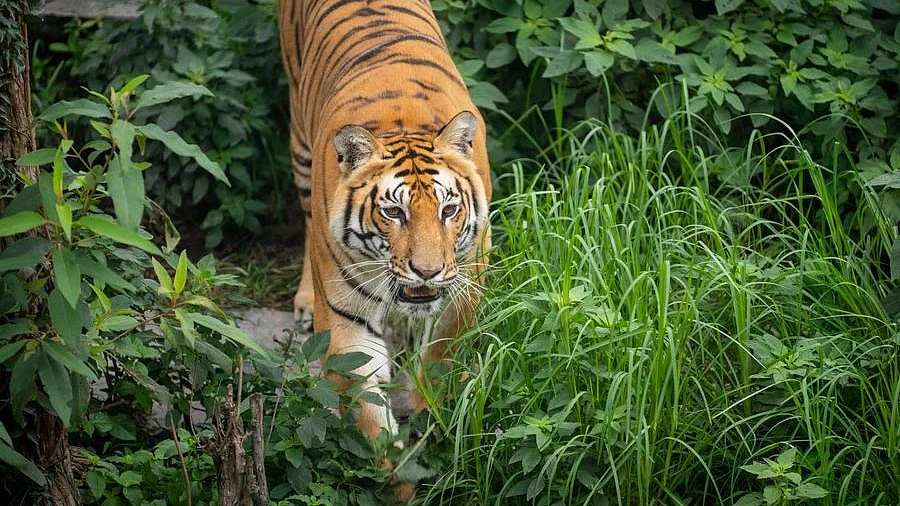


In a landmark step for wildlife conservation, Nepal is preparing to establish its first-ever tiger sanctuary in the famed Chitwan National Park, creating a safe and natural habitat for rescued and "problematic" tigers while opening a new chapter in the country's eco-tourism story.
The ambitious project comes as Nepal celebrates one of the world's greatest conservation successes. The country's tiger population has nearly tripled — from 121 in 2009 to 355 in 2022 — thanks to sustained conservation efforts. But the resurgence has also brought an unintended consequence: a sharp increase in human-tiger conflict and mounting pressure on wildlife rescue centres.
To address the growing challenge, the government plans to develop the sanctuary on 52 hectares of land at Devnagar in Chitwan, where up to 20 tigers that cannot safely return to the wild will be housed in spacious natural enclosures.
"'Problematic tigers' are those that pose a direct threat to human safety, often because they are old, injured or no longer capable of hunting natural prey," explained Hari Bhadra Acharya, senior ecologist at Nepal's Department of National Parks and Wildlife Conservation.
"At present, rescued and problematic tigers are kept in small cages at different locations. The sanctuary will provide them with a much larger enclosed habitat where they can move more naturally while ensuring the safety of nearby communities," Acharya told IANS.
Recognising the urgency of the project, the Nepali government has earmarked NPR 30 million in the 2026-27 fiscal year for the sanctuary, which will be developed by expanding the existing wildlife rescue centre at Devnagar. The facility already houses veterinary services and temporary holding enclosures for rescued wildlife.
Far more than a rescue centre, the proposed sanctuary has been envisioned as a model where conservation and tourism complement each other. Visitors will be able to watch tigers roaming freely through secure natural enclosures from elevated canopy walkways, observation towers, or specially designed caged safari vehicles travelling along dedicated routes.
In a striking reversal of the traditional safari experience, it will be the visitors — not the tigers — who remain behind protective barriers.
"The tigers will roam freely within the enclosure, while visitors will travel through the sanctuary in specially designed enclosed safari vehicles resembling secure cages," Acharya said. "Dedicated safari tracks and fire lines will ensure complete separation between the animals and visitors."
The sanctuary has been carefully designed to preserve the region's existing wildlife corridor and minimise ecological disruption. It will comprise three interconnected zones — a holding centre for two tigers, a viewing enclosure accommodating four tigers, and a larger Jeep Safari zone capable of housing 10 to 12 animals. Altogether, the sanctuary will have the capacity to accommodate 18 to 20 tigers.
To ensure maximum safety, the facility will feature a three-layer fencing system, including reinforced double perimeter barriers and internal security fencing to protect both wildlife and visitors.
Officials emphasise that the sanctuary is not intended for healthy wild tigers but only for rescued animals that cannot be released back into their natural habitat.
Acharya explained that conflict usually arises under three circumstances. Young tigers forced out of overcrowded forests often wander into villages while searching for new territories. Tigers injured in territorial fights lose their ability to hunt wild prey and begin targeting livestock, while ageing tigers, weakened by worn teeth and claws, increasingly venture close to human settlements in search of easier food.
"To protect both local communities and these vulnerable animals, the tiger sanctuary has been envisioned," he said.
The project remains in its planning phase. A technical committee headed by Acharya has already submitted a concept report, while work on a Detailed Project Report (DPR) is expected to begin shortly.
The DPR will outline the sanctuary's final design, implementation strategy and financial requirements. Once construction starts, officials estimate it will take two to three years to build the country's first dedicated tiger sanctuary.
If realised, the project will mark a significant milestone in Nepal's conservation journey — offering a second chance to tigers that can no longer survive in the wild while showcasing a pioneering model that balances wildlife protection, public safety and sustainable tourism.
With IANS inputs
Join our official telegram channel (@nationalherald) and stay updated with the latest headlines