


No passage without permission: Iran claims control over Strait of Hormuz
Iran’s army spokesman Mohammad Akraminia says country now firmly controls waterway, calling it a long-unused sovereign right
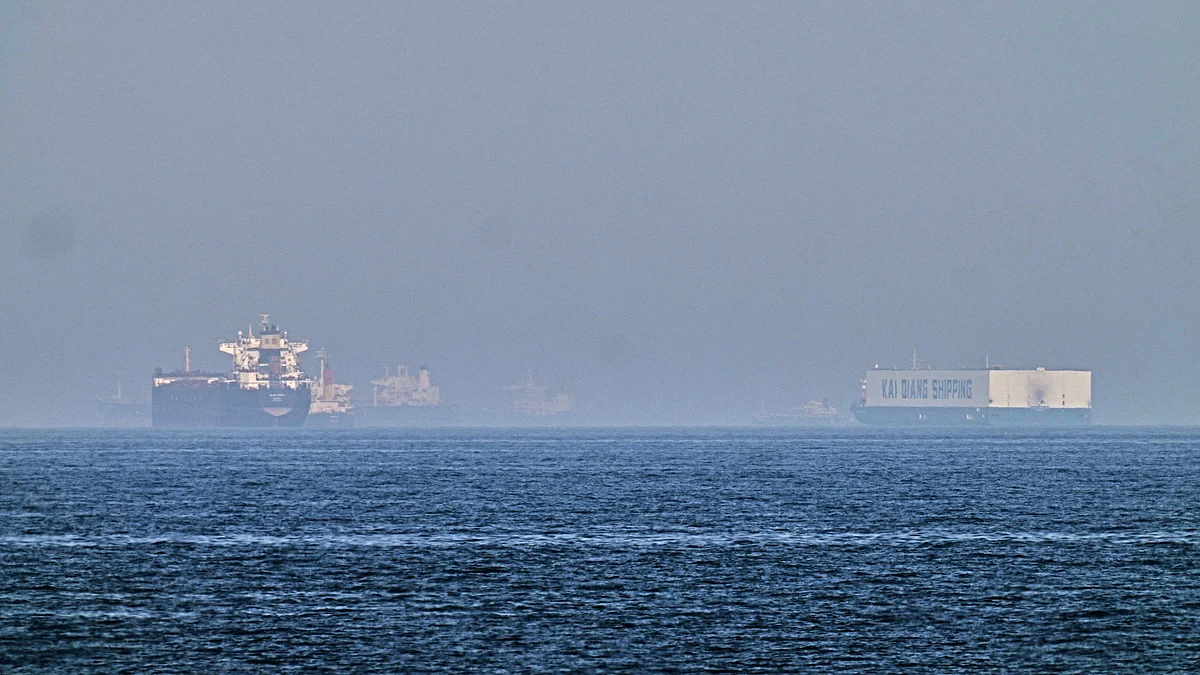


Iran has dramatically escalated its stance in the Persian Gulf, with senior military and political leaders asserting full control over the strategically vital Strait of Hormuz — declaring that no vessel, “friend or foe,” can pass without Tehran’s approval.
Iranian army spokesman Mohammad Akraminia said the country’s forces are now firmly in command of the waterway, describing such control as a sovereign right long left unused.
“At present, Iran's Islamic Revolution Guard Corps in the west and the country's army in the east are controlling the strait with power, and no ship, friend or foe, will have the right to pass without the permission and authorization of our forces,” Akraminia said.
He added that controlling the strait is “an inherent right” of Iran, signalling a decisive shift in Tehran’s maritime posture after years of restraint.
The move has triggered urgent reactions worldwide. According to Iran’s deputy foreign minister Hamid Ghanbari, several countries are already seeking safe passage for their vessels through diplomatic channels.
“Different countries are anxiously and urgently requesting Iran… to let their ships pass,” Ghanbari said, as quoted by Iranian media.
The tightening of control dates back to 28 February, when Iran restricted passage for vessels linked to the United States and Israel following joint strikes on its territory — marking a significant escalation in the ongoing conflict.
Iran’s Supreme Leader Mojtaba Khamenei framed the development as part of a broader strategic shift, declaring that a “new chapter” is being written in the Persian Gulf.
In a message marking National Persian Gulf Day, he announced plans for a new legal and administrative framework governing the strait — one he claimed would benefit regional nations.
“The new legal framework and management system for the Strait of Hormuz will advance comfort and development for all the region’s nations,” Khamenei said.
He also invoked Iran’s historical resistance against foreign powers, criticising Western involvement in the region.
“This strategic asset has long provoked the greed of many evildoers… the repeated invasions by European and American foreigners reflect the malicious schemes of global oppressors,” the message read.
Khamenei further projected a future vision of the region independent of US influence.
“The future of the Persian Gulf will be bright and free of America, devoted to progress, peace, and prosperity,” he said.
The Strait of Hormuz is one of the world’s most critical oil transit routes, handling a significant share of global shipments. Any disruption — or even the threat of one — can quickly impact energy markets and global trade.
Iran’s assertion of control raises the stakes in an already volatile region, with the risk of confrontation increasing as global powers weigh their response to what could effectively amount to a maritime chokehold.
With Tehran doubling down on both military control and a new legal framework, and international pressure mounting, the Strait of Hormuz is fast becoming the focal point of a high-stakes geopolitical showdown.
With IANS inputs
Join our official telegram channel (@nationalherald) and stay updated with the latest headlines