


Oil prices near six-week high as US-Iran conflict disrupts Strait of Hormuz
Escalating attacks on tankers and energy facilities push Brent towards $97 a barrel, intensifying pressure on fuel prices and household spending
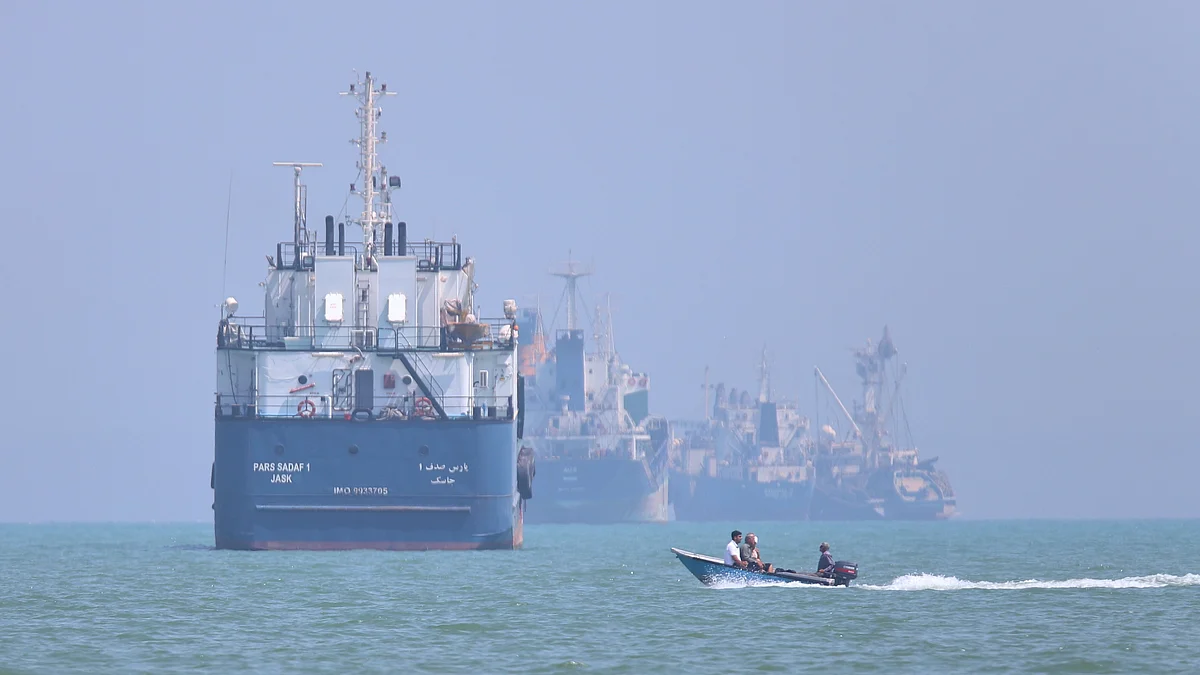


Oil prices climbed towards their highest level in nearly six weeks on Monday as intensifying hostilities between the United States and Iran raised fears of prolonged supply disruption in the Strait of Hormuz, a vital passage for about one-fifth of global oil supplies during peacetime.
Brent crude futures, the international benchmark, traded at around $97 a barrel after gaining approximately 9 per cent over five days and 19 per cent during the past month. Prices were closing in on the $97.93 level recorded on 24 July. US West Texas Intermediate crude also advanced, rising 79 cents to $92.27 a barrel.
The latest increase followed a fresh exchange of attacks in and around the Strait of Hormuz, Al Jazeera reported. The United States struck three Iranian oil tankers on Saturday, while Iran’s Islamic Revolutionary Guard Corps said it had targeted three tankers and three US-linked vessels elsewhere.
Rachel Ziemba, adjunct senior fellow at the Center for a New American Security, said the rise reflected the continuing exchange of fire as well as persistent shortages in global supplies. The absence of any clear end to the hostilities was encouraging markets to factor in the possibility of longer-lasting disruption.
Concerns deepened on Monday after Saudi Aramco’s facilities in Jizan were reportedly struck for the second time in a month. The attack may further delay the restoration of production at the site, adding to the uncertainty surrounding regional energy supplies.
Shipping activity through the Strait of Hormuz has fallen sharply amid the escalation. Data analytics platform Kpler estimated that an average of only 10 commodity vessels a day had crossed the strategic waterway over the preceding 10 days.
Arif Gasilov, a partner at energy advisory firm Gasilov Group, said crude prices had fluctuated since the conflict began, initially returning to pre-war levels before rising again following renewed attacks and the strike on the Saudi facility.
He suggested that the market’s response to any future ceasefire could eventually weaken if the disruption continues for an extended period. Under such circumstances, even an agreement to halt hostilities might reduce oil prices by only one or two dollars.
Higher crude prices are already feeding through to American consumers. Al Jazeera reported that the national average price of petrol rose seven cents in a week to $4.15 a gallon on Monday, according to the American Automobile Association. It stood at $4.04 a month earlier and $2.98 on 28 February, when the United States and Israel first launched strikes against Iran.
The increase represents a rise of about 39 per cent since the beginning of the war. Diesel prices have also continued to surge, with the national average exceeding $5.90 a gallon on Monday.
Patrick De Haan, head of petroleum analysis at GasBuddy, warned that record diesel prices would eventually affect the wider economy because higher transport costs are passed through to the prices of goods purchased by consumers. Analysts said refined products, particularly diesel, continued to face some of the most severe disruption.
The impact on household budgets is becoming increasingly pronounced. American households have spent an average of $764.59 on fuel since the war began, approximately $418.82 more than they ordinarily would, according to Brown University’s Watson School of International and Public Affairs.
Travel costs have also risen. Ahead of the 5–7 September Labor Day weekend, the American Automobile Association had forecast that flight prices would be about 20 per cent higher than during the corresponding holiday period last year.
The growing cost burden could become politically significant ahead of the US midterm elections, with the economy emerging as a central concern among voters. A recent Financial Times poll placed President Donald Trump’s economic approval rating at 17 per cent.
An Economist/YouGov survey found that 39 per cent of respondents believed the Democrats were handling the economy more effectively, compared with 32 per cent who favoured the Republicans.
Asian economies face greater direct exposure to shipments passing through the Strait of Hormuz than the United States. China, however, has sought to limit its vulnerability by drawing on domestic supplies, tapping its strategic petroleum reserve and diversifying its energy sources.
John Gong, an economics professor at the University of International Business and Economics, said China had prepared for such pressures by conserving oil and gas, developing domestic resources and maintaining close energy ties with Russia, which can meet nearly half of its daily oil requirements.
Beijing is also accelerating its transition towards renewable energy and vehicles that consume little or no oil. Electric vehicles now account for more than half of new cars sold in the Chinese market, helping reduce the country’s longer-term exposure to volatility in global crude supplies.
Join our official telegram channel (@nationalherald) and stay updated with the latest headlines