


Over 80,000 civilian places attacked by US, Israel since war began: Iran
Nearly 18,790 businesses, 266 medical centres and 498 schools hit, says Iran Red Crescent chief
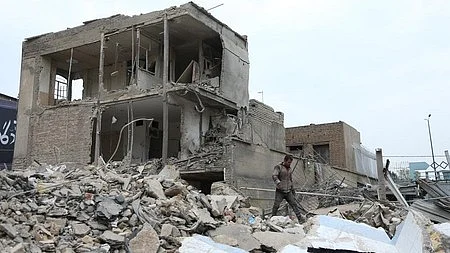


In a sweeping and deeply charged indictment of the ongoing conflict, Pirhossein Kolivand, head of the Iranian Red Crescent Society, accused the United States and began of striking more than 80,000 civilian sites across Iran since the onset of what he described as their “aggression”.
Addressing foreign media, Kolivand painted a grim portrait of devastation, alleging widespread violations of international humanitarian law. Citing figures that underscore the scale of destruction, he claimed that over 20,000 of the targeted locations were in Tehran alone, with more than 60,000 others spread across the country.
The toll on civilian infrastructure, he suggested, has been staggering. Nearly 18,790 commercial establishments have reportedly been hit, alongside 266 medical centres and 498 schools — institutions that typically stand as sanctuaries in times of war. The human cost, too, has been severe: 12 members of Iran’s medical staff killed, over 90 wounded, and hundreds of civilians — including children and at least 231 women — losing their lives.
While Kolivand did not provide an overall death toll, separate media reports have suggested that fatalities in Iran may have crossed 1,500, lending further weight to concerns over the scale of the conflict.
Even as humanitarian alarms grow louder, the military dimension of the confrontation continues to intensify. Iran’s powerful Islamic Revolutionary Guard Corps (IRGC) claimed it had struck an Israeli F-16 Fighting Falcon within central Israeli airspace — a claim that, if verified, would mark a significant escalation. Iranian state media also reported strikes on fuel storage facilities for military aircraft at Ben Gurion Airport, underscoring Tehran’s intent to target critical infrastructure.
The rhetoric has been no less forceful. Ebrahim Zolfaghari, spokesman for the Khatam al-Anbiya Central Headquarters, issued a stark warning that Iran could extend its strikes to Ras Al-Khaimah if attacks were launched from its territory against Iranian positions. “We will attack the origin of any invasion against our territory and national sovereignty,” he declared, signalling Tehran’s readiness to widen the theatre of conflict.
The present crisis traces its origins to 28 February, when Israel and the United States launched coordinated strikes on Tehran and several other Iranian cities. The attacks reportedly killed Ali Khamenei along with senior military commanders and civilians — a development that dramatically altered the trajectory of the conflict. In response, Iran unleashed waves of missile and drone strikes targeting Israeli territory and US military assets across the Middle East.
As accusations mount and retaliatory strikes intensify, the conflict appears locked in a perilous cycle — one where the lines between military objectives and civilian life grow increasingly blurred, and the spectre of a broader regional war looms ever larger.
With IANS inputs
Join our official telegram channel (@nationalherald) and stay updated with the latest headlines