


Pakistan and Iran deport more than 10,000 Afghan refugees in two days
The returnees entered Afghanistan through key border crossings, including Islam Qala, Pul-i-Abresham, Spin Boldak, Bahramcha and Torkham
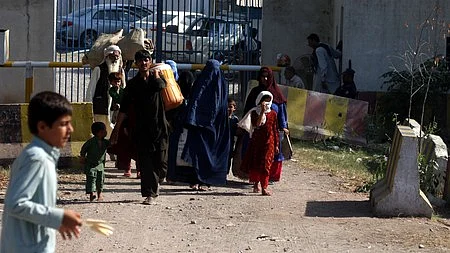


More than 10,000 Afghan refugees have been forcibly deported from Pakistan and Iran over the past two days, according to an Afghan government official.
Hamdullah Fitrat, deputy spokesperson for the government in Afghanistan, said 1,939 families, comprising 10,043 individuals, returned to Afghanistan on Thursday and Friday. The figures were shared in a report by the High Commission for Addressing Migrants’ Issues.
The returnees crossed back into Afghanistan through several major border points, including Islam Qala in Herat, Pul-i-Abresham in Nimroz, Spin Boldak in Kandahar, Bahramcha in Helmand and Torkham in Nangarhar.
Fitrat said 1,464 families, totalling 8,140 people, had since been relocated to their home regions, while 1,279 families received humanitarian assistance. He added that telecommunication companies distributed 1,626 SIM cards to the returnees to help them reconnect with services and relatives.
He also noted that Pakistani and Iranian authorities had forcibly repatriated around 2,300 Afghan refugees on Wednesday alone.
The latest deportations come amid mounting pressure on Afghan migrants in Pakistan. In November, the United Nations High Commissioner for Refugees said Pakistan had detained a record number of Afghan nationals in 2025, with the highest arrest figures reported from the provinces of Balochistan and Punjab.
A recent UNHCR report found that most arrests took place in the districts of Chagai and Quetta in Balochistan, and Attock in Punjab. Pakistani authorities reportedly detained 100,971 Afghans between 1 January and mid-November 2025 — a sharp increase compared with about 9,000 arrests in 2024 and more than 26,000 in 2023.
According to UNHCR, around 76 per cent of those detained were either holders of Afghan Citizen Cards or undocumented migrants, while the remaining 24 per cent possessed Proof of Registration cards.
The surge in detentions followed two government directives issued in 2025 that ordered the removal of Afghan migrants from Islamabad and Rawalpindi and authorised police to arrest even those holding PoR cards.
Several humanitarian organisations have urged Pakistan to ensure that any returns are voluntary and in line with international obligations. They warned that large-scale expulsions risk destabilising border regions, as many returning families face acute shortages of housing, jobs and basic services once back in Afghanistan.
With IANS inputs
Join our official telegram channel (@nationalherald) and stay updated with the latest headlines