


Hegseth to be grilled by US Congress for first time since Iran war began
Lawmakers to probe war costs, readiness gaps and top-level Pentagon dismissals amid uneasy ceasefire
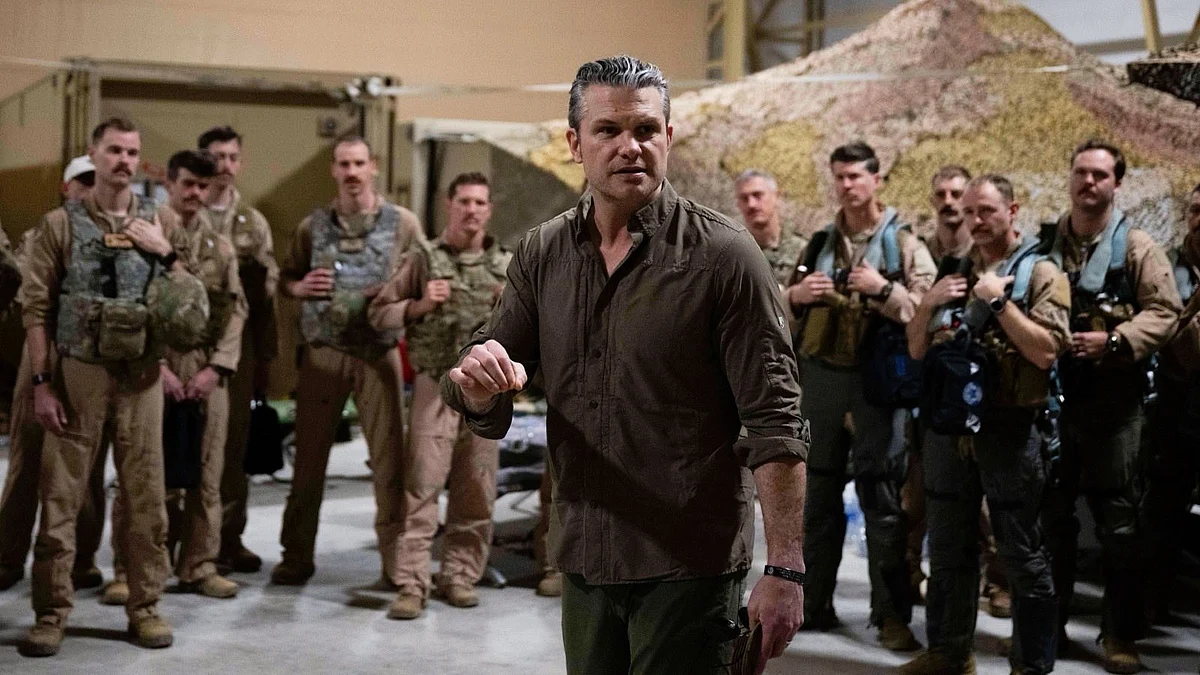


US defence secretary Pete Hegseth is set to face lawmakers on Wednesday for the first time since the Trump administration Iran war began — a campaign Democrats have sharply criticised as an expensive, discretionary conflict launched without congressional sanction.
The appearance before the House Armed Services Committee is formally tied to discussions on the administration’s 2027 military budget proposal, which envisages a steep increase in defence spending to an unprecedented USD 1.5 trillion.
Hegseth, alongside Joint Chiefs chairman Dan Caine, is expected to underline the need for expanded investment in drones, missile defence capabilities and naval assets.
Democrats, however, are expected to shift focus toward the spiralling financial burden of the Iran conflict, the depletion of key US munitions stockpiles, and a controversial airstrike on a school that resulted in the deaths of children. Lawmakers may also press the Pentagon on operational readiness, particularly in countering Iranian drone swarms — some of which breached US defences and led to American casualties.
Although a ceasefire currently holds, the United States and Israel initiated military action on 28 February without congressional oversight. Efforts by Democrats in both chambers to pass war powers resolutions — measures that would have compelled Donald Trump to halt hostilities pending authorisation — have so far fallen short.
Republicans have largely continued to back Trump’s handling of the conflict, pointing to concerns over Iran’s nuclear ambitions, the possibility of renewed negotiations, and the risks tied to disengagement. At the same time, there is unease within the GOP, with some lawmakers signalling that prolonged hostilities could test party unity and the president’s authority in future votes.
Tehran’s move to shut the Strait of Hormuz — a critical artery for global oil shipments — has driven fuel prices sharply higher, creating fresh political pressure for Republicans ahead of midterm elections.
Washington has responded by imposing a naval blockade on Iranian shipping and reinforcing its military footprint in the region, deploying three aircraft carriers to the Middle East — a concentration not seen in over two decades.
Despite these escalations, both sides appear entrenched. Trump is seen as unlikely to accept Iran’s latest proposal to reopen the strait in exchange for an end to the war, lifting of the blockade and a delay in nuclear negotiations.
Hegseth has so far avoided direct questioning from Congress, opting instead for televised Pentagon briefings alongside Caine. His media interactions have largely been limited to conservative outlets, where he has at times invoked Biblical references while criticising mainstream journalism.
That dynamic is expected to shift significantly during Wednesday’s hearing, and again on Thursday when both officials appear before the Senate Armed Services Committee. Lawmakers are expected to widen their scrutiny beyond the war and budget to include Hegseth’s recent removal of senior military leadership.
In addition to the recent exit of navy secretary John Phelan, Hegseth has dismissed the Army’s top uniformed officer Randy George, along with several other senior generals, admirals and defence officials.
“Tell us why. You know these are important positions. We are in a war posture with Iran,” said Thom Tillis, a Republican from North Carolina.
Tillis, who played a key role in confirming Hegseth, suggested the Pentagon’s recent turbulence had made him reconsider his support. “He may be able to clean it up, but on its face, you don't go through the number of highly reputable, senior-level officials, admirals and generals,” he said.
Meanwhile, Austin Scott, a Republican from Georgia, also criticised George’s removal during a House Armed Services Committee session last week. “I think the firing of Gen. George was an extreme disservice to the United States Army,” Scott said. “And I think it was reckless conduct.”
With AP/PTI inputs
Join our official telegram channel (@nationalherald) and stay updated with the latest headlines