


Russia hails Donald Trump’s updated US security strategy
Kremlin spokesperson Dmitry Peskov praises the approach, noting that its prescriptions “correspond in many ways to our vision”
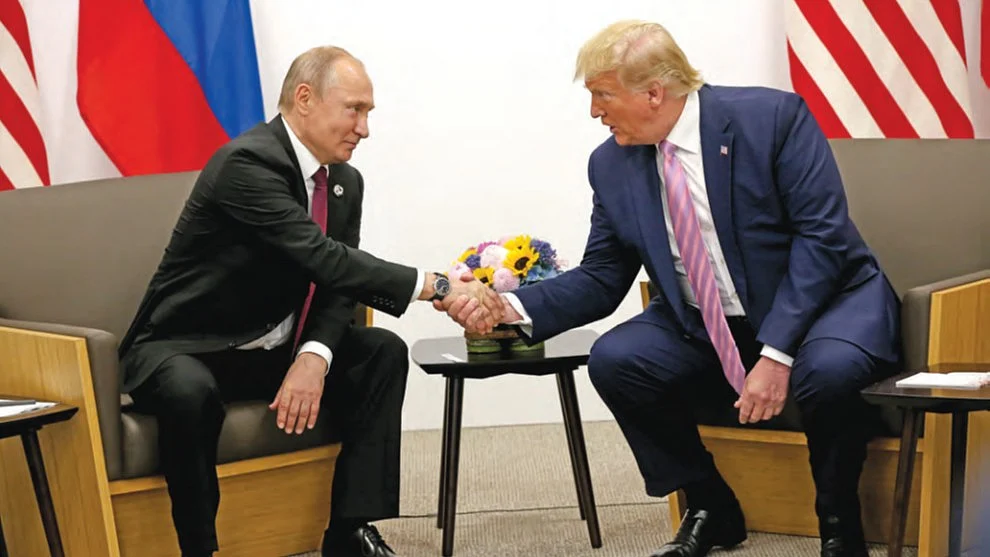


The Kremlin has extended an unusually warm embrace to a freshly unveiled national security strategy championed by US President Donald Trump, hailing it as strikingly aligned with Moscow’s own vision of global order, the Al Jazeera reported.
The strategy, published last week, casts Europe as teetering on the brink of what it terms “civilisational erasure”, elevates ending the war in Ukraine to a “core” US interest, and signals a tentative pivot toward restoring what Washington now describes as strategic stability with Russia.
Kremlin spokesperson Dmitry Peskov praised the approach, noting that its prescriptions “correspond in many ways to our vision”, the Al Jazeera reported.
He particularly welcomed language addressing NATO, which the strategy frames as shedding the perception of being a perpetually expanding alliance — a point long contested by Moscow, which views NATO enlargement as a direct threat to its security. Yet Peskov offered a note of caution: the position of what he termed the US “deep state” — a phrase Trump has often invoked to describe entrenched officials opposing his policies — may diverge from the President’s own blueprint.
Since Russia’s annexation of Crimea in 2014 and its full-scale invasion of Ukraine in 2022, successive US administrations have cast Moscow as a destabilizing force in the post-Cold War world. Trump’s latest strategy, however, marks a pronounced shift, reflecting both his personal affinity for Russian President Vladimir Putin and his frequent clashes with Ukraine’s Volodymyr Zelenskyy.
The document comes at a moment when the White House is intensifying efforts to broker a resolution to the ongoing war. Zelenskyy is set to travel to London for a high-stakes four-way meeting with UK Prime Minister Keir Starmer, French President Emmanuel Macron, and German chancellor Friedrich Merz, seeking European support amid US signals that Kyiv might have to contemplate territorial concessions.
The strategy extends far beyond Europe, placing the Indo-Pacific at the heart of US foreign policy, labeling the region a “key economic and geopolitical battleground”.
It pledges to strengthen American military capabilities to deter potential conflict between China and Taiwan, even as Russia, isolated under Western sanctions, has deepened its ties with Beijing. In March, Trump cautioned against the alignment of the two powers, reflecting his longstanding historical lens: “The first thing you learn is you don’t want Russia and China to get together,” he told Fox News.
Experts say the document is emblematic of Trump’s ambition to reimagine the post-World War II international order, filtering global alliances through an “America First” prism. It also stresses the defense of Europe’s so-called Western identity, framing its preservation as vital to preventing the looming specter of “civilisational erasure”. Analysts note that this rhetoric resonates strongly with far-right currents both in the US and across the European Union.
As the world digests the contours of Trump’s vision, one thing is clear: the strategy is not merely a policy document but a bold manifesto, seeking to reshape alliances, redraw strategic fault lines, and assert a distinctly American narrative over the global stage — all while Moscow watches with measured approval and wary calculation.
Join our official telegram channel (@nationalherald) and stay updated with the latest headlines