


Son succeeds father: Mojtaba Khamenei becomes Iran’s supreme leader
The 56-year-old cleric now assumes command of the Islamic Republic of Iran at perhaps the most perilous moment in its 47-year history
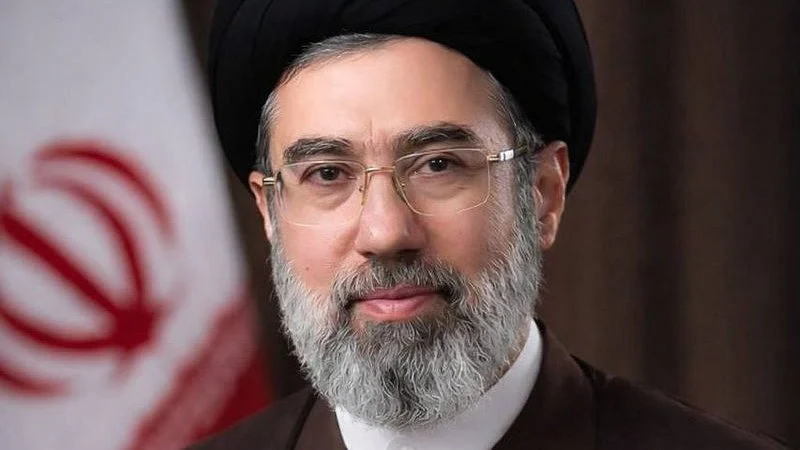


Iran has appointed Mojtaba Khamenei as its new supreme leader, barely a week after the dramatic assassination of his father, Ali Khamenei, in joint strikes by the United States and Israel — an event that has plunged the Middle East into one of its most volatile crises in decades, the Al Jazeera reported.
The 56-year-old cleric now assumes command of the Islamic Republic of Iran at perhaps the most perilous moment in its 47-year history. His appointment was confirmed on Sunday by the powerful Assembly of Experts, the 88-member clerical body tasked with selecting the country’s supreme leader. The move came swiftly despite the ongoing war and the deepening turmoil gripping the region.
Within hours of the announcement, key pillars of Iran’s power structure — including the formidable Islamic Revolutionary Guard Corps (IRGC) and the country’s armed forces — pledged their allegiance to the new leader, projecting a show of unity as the nation braces for a prolonged confrontation.
Senior officials echoed the call for solidarity. Ali Larijani, secretary of Iran’s Supreme National Security Council and the man overseeing the country’s wartime security strategy, urged the nation’s political and military establishment to rally around Mojtaba Khamenei, the Al Jazeera reported.
Meanwhile, parliament speaker Mohammad Bagher Ghalibaf described loyalty to the new supreme leader as both a “religious and national duty”.
Though he has never stood for public office or faced a nationwide vote, Mojtaba Khamenei has long been one of the most influential figures in Iran’s political inner circle. For decades he functioned as a discreet yet powerful presence around his father, cultivating close relationships with senior clerics and particularly with the IRGC — ties that many analysts say have helped cement his rise.
His selection also signals continuity within Iran’s ruling establishment. In recent years, Mojtaba had increasingly been discussed as a likely successor to his father, whose rule spanned nearly four decades after he took over from the revolutionary leader Ruhollah Khomeini, the architect of the Iranian Revolution.
Observers suggest the appointment may also reflect the dominance of hardline factions within Iran’s power structure. Analysts say it could indicate that Tehran has little appetite for compromise as the war — triggered by US-Israeli strikes on Iranian targets — moves into its second week.
Regional analyst Ali Hashem told the Al Jazeera that Mojtaba Khamenei has long been viewed as his father’s “gatekeeper” — a trusted confidant who faithfully mirrored the elder Khamenei’s worldview.
“He adopts the positions of his father with respect to the United States and Israel,” Hashem said, predicting a confrontational leadership style rather than any immediate shift toward moderation. Still, he suggested that if the war eventually subsides, the new leader might explore alternative diplomatic paths to stabilise Iran’s position.
Political analyst Rami Khouri of the American University of Beirut similarly described the appointment as an unmistakable signal of continuity — and defiance.
“Iran is essentially telling Washington and Tel Aviv: you sought to dismantle our system, but the system remains — and it may now be even more radical,” Khouri said.
Members of the Assembly of Experts made little effort to hide the symbolic weight of their decision. Cleric Heidari Alekasir, who participated in the deliberations, revealed that the late supreme leader had once advised that Iran’s top authority should be “hated by the enemy rather than praised by it”.
That remark appeared to reference comments by Donald Trump, who had earlier declared Mojtaba Khamenei an “unacceptable” choice for Iran’s leadership.
Washington’s rhetoric has remained confrontational. On Sunday, Trump again claimed the United States would influence who ultimately leads Iran, warning that any supreme leader lacking American approval “is not going to last long”.
Israeli officials have issued equally stark warnings. The Israel Defense Forces previously signalled that any successor to Ali Khamenei could become a potential target as the war escalates.
Iranian leaders, however, have fiercely rejected such statements. Ghalibaf dismissed Trump’s remarks with biting sarcasm on social media, declaring that the destiny of Iran would be decided only by the Iranian people.
As political drama unfolded, the war itself continued to rage. A thick, acrid haze hung over Tehran after Israeli strikes ignited several oil facilities around the capital, sending plumes of smoke curling into the sky.
Despite the relentless bombardment, the IRGC insisted that Iran still possesses vast reserves of missiles and drones. Spokesman Ali Mohammad Naini claimed the country has sufficient supplies to sustain attacks across the region for up to six months. He added that Iran has so far deployed only first- and second-generation missiles and could soon introduce more advanced long-range systems.
For his part, Trump has refused to rule out deploying American ground troops while simultaneously asserting that the war is nearing victory — claims that stand in stark contrast to the continued barrage of Iranian drones and missiles.
With hostilities now stretching into their ninth day and no clear diplomatic path in sight, analysts warn the conflict could drag on for weeks, potentially reshaping the geopolitical landscape of the Middle East.
At the centre of this storm now stands Mojtaba Khamenei — a little-known but deeply connected cleric who must guide Iran through the most dangerous chapter since the birth of the Islamic Republic.
Join our official telegram channel (@nationalherald) and stay updated with the latest headlines