


SpaceX acquires xAI to launch space‑based AI data centres: Elon Musk
Musk says launching a million tonnes of satellites annually could add 100 GW of AI capacity with no maintenance required
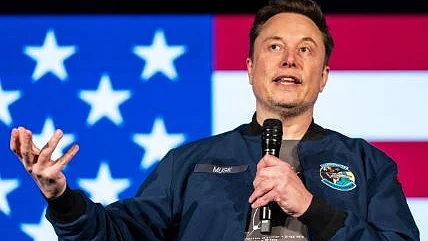


In a bold leap toward the future of artificial intelligence, US entrepreneur Elon Musk has announced that his aerospace giant SpaceX has acquired his AI startup, xAI, unveiling an ambitious vision to take AI compute power beyond Earth’s bounds.
Musk envisions a fleet of orbital satellites acting as sprawling data centers in space, harnessing the Sun’s near-constant energy to power AI at scales unimaginable on Earth.
“Launching a million tonnes per year of satellites generating kilowatts of compute per tonne would add 100 gigawatts of AI capacity annually, with no operational or maintenance burden. Ultimately, we see a path to 1 terawatt per year from Earth,” Musk said, framing space as the only viable frontier to meet the insatiable energy demands of advanced AI.
He argued that Earth-bound data centers, while powerful, are constrained by immense energy consumption, cooling requirements, and environmental costs. “To harness even a millionth of our Sun’s energy would require over a million times more power than humanity currently uses,” Musk said. “The logical solution is to move these resource-intensive efforts to a domain with abundant space and energy — orbit.”
According to Musk, the cost-efficiency of orbital compute will allow AI companies to train models and process data at unprecedented speeds and scales, without overburdening terrestrial power grids or communities.
The plan hinges on SpaceX’s Starship, which is set to begin deploying the much more powerful V3 Starlink satellites in 2026. Each Starship launch will deliver more than 20 times the capacity of current Falcon-launched V2 satellites, eventually lifting millions of tons to orbit and beyond. The visionary program will also deploy next-generation direct-to-mobile satellites, promising full cellular coverage across the globe.
Musk’s statement positions space as not just the next frontier for human exploration, but the ultimate sanctuary for humanity’s most ambitious technological pursuits — a cosmic playground where AI can grow unshackled by terrestrial limits.
With IANS inputs
Join our official telegram channel (@nationalherald) and stay updated with the latest headlines