


Storm Byron batters Gaza, killing 14 Palestinians including children
Vast sections of the coastline have crumbled, leaving tents pitched mere metres from the sea in grave danger
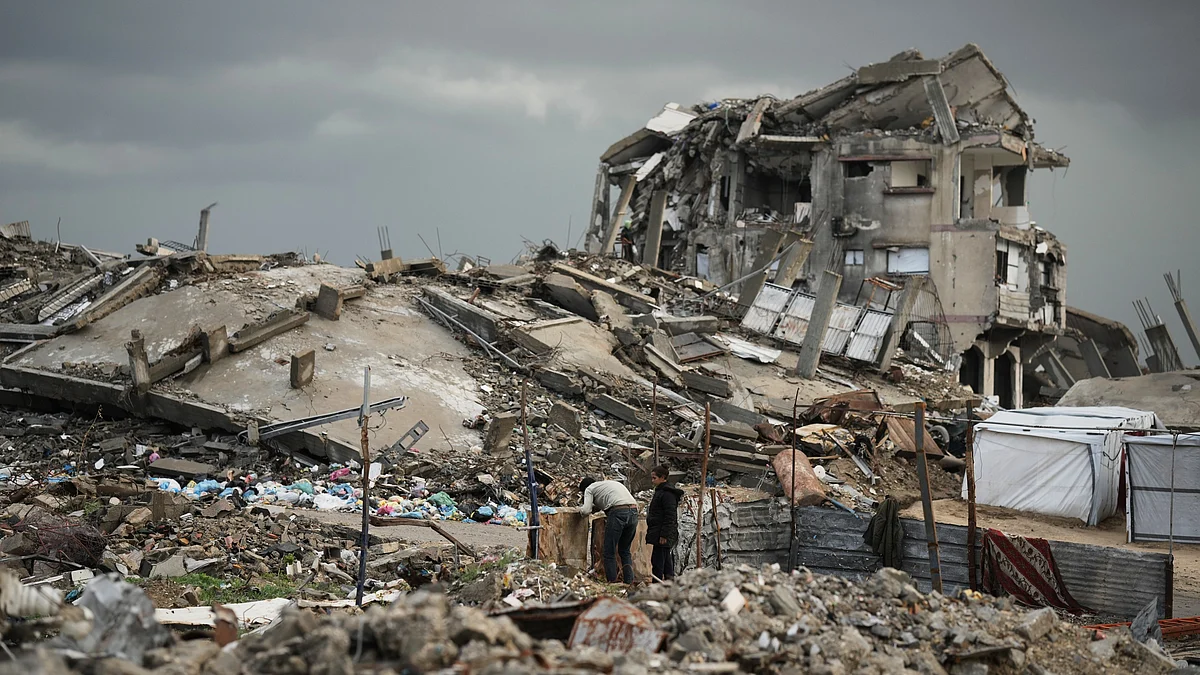


Storm Byron descended on the Gaza Strip like a final blow, leaving at least 14 people dead, many of them children, as torrential rain, fierce winds and crumbling structures crushed families already worn down by months of war and forced displacement, according to Gaza’s interior ministry.
In the dark hours before dawn on Friday, five people were killed when a house sheltering displaced civilians collapsed in Bir an-Naaja in northern Gaza, the ministry said. As the storm raged on, tragedy followed at first light: two more people died when a wall crumbled onto tents in Gaza City’s Remal neighbourhood.
Elsewhere, the storm exposed the fragility of life for Gaza’s displaced. A day earlier, another person was killed when a damaged structure gave way in Shati refugee camp, while a newborn in al-Mawasi succumbed to freezing temperatures. Hospitals have since reported a growing toll from exposure as cold and rain seep into makeshift shelters.
Medical staff at al-Shifa Hospital confirmed the deaths of nine-year-old Hadeel al-Masri, who died in a shelter west of Gaza City, and baby Taim al-Khawaja, who perished in Shati camp. In Khan Younis, eight-month-old Rahaf Abu Jazar died after rainwater flooded her family’s tent.
Relatives said Rahaf’s family had been sheltering in a roofless, bomb-damaged home after an Israeli air strike destroyed their house. Her grandfather recounted the desperate moments before her death.
Storm Byron has turned Gaza’s flimsy shelters into deadly traps, Al Jazeera reported.
Al Jazeera reported that officials have warned of continued flooding, heavy rain and hail, putting around 850,000 people — many of them children — at risk across 761 shelter sites. Tents, battered by wind and rain, have been torn apart, leaving families exposed to the cold.
Vast sections of the coastline have crumbled, leaving tents pitched mere metres from the sea in grave danger.
For families forced to flee repeatedly during more than two years of Israeli bombardment, the storm has brought what al-Khalili described as “an added layer of suffering”.
Al Jazeera reported that residents are facing unbearable cold as tents collapse, leaving many with nowhere to seek refuge. Locals describe it as a new kind of war — waged not with bombs, but with rain, wind, and freezing temperatures — driving them from their fragile shelters.
Al Jazeera reported that at least 10 houses have collapsed in the past 24 hours, with more at risk of falling at any moment. Many Palestinians remain trapped in damaged buildings, lacking tents, tarpaulins, or alternative shelter, as Israeli authorities continue to block the entry of winterisation supplies.
Civil defence teams recovered one body and rescued two injured children from the rubble in Bir an-Naaja, while more people are believed to be trapped beneath collapsed homes. The interior ministry said emergency crews have received more than 4,300 distress calls since the storm began and recorded at least 12 collapses of buildings previously weakened by Israeli air strikes.
Despite severe shortages of fuel and equipment, police and civil defence workers continue rescue efforts. The ministry urged international actors to pressure Israel to allow the entry of critical aid and shelter materials.
“What is happening now is a wake-up call for the world to face its responsibilities,” the statement said.
Hamas spokesperson Hazem Qassem described the storm-related deaths as a continuation of what he called Israel’s “war of extermination”, saying the collapsing homes laid bare the scale of the humanitarian catastrophe left behind.
“Children drowning in flooded tents show that the war continues, even if its tactics have changed,” he said, calling for urgent international action to provide proper shelter and halt what he described as genocide. Current aid supplies, he added, “do not protect against rain or the cold”.
Join our official telegram channel (@nationalherald) and stay updated with the latest headlines