


Storm Byron batters Gaza, deepening crisis for displaced Palestinians
Winter storm, expected to last until Friday, threatens a territory already facing a severe humanitarian crisis after two years of conflict
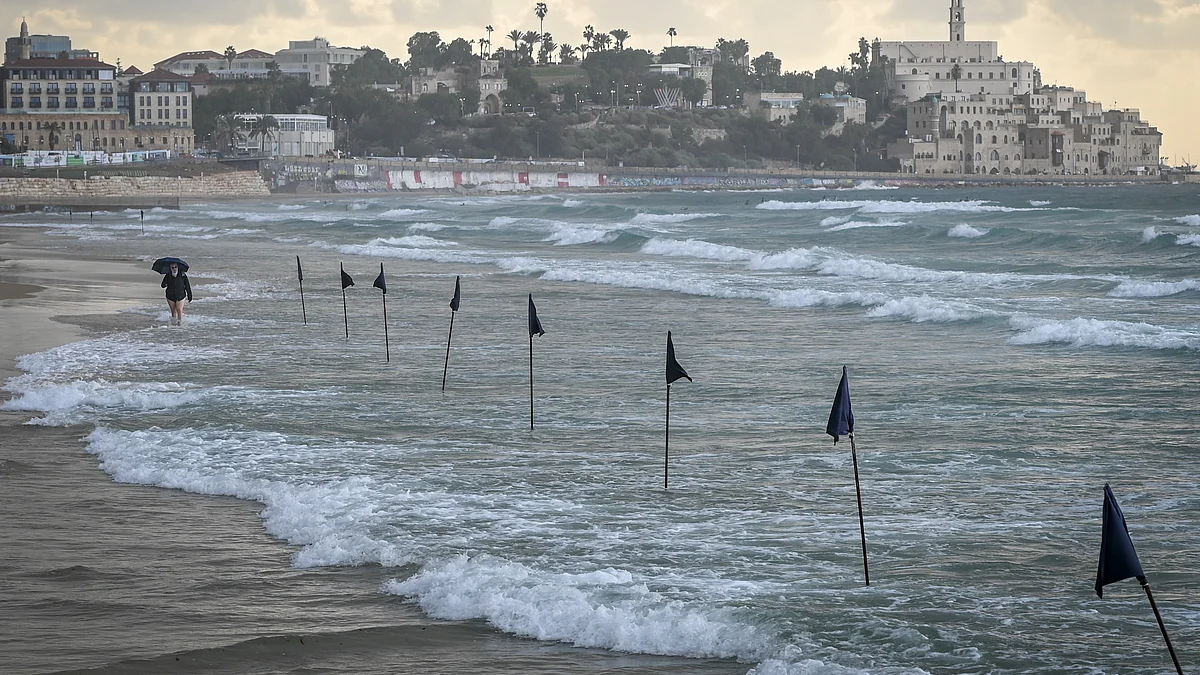


Storm Byron has struck Gaza, bringing heavy rains, strong winds, and hail that threaten to worsen the plight of hundreds of thousands of displaced Palestinians, officials and humanitarian agencies warned. Families in makeshift shelters and temporary camps have made distress calls from flooded tents, while many others are fleeing to find dry ground.
The winter storm, expected to continue until Friday, poses a significant risk in a territory already grappling with a severe humanitarian crisis following two years of conflict. Humanitarian workers have highlighted that Israeli restrictions on the entry of tents and essential repair tools have left Gaza poorly equipped to handle the emergency.
In Rafah, the Palestinian Civil Defence reported receiving multiple calls from displacement camps, with families trapped in waterlogged tents. “Despite limited resources, our teams are working tirelessly to reach those in need,” the agency said. Social media footage verified by Al Jazeera showed residents digging ditches around tents in a desperate attempt to protect them from flooding.
According to the UN Office for the Coordination of Humanitarian Affairs (OCHA), nearly 850,000 people across 761 displacement sites are at the highest risk of flooding. Previous storms have contaminated sites with sewage and debris, destroyed tents, and forced families out of makeshift shelters.
Local reports indicate that the flimsy tents, often torn and unreinforced, offer little protection from the storm, leaving families’ possessions vulnerable. Amjad Shawa, director of the Palestinian NGOs Network, said only 40,000 tents had been allowed into Gaza, far short of the 300,000 needed. Tools to repair water and sewage systems were also restricted.
“The lack of adequate shelter and repair supplies increases the risk of disease as flooding contaminates drinking water and food,” Shawa said, noting that 2.2 million people live in just 43 per cent of Gaza, with the remainder under Israeli control.
Oxfam’s humanitarian adviser Chris McIntosh described the situation as “very tragic,” emphasising that bureaucratic restrictions had left Palestinians living in “deplorable conditions,” with over half the population reliant on tents. Many are expected to seek shelter in bombed-out buildings at risk of collapse amid heavy rains.
UN officials echoed the concerns. Farhan Haq, spokesperson for UN Secretary-General Antonio Guterres, highlighted the particular vulnerability of newborns and other at-risk groups. He noted that about 200 families were relocating to a new site in eastern Khan Younis to escape flooding.
Gaza’s Government Media Office reported that roughly 288,000 families remain without adequate shelter. Director Ismail al-Thawabta called on the international community, including the United States and the UN Security Council, to pressure Israel to allow essential aid into the territory.
UN Special Rapporteur Francesca Albanese condemned global inaction, writing on X that “Palestinians in Gaza are literally left alone, freezing and starving in the winter storm,” questioning the international community’s failure to prevent further suffering.
With Storm Byron continuing to lash the enclave, humanitarian agencies warn that the combination of flooding, inadequate shelter, and limited resources could have devastating consequences for Gaza’s already vulnerable population.
With agency inputs
Join our official telegram channel (@nationalherald) and stay updated with the latest headlines