


Strait of Hormuz traffic falls by two-thirds as uncertainty grips shipping lanes
Only 12 vessels transited Strait of Hormuz on Sunday, down from 35 a day earlier, according to a maritime intelligence company
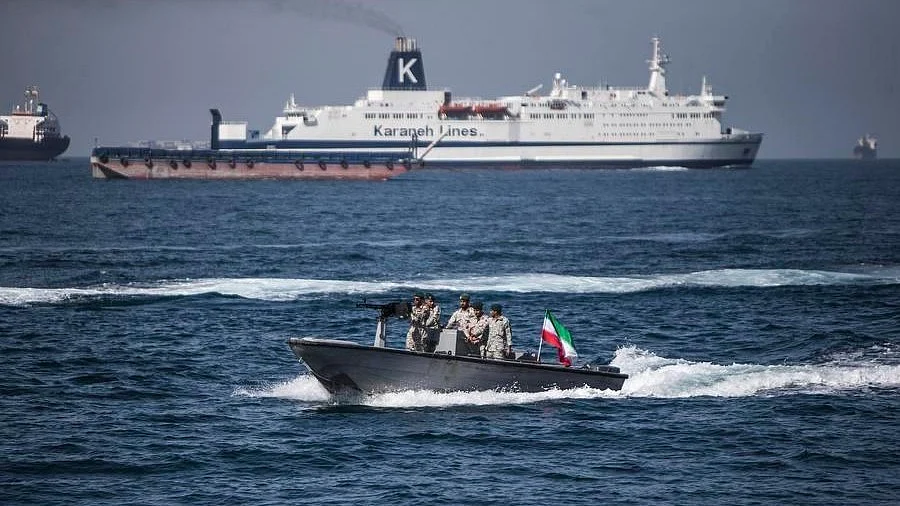


Fresh uncertainty gripped one of the world's most critical maritime chokepoints on Sunday after Iran announced the closure of the Strait of Hormuz in response to Israel's strikes on Lebanon, triggering a sharp drop in commercial shipping and reigniting concerns about global energy supplies.
Ship-tracking data showed vessel traffic through the narrow waterway fell dramatically following Tehran's declaration. According to maritime intelligence company Windward, only 12 vessels transited the strait on Sunday, compared with 35 crossings the previous day.
The slowdown was accompanied by unusual shipping activity. Five of the eight vessels entering the strait had switched off their Automatic Identification Systems (AIS), making their movements difficult to track.
"The current traffic profile: dark, sanctioned, Iranian-linked, resembling the late-blockade baseline more than a functioning open strait," Windward said in a post on X, suggesting that commercial shipping patterns were beginning to resemble those seen during previous periods of disruption.
The decline in traffic marks a dramatic reversal from the tentative recovery witnessed earlier in the week. Maritime activity had picked up after US President Donald Trump and Iranian President Masoud Pezeshkian signed a memorandum of understanding on Wednesday aimed at ending the US-Israel war against Iran and reducing regional tensions.
According to maritime intelligence provider Kpler, 25 vessels transited the strait on Thursday — the highest daily total recorded since mid-April — offering hope that normal shipping patterns were beginning to return.
Those hopes were short-lived.
Iran's Islamic Revolutionary Guard Corps announced on Saturday that the strategic waterway had been closed, citing Israeli "crimes" in Lebanon and accusing Washington of failing to uphold a ceasefire agreement. The move immediately raised fears of renewed disruption in a passage that normally handles roughly one-fifth of the world's oil and liquefied natural gas shipments.
The United States swiftly disputed Tehran's claim.
US Central Command (CENTCOM) insisted that safe navigation through the strait remained "intact" and said 55 merchant vessels had transited the waterway on Saturday, a figure sharply at odds with data from commercial ship-tracking firms.
The discrepancy has added another layer of uncertainty to an already volatile situation, with no clear explanation for the differing transit counts.
The developments unfolded as US and Iranian negotiators met in Switzerland for high-stakes talks widely viewed as crucial to determining whether the recently extended 60-day ceasefire can evolve into a lasting peace agreement.
Speaking after the negotiations, Iranian foreign ministry spokesman Esmaeil Baghaei said the issue of maritime security featured prominently in discussions.
"The sides discussed the safe passage of ships through the strait, and a mechanism was set up, which is important," Baghaei told Iranian media, hinting at efforts to prevent further disruptions to international shipping.
Yet despite the heightened tensions and signs of reduced maritime traffic, global markets reacted with surprising calm.
Oil prices edged lower in Asian trading on Monday, suggesting traders remained sceptical that a prolonged disruption was imminent. Brent crude, the international benchmark, fell about 0.9 per cent to trade just below $80 a barrel.
Asian equities also shrugged off the latest geopolitical tensions. Japan's Nikkei 225 climbed 1.8 percent, South Korea's Kospi gained 1.5 per cent and Taiwan's Taiex surged 2.6 per cent. Hong Kong's Hang Seng Index was the lone major regional outlier, slipping 0.7 per cent.
For now, the Strait of Hormuz remains caught between conflicting narratives — Iranian claims of closure, American assurances of open passage, and shipping data that suggests commercial operators are proceeding with extreme caution. As diplomats race to salvage a broader peace deal, the narrow stretch of water continues to serve as both a strategic lifeline for the global economy and a barometer of West Asia tensions.
Join our official telegram channel (@nationalherald) and stay updated with the latest headlines