


Taliban marks five years in power as UN warns of deepening rights crisis
Afghan rulers celebrated what they called the country’s liberation, while the UN highlighted systematic restrictions on women and girls
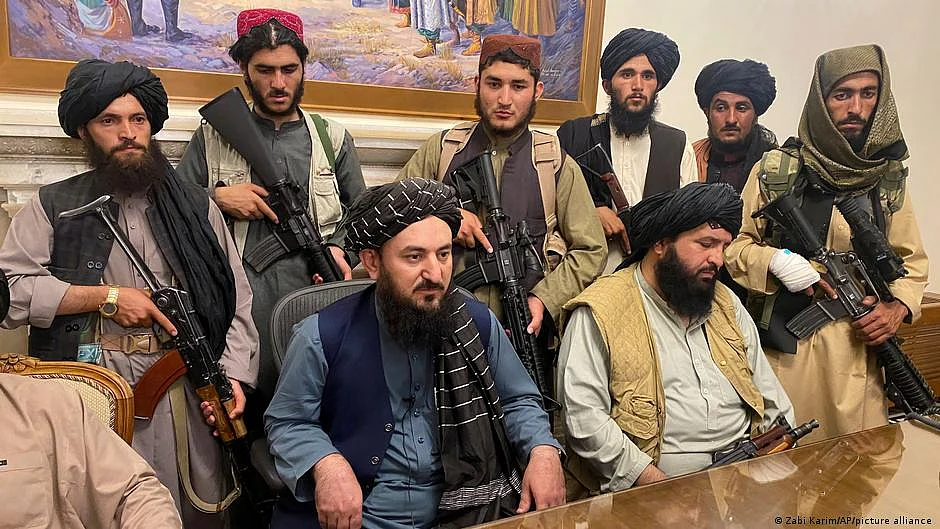


Taliban leaders and government officials gathered at Afghanistan’s Loya Jirga assembly hall on Saturday to mark five years since their return to power, claiming to have restored stability after decades of conflict.
The anniversary came amid renewed international criticism of the Taliban’s human rights record, particularly its sweeping restrictions on women and girls. A senior United Nations expert warned that Afghanistan remained in a grave rights crisis despite the end of widespread fighting.
The Taliban took control of Kabul on 15 August 2021, as United States and NATO forces completed their withdrawal following two decades of war. The departure triggered chaotic scenes at Kabul airport as thousands attempted to leave the country.
Senior Taliban officials, foreign representatives and thousands of citizens attended Saturday’s ceremony at the Loya Jirga hall. Speakers described the takeover as Afghanistan’s liberation from American occupation. No women were present at the event.
“We pray to Almighty God to forever protect our homeland from occupation, aggression, wars and insecurity, and to enable our people to enjoy peace, tranquillity and prosperity under the Sharia-based government,” Taliban deputy spokesman Hamdullah Fitrat said.
Similar events were organised across Afghanistan, with Taliban flags and posters praising the group’s return to power displayed along roads and in marketplaces.
The Taliban administration remains largely isolated internationally, with Russia the only country to have formally recognised its government.
Soon after regaining power, the Taliban prohibited girls from attending school beyond the sixth grade and subsequently barred women from universities. The measures contradicted earlier assurances that women would retain access to education, employment and public life.
Women have also been excluded from gyms, parks and sporting activities and face restrictions on travelling long distances without a male guardian.
In a video message, Richard Bennett, the UN special rapporteur on human rights in Afghanistan, questioned whether the end of war had brought genuine peace.
“While the era of war has ended, it’s questionable whether there’s real peace, and the human rights situation has steadily deteriorated, most dramatically for women and girls,” Bennett said.
He said his mandate had concluded that the Taliban’s treatment of women and girls amounted to the crime against humanity of gender persecution.
Bennett said the crisis extended beyond gender-based restrictions, citing reports of arbitrary detention, torture, extrajudicial killings, corporal punishment and enforced disappearances.
He also highlighted constraints on freedom of expression, attacks on journalists and human rights defenders, the persecution of ethnic and religious minorities, discrimination against LGBT+ people and the shrinking of civic space.
Bennett urged the international community not to “normalise” the Taliban’s policies, warning that doing so would legitimise discrimination and suggest to victims that their suffering was negotiable.
Molvi Hayatullah Mahajar Farahi, a deputy minister responsible for broadcasting in the Taliban’s Ministry of Information and Culture, defended the administration’s record in an interview with The Associated Press. He said the government had improved security, built infrastructure and created employment despite facing significant challenges.
Farahi did not directly address questions about the exclusion of girls and women from education. He instead claimed that investment in universities had reached unprecedented levels.
UNESCO estimates that approximately 2.4 million Afghan girls have been denied secondary education.
UN Women said this week that Afghan women and girls faced the most severe restrictions anywhere in the world. It warned that their exclusion from education and employment was damaging the country’s future and contributing to shortages of teachers, doctors, nurses and midwives.
Join our official telegram channel (@nationalherald) and stay updated with the latest headlines