


The Human Cost of Terrorism: Pahalgam, 9/11 attacks feature in US exhibition
Retired US Army sergeant Chris Gruman recounts Pentagon chaos—flames engulfing corridors, a woman clutching a baby, and instinct taking over


The memory begins with a sound — violent, overwhelming, unforgettable. A survivor of the September 11 attacks recalled the moment the second plane struck: “It was the loudest noise I ever felt… people were screaming… it was just a horrific, horrific hurt that I can’t get out of my brain.”
That voice, heavy with the passage of 25 years, set the tone for The Human Cost of Terrorism, an exhibition on Capitol Hill that sought to collapse distances between tragedies — from New York to Mumbai to Kashmir—into a shared space of grief, memory and resilience.
Organised with the support of the Embassy of India in Washington, D.C., the exhibition marked two solemn milestones: one year since the killing of 26 civilians in a terror attack in Kashmir, and the 25th anniversary of 9/11.
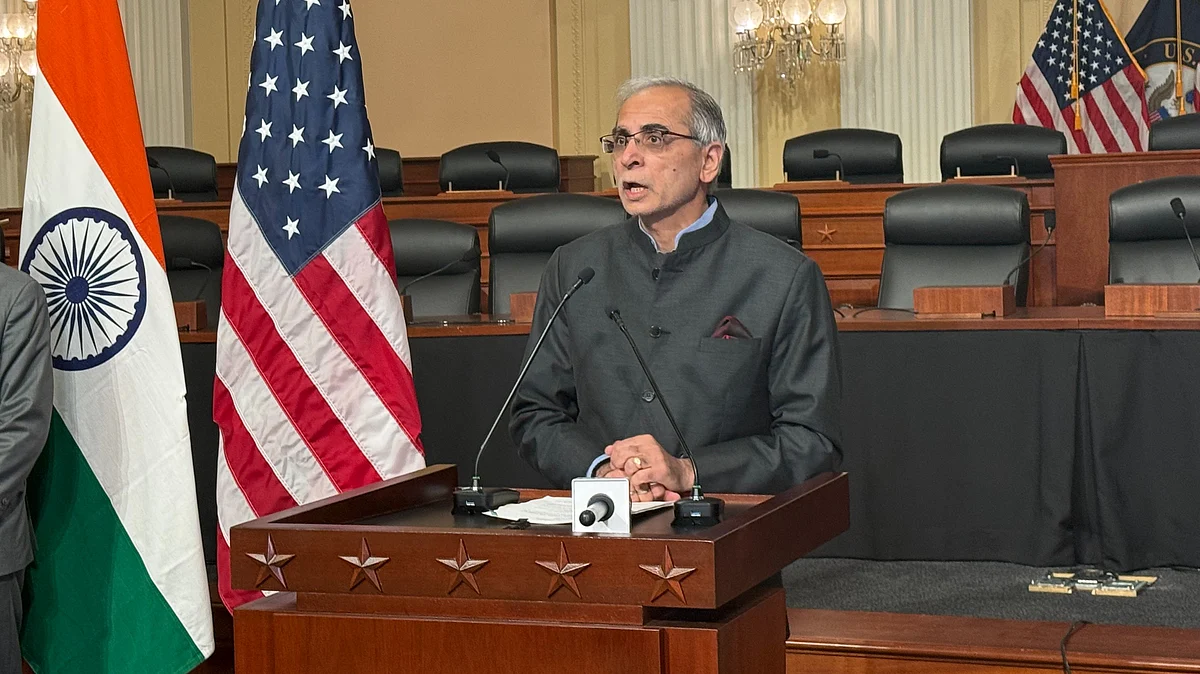
India’s ambassador to the United States, Vinay Mohan Kwatra, framed the event as both remembrance and resolve. “Today’s event is in memory of those who lost their lives,” he said, “but it’s also an expression of continuing resolve… to fight this menace.” He emphasised that terrorism does more than take lives — it attempts to “change the ways of your life,” leaving behind enduring scars.
Yet beyond the language of diplomacy, it was the deeply personal testimonies that anchored the evening.
Retired US Army sergeant Chris Gruman recounted the chaos inside the Pentagon with stark clarity: flames engulfing corridors, a woman clutching a baby, the instinct to act without hesitation. “I grabbed the baby… and together we ran for 60 yards away from the burning building,” he said.
Gruman returned repeatedly to the wreckage, helping pull out survivors and the dead. “I had the honour… with my name on 63 body bags that I pulled out,” he said. Decades later, the toll remains. “I have severe asthma… but I go around talking because it’s an honour.”
His account underscored a central theme of the exhibition: terrorism is not confined to the moment of attack — it reverberates through lives, families and generations. “What people don’t realise is the carnage that comes after,” he said. “The mental carnage, the physical carnage… the family members who lost somebody.”
Lawmakers echoed that sentiment, often stepping away from policy language to reflect on the human dimension.
Brad Schneider paused before photographs of victims. “They have their names, their hometowns, their families, and their stories,” he said, stressing that survivors and relatives are “forever scarred.”
Brad Sherman invoked the story of a young Indian Navy officer killed days after his wedding, his wife witnessing the tragedy. “Let us remember… all the victims,” he said, tying together the grief of India and the United States.
Shri Thanedar broadened the conversation, calling for the elimination of terrorism “in any form,” while also reflecting on the resilience of immigrant communities.
For April McClain Delaney, the exhibition was “about remembrance, accountability, and collective action,” while Rich McCormick pointed to the potential of US-India cooperation to counter what he described as “unique evils.”
Other lawmakers — including Jamie Raskin, Bill Huizenga and Raja Krishnamoorthi — emphasised the need for global coordination, intelligence-sharing and a firm rejection of terrorism in all forms.
Still, the exhibition resisted being reduced to strategy. It lingered instead on faces and fragments—photographs of victims from Mumbai, New York and Kashmir; names etched alongside stories abruptly cut short. Visitors moved slowly through the space, pausing in quiet reflection.
Ambassador Kwatra highlighted this universality, recalling attacks from 2008 Mumbai attacks to Pulwama attack, and beyond. “India and the US are not alone in bearing these scars,” he said.
That shared burden was echoed across the room. Lawmakers called for unity, vigilance and sustained focus, even as they acknowledged the evolving nature of threats.
But in the end, it was not policy prescriptions that lingered — it was the voice of the survivor, describing a life forever divided into “before” and “after”.
“It doesn’t leave me every day,” he said. “I wake up, and I’m grateful that I’m alive.”
In capturing stories like his, the exhibition offered no easy answers. Instead, it demanded something harder: to confront terrorism not as an abstraction, but as a human rupture — measured not in numbers, but in lives interrupted, families altered, and memories that refuse to fade.
With IANS inputs
Join our official telegram channel (@nationalherald) and stay updated with the latest headlines