


Trans-Atlantic rifts weaken NATO’s deterrence against Russia
Allies raise defence spending, but internal distrust erodes alliance credibility
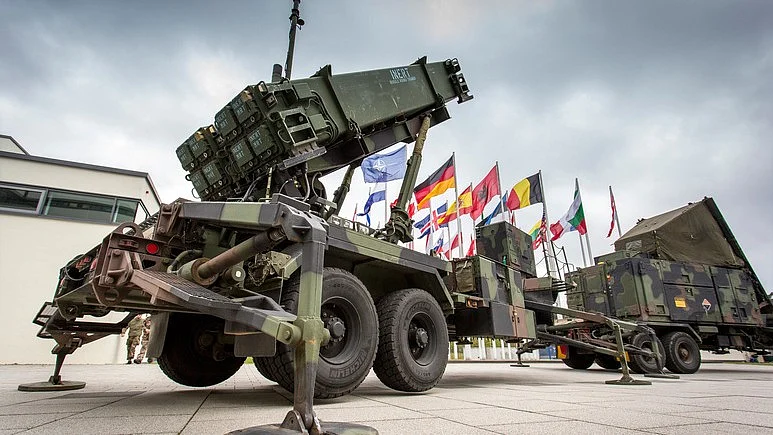


Despite European allies and Canada committing billions of dollars in military aid to Ukraine and pledging sharp increases in defence spending, NATO’s ability to deter Russia has been weakened by growing trans-Atlantic divisions and internal mistrust, analysts say.
The 32-member alliance has faced strain over the past year amid repeated remarks and actions by US President Donald Trump, which allies say have undercut NATO’s political cohesion.
The tensions have been most visible in the following areas:
Trump’s repeated threats to seize Greenland, a semi-autonomous territory of NATO member Denmark
His criticism of NATO allies’ defence contributions
His remarks questioning the role of European and Canadian troops in Afghanistan
While tensions over Greenland have eased for now, experts say the episode caused lasting damage. Sophia Besch of Carnegie Europe said the dispute “crossed a line that cannot be uncrossed”, weakening the alliance even without the use of force.
The discord has not gone unnoticed in Moscow. Russia remains NATO’s principal security threat, and deterrence depends on convincing President Vladimir Putin that the alliance would respond collectively if the war expands beyond Ukraine.
“It's a major upheaval for Europe, and we are watching it,” Russian Foreign Minister Sergey Lavrov said last week.
Under pressure from Washington, NATO allies agreed in July to significantly raise defence expenditure, committing to:
Spending 3.5 per cent of GDP on core military defence by 2035
Allocating an additional 1.5 per cent to security-related infrastructure
Matching overall US defence spending levels over the next decade
NATO Secretary-General Mark Rutte has hailed the pledges as proof of NATO’s strength, crediting Trump for pushing allies to act. However, he has avoided commenting on the Greenland dispute, raising concern among some members.
Founded in 1949, NATO’s deterrence rests on Article 5, which commits all allies to respond to an attack on any one of them. Analysts argue that Trump’s remarks challenge the assumption that all allied territories are inviolable.
US Senators Jeanne Shaheen and Lisa Murkowski warned in an opinion article that threats against allies weaken American interests and signal unpredictability, thereby undermining deterrence.
Trump has repeatedly questioned whether the US should defend allies that, in his view, fail to contribute adequately, though his administration insists Washington remains committed to NATO.
US Secretary of State Marco Rubio told the Senate Foreign Relations Committee that stronger European partners would give the US greater strategic flexibility rather than represent an abandonment of the alliance.
Despite higher spending pledges, European officials say Russia appears undeterred. EU foreign policy chief Kaja Kallas warned this week that Moscow would remain a long-term security threat, citing:
Cyberattacks and sabotage of critical infrastructure
Political interference and information manipulation
Military intimidation and territorial threats
NATO officials across Europe have reported acts of sabotage and unexplained drone activity near airports and military facilities, though Russia denies involvement.
In a recent address, Rutte warned that Europe must prepare for the possibility of large-scale conflict, saying Russia had “brought war back to Europe”.
Russian officials, meanwhile, have openly mocked NATO’s divisions. Lavrov described the Greenland dispute as evidence of a “deep crisis” within the alliance, while Russian state media claimed trans-Atlantic unity had ended.
US Defence Secretary Pete Hegseth is due to meet NATO counterparts on 12 February, with Arctic security and US troop deployments in Europe expected to be key agenda items.
A recent report by the European Union Institute for Security Studies warned that while a sudden US troop withdrawal from Europe is unlikely, growing uncertainty about Washington’s commitment risks weakening NATO’s deterrence posture.
Join our official telegram channel (@nationalherald) and stay updated with the latest headlines