


Trump ratings stagnate amid deportation backlash, Reuters poll flags risks for Republicans
Concerns over temperament, Iran war and hardline immigration converge ahead of midterms
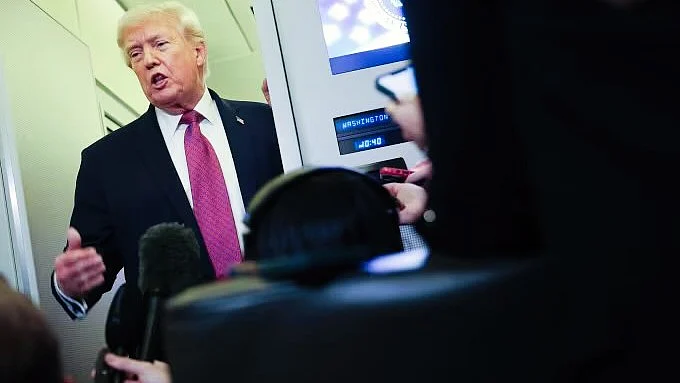


US President Donald Trump is facing a convergence of political pressures — from a controversial deportation drive to the fallout of the Iran war — with new Reuters/Ipsos surveys pointing to stagnant approval ratings and potential electoral risks for his Republican Party.
A six-day Reuters/Ipsos poll of 4,557 adults concluded on Monday, 20 April, found Trump’s overall approval rating stuck at 36 per cent, the lowest of his current term and unchanged from a month earlier. The figure marks a sharp drop from the 47 per cent he recorded shortly after taking office on 20 January 2025.
At the same time, a separate Reuters/Ipsos poll suggests Trump’s aggressive immigration crackdown could carry political costs. Some 52 per cent of Americans said they are less likely to support candidates who back his deportation policies, compared with 42 per cent who said they would be more likely to do so.
The warning signs are particularly pronounced among independents, with 57 per cent preferring candidates who oppose Trump’s deportation approach and just 32 per cent favouring those who support it — a potentially decisive shift ahead of November’s midterm elections.
The erosion in support comes despite immigration initially being one of Trump’s stronger issues. Approval of his handling of immigration stood at around 50 per cent shortly after his inauguration, but has since dropped to 40 per cent following more than a year of aggressive enforcement measures.
Also Read: Electoral storm gathering over Trump
Those measures — including the deployment of masked federal agents across US cities and controversial enforcement actions that reportedly led to the deaths of two US citizens — appear to have left a lasting public impression. “I don’t think those images are going to go away anytime soon,” said Sarah Pierce of Third Way, citing incidents in Los Angeles, Chicago and Minneapolis.
Even as the administration appears to have slightly scaled back arrests — with Immigration and Customs Enforcement detentions falling from nearly 1,300 a day in December to just over 1,000 in early March, according to data analysed by Reuters — public sentiment remains wary. While only one in four respondents said enforcement has become less aggressive, 70 per cent said a softer approach would be a positive change.
At the same time, the broader political context has further complicated Trump’s standing. The US-Israel military campaign against Iran, launched in February, has pushed up gasoline prices and added to economic anxieties. Only 36 per cent of Americans approve of US strikes on Iran, Reuters reported, while just 26 per cent believe the military action has been worth its cost.
Economic concerns are feeding directly into perceptions of Trump’s leadership. His approval rating on handling the cost of living stands at just 26 per cent, tying the lowest level recorded for him on the issue.
Also Read: Why Trump’s America is a lonely superpower
The polls also reveal deeper concerns about the president himself. Only 26 per cent of Americans describe Trump as “even-tempered”, with opinion sharply divided along party lines — 53 per cent of Republicans agreeing, but just 7 per cent of Democrats. A majority of respondents, 51 per cent, said his mental sharpness has worsened over the past year.
Trump’s recent public conduct has drawn scrutiny. He has issued combative social media threats against Iran, including warnings of widespread destruction, and attacked Pope Leo after the pontiff criticised the war. He has also unsettled allies by suggesting military action against NATO member Denmark over his push to annex Greenland.
Americans, however, view the pope far more favourably than the president. Around 60 per cent expressed a positive opinion of Pope Leo, compared with 36 per cent for Trump, according to Reuters/Ipsos data.
Despite backing strong border enforcement — with 84 per cent of respondents saying secure borders are important and 87 per cent supporting enforcement of immigration laws — Americans also favour a more balanced approach. Some 76 per cent support allowing undocumented migrants with jobs and no criminal record to gain legal status.
This tension is now surfacing within the Republican Party itself. Representative Maria Elvira Salazar has pushed legislation offering legal status to certain migrants, arguing it aligns with border security goals, though the proposal has faced resistance from party hardliners.
“I’m very concerned about what’s happening within the party with immigration,” Salazar said in remarks reported earlier this month.
With Republicans seeking to defend their congressional majorities, the combined weight of economic strain, foreign policy fallout and a polarising immigration agenda is emerging as a potential vulnerability — one that could shape the contours of the midterm elections.
Join our official telegram channel (@nationalherald) and stay updated with the latest headlines