


Ukraine can hold elections within months if security is ensured: Zelenskyy
Ukrainian leader signals flexibility under US pressure, even as aid falls and Moscow hardens demands
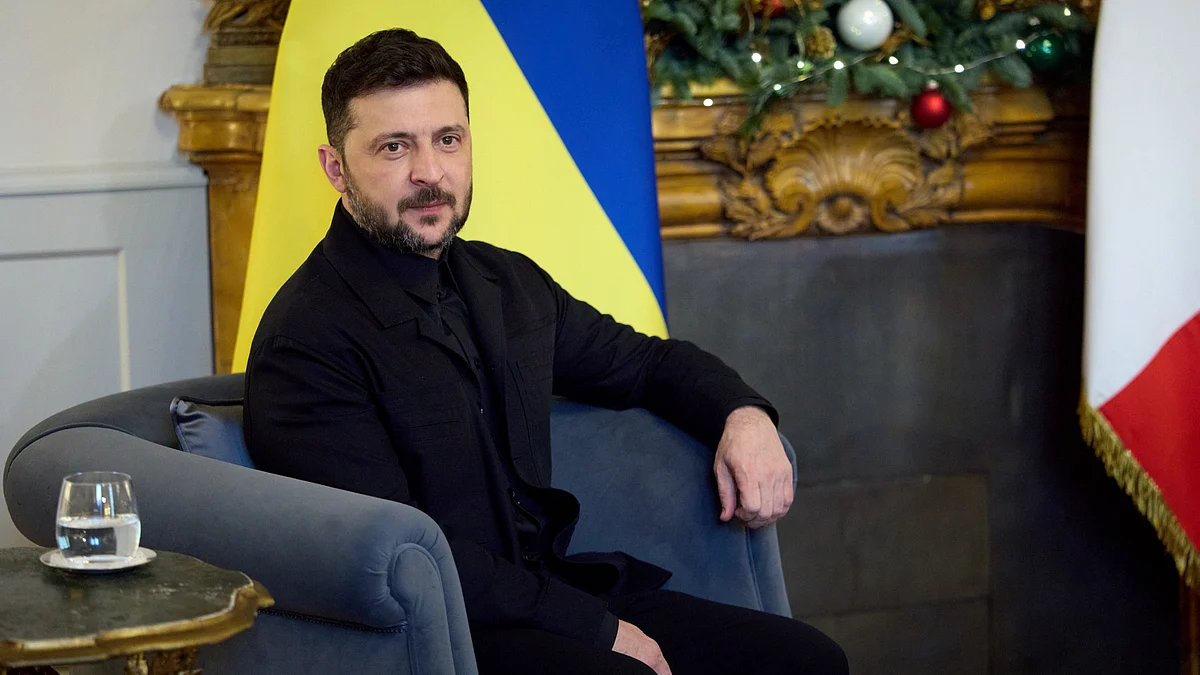


Ukrainian officials are expected to present their latest peace proposals to United States negotiators on Wednesday, President Volodymyr Zelenskyy confirmed, as he attempted to rebut criticism from US President Donald Trump over Ukraine’s democratic credentials and its decision not to hold wartime elections.
Speaking to journalists late on Tuesday, Zelenskyy insisted he is “ready” to go to the polls and argued that Ukraine could organise a nationwide vote within as little as 60 to 90 days — but only if international partners can guarantee the security of voters amid continuing missile strikes and front-line fighting. He stressed that any election would require assistance from the US and likely European governments to ensure that polling stations could operate safely and that serving troops could cast ballots.
“To hold elections, two issues must be addressed: primarily, security — how to conduct them, how to do it under strikes, under missile attacks; and a question regarding our military — how they would vote,” he said. “And the second issue is the legislative framework required to ensure the legitimacy of elections.”
Under existing Ukrainian law, national elections cannot take place while martial law remains in force. Zelenskyy has repeatedly noted that almost 20 per cent of the country is still occupied by Russia and that civilian areas face regular bombardment, conditions that would complicate any attempt to run a credible ballot. He has nevertheless instructed MPs from his party to draft proposals enabling wartime voting without undermining the integrity of the process.
While there is little public pressure inside Ukraine for an election, Trump has claimed that Kyiv is “using war not to hold an election”, echoing the Kremlin’s argument that Zelenskyy’s mandate has lapsed since his initial five-year term expired. Putin has used this line to delegitimise negotiations, insisting Zelenskyy lacks authority to sign any settlement.
US–Russia dynamics reshape the peace push
The debate over Ukrainian democracy comes as the Trump administration outlines its new national security doctrine, published last Friday, which calls for repairing relations with Moscow and aims to “reestablish strategic stability with Russia”, while casting European allies as underpowered and divided.
Russia appeared to welcome the shift: foreign minister Sergey Lavrov on Wednesday lauded Trump’s approach, praising his “commitment to dialogue” and calling him “the only Western leader” who understands what Moscow claims were the inevitabilities leading to war.
But Washington’s peace push has stalled amid incompatible demands from Kyiv and Moscow. Trump’s opening proposal reportedly leaned heavily towards Russia’s terms, prompting Zelenskyy to shore up European backing.
Over recent days, he has held talks with the leaders of Britain, Germany, France and Italy, as well as NATO and EU chiefs, discussing three key documents: a 20-point and still-evolving framework for peace, a separate text on security guarantees, and a plan for Ukraine’s reconstruction.
Military aid falters as Europe’s support splinters
The diplomatic manoeuvring comes at a moment of shrinking military assistance. After Trump halted US supplies unless the costs were shouldered by other NATO members, European commitments have grown patchy. According to new data published Wednesday by the Kiel Institute, foreign military support dropped sharply over the summer and remained depressed in September and October.
Where Ukraine received an annual average of €41.6 billion ($40 bn approx.) between 2022 and 2024, it has secured only €32.5 billion ($38 bn) so far this year. “If this slower pace continues in the remaining months, 2025 will become the year with the lowest level of new aid allocations since the war began,” the institute warned.
Several northern European states — Denmark, Finland, Norway and Sweden — have substantially increased their contributions, while Germany has nearly tripled its average monthly aid and France and the UK have more than doubled theirs. But others have fallen away: Spain has offered no new military support in 2025, and Italy has cut its modest commitments by a further 15 per cent.
Against this backdrop, Zelenskyy is attempting a delicate balancing act — signalling democratic openness to placate Washington while resisting pressure to accept a peace deal that critics say would reward Russian aggression.
With AP/PTI inputs
Join our official telegram channel (@nationalherald) and stay updated with the latest headlines