


UN chief welcomes Myanmar shifting Aung San Suu Kyi to home detention
Antonio Guterres calls Suu Kyi’s shift to house arrest a positive step, but says more action is needed
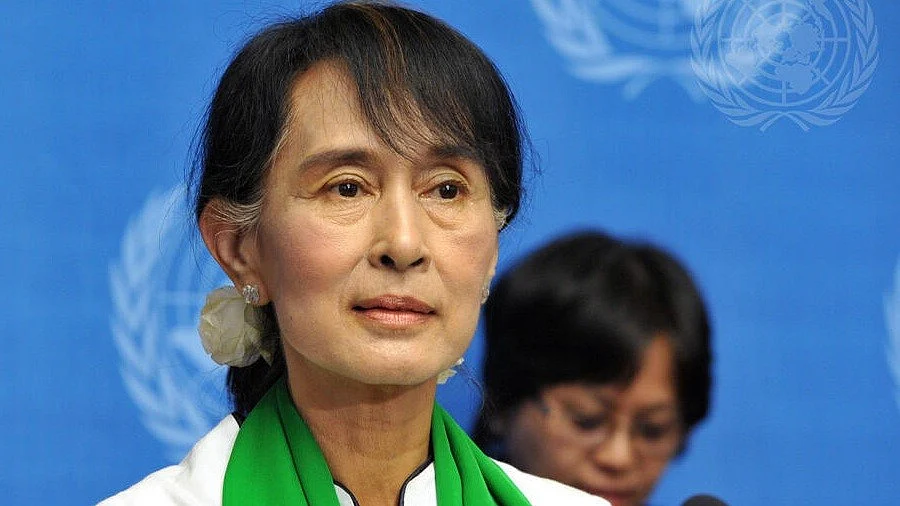


The United Nations has cautiously welcomed Myanmar’s decision to move Aung San Suu Kyi from prison to house arrest, describing it as a “meaningful step” toward creating conditions for a credible political process in the conflict-hit nation.
UN secretary-general Antonio Guterres, through his spokesperson Stephane Dujarric, said the commutation to a “so-called house arrest and a designated residence” was a positive development, though he stressed that much more needs to be done. “It is a meaningful step towards conditions conducive to a credible political process,” Dujarric said.
Suu Kyi, the former state counsellor and de facto leader of Myanmar’s democratically elected government, has been in detention since the military coup in 2021 that abruptly ended civilian rule. The military-controlled government announced that her remaining prison sentence will now be served under house arrest after a series of sentence reductions.
Originally sentenced to 33 years by the junta, her term was reduced to 22 years and six months through successive commutations, with an additional one-sixth cut granted last month. She had been held at Nay Pyi Taw Prison prior to the latest move.
The UN reiterated its longstanding demand for the release of all political detainees. Guterres and his Special Envoy for Myanmar, Julie Bishop, have been calling for months for the unconditional release of political prisoners as a key step toward restoring democratic governance. “The only viable political solution must be based on immediate cessation of violence and a genuine commitment to inclusive dialogue,” Dujarric added.
The development comes amid subtle shifts within Myanmar’s military leadership. Senior general Aung Hlaing, who led the 2021 coup, was recently elevated to the presidency — an outcome viewed with scepticism as the elections that facilitated the transition excluded Suu Kyi’s National League for Democracy.
In a parallel move, former president Win Myint — also ousted in the coup — was released on April 17 along with around 4,300 political prisoners to mark Myanmar’s New Year. Authorities said it was Win Myint who formally commuted Suu Kyi’s remaining sentence to house arrest.
Despite these developments, the military regime continues to face questions over legitimacy. It is not recognised by the United Nations, which still considers Kyaw Moe Tun — a representative of the ousted civilian government — as Myanmar’s official envoy to the global body.
Efforts to resolve the crisis remain ongoing. Bishop, a former Australian foreign minister, has been engaging with regional stakeholders and international actors to chart a path back to democracy. As part of these diplomatic efforts, she visited India last year and held discussions with external affairs minister S. Jaishankar on the evolving situation in Myanmar.
While the shift to house arrest for Suu Kyi signals a potential easing of the junta’s grip, observers caution that without broader reforms, an end to violence, and genuine political dialogue, Myanmar’s path to stability remains uncertain.
With IANS inputs
Join our official telegram channel (@nationalherald) and stay updated with the latest headlines