


US completes withdrawal from WHO but ties remain unresolved
Exit leaves unpaid dues, data-sharing gaps and warnings from health experts about global and domestic risks
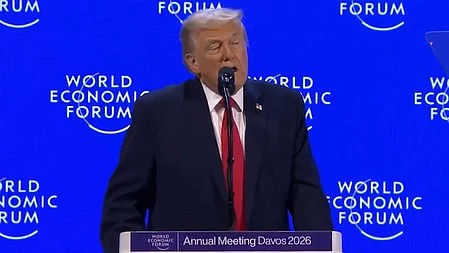


The United States has formally completed its withdrawal from the World Health Organisation (WHO), one year after President Donald Trump announced an end to the country’s 78-year membership, US federal officials have confirmed.
Despite the legal completion of the exit, the break is far from clean. The US still owes more than $130m to the global health body, according to the WHO, and senior officials acknowledge that key practical issues, including access to international disease surveillance data, remain unresolved.
Public health experts have warned that the decision will weaken both the global response to emerging health threats and America’s own ability to detect and counter future pandemics.
Lawrence Gostin, a professor of global health law at Georgetown University, said the move would have long-lasting consequences for outbreak preparedness and biomedical research.
“In my opinion, it’s the most ruinous presidential decision in my lifetime,” he said.
The WHO is the United Nations’ specialised health agency, tasked with coordinating international responses to outbreaks such as mpox, Ebola and polio. It also supports vaccination campaigns, provides technical assistance to lower-income countries and sets global health guidelines covering everything from mental health to cancer care. Nearly every country in the world is a member.
The US played a central role in the organisation’s creation in 1948 and has historically been one of its largest contributors, both financially and in terms of expertise. On average, Washington paid around $111m a year in mandatory membership fees and a further $570m annually in voluntary contributions, according to the US Department of Health and Human Services.
Trump ordered the withdrawal through an executive action shortly after returning to office, citing the WHO’s handling of the Covid-19 pandemic, its failure to enact reforms and what he described as undue political influence from member states.
The administration has also criticised the organisation’s leadership structure, noting that none of its nine directors-general have been American, despite the scale of US funding and the involvement of personnel from the US Centers for Disease Control and Prevention.
The WHO has acknowledged serious missteps during the pandemic, including early advice against public mask use and its delayed recognition of Covid-19 as an airborne virus, a position it did not formally revise until 2024.
Health experts, however, say withdrawing entirely risks far greater harm. Dr Ronald Nahass, president of the Infectious Diseases Society of America, described the decision as “shortsighted, misguided and scientifically reckless”.
The US has already ended its participation in WHO committees, technical working groups and governance bodies. This includes groups that monitor circulating influenza strains and make recommendations on updating seasonal flu vaccines.
As a result, the US is no longer part of the global flu data-sharing system that helps countries rapidly adjust vaccines and treatments when new variants emerge. Such intelligence has historically given the US early access to lifesaving countermeasures, experts say.
Administration officials argue that the US can rely on direct bilateral relationships with other countries to exchange health data, rather than using the WHO as an intermediary. However, they have provided few details on how many such agreements exist or how comprehensive they are.
Mr Gostin said it was unrealistic to believe the US could replicate the WHO’s global surveillance network through bilateral deals, particularly with countries such as China or nations affected by US trade tariffs.
“Is China going to sign a contract with the United States? Are countries in Africa going to do it?” he asked. “The claim is almost laughable.”
The withdrawal has also raised legal questions. Gostin and other experts argue that because the US joined the WHO through an act of Congress, leaving should also require congressional approval, a step that has not taken place.
Under the terms of membership, the US was required to give one year’s notice of withdrawal, which it did, and to settle outstanding financial obligations. The WHO says Washington has not paid dues for 2024 or 2025, leaving arrears of more than $133m.
An administration official disputed that interpretation on Thursday, insisting the US has no obligation to clear the balance now that it has formally exited the organisation.
Join our official telegram channel (@nationalherald) and stay updated with the latest headlines