


US preparing another aircraft carrier for Middle East deployment: Trump
The move comes hours after Trump hosted Israeli PM Benjamin Netanyahu at the White House amid tensions over Iran
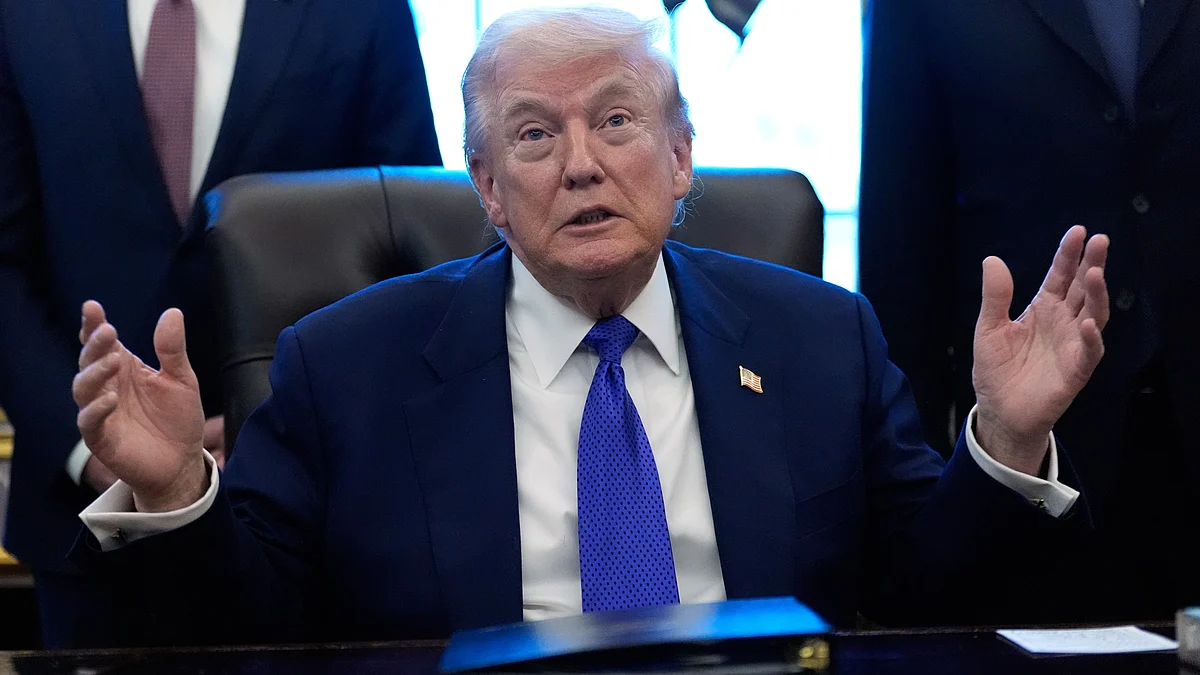


US President Donald Trump has signalled that Washington may further reinforce its military footprint in the Middle East, even as diplomatic channels with Tehran remain open, the Al Jazeera reported.
On Thursday, Trump shared — without additional comment — a report by The Wall Street Journal on his Truth Social platform under the headline, “Pentagon Prepares Second Aircraft Carrier to Deploy to the Middle East.” The article, citing US officials, said the Pentagon has ordered preparations for an additional aircraft carrier strike group to join the USS Abraham Lincoln, which is already stationed in the region.
The development came just hours after Trump hosted Israeli Prime Minister Benjamin Netanyahu at the White House — a meeting closely watched amid Israel’s assertive posture towards Iran. Despite the show of military readiness, Trump reiterated his preference for diplomacy.
“There was nothing definitive reached other than I insisted that negotiations with Iran continue to see whether or not a Deal can be consummated,” Trump wrote following the talks. “If it can, I let the prime minister know that will be a preference. If it cannot, we will just have to see what the outcome will be.”
Last week, Washington and Tehran held their first round of indirect talks since last year in Oman, a tentative step towards easing tensions that have simmered for months. Both sides described the discussions as constructive and signalled willingness to continue, though no fresh round has yet been publicly scheduled.
Tehran, meanwhile, has accused Israel of attempting to derail the diplomatic effort. Iran’s senior security official Ali Larijani told Al Jazeera that negotiations are “exclusively with the United States” and alleged that Israel has sought to “undermine and sabotage” the process.
Trump later dismissed suggestions that Netanyahu was lobbying him to abandon talks. “I’ll talk to them as long as I like, and we’ll see if we can get a deal with them,” he told reporters, adding that an agreement could be reached as early as next month — provided Tehran moves swiftly.
The US president has repeatedly stated that any deal must guarantee Iran has “no nuclear weapons” and “no missiles”. Iran, which denies seeking nuclear arms, has firmly ruled out negotiating over its missile programme. foreign minister Abbas Araghchi described the missile arsenal as a non-negotiable matter of national defence.
The shadow of last year’s hostilities continues to loom large. In June, Israel launched a sweeping offensive against Iran, targeting senior military officials and nuclear scientists. Tehran retaliated with barrages of missiles, some of which pierced Israeli air defences. The United States later joined the campaign, striking three Iranian nuclear facilities before a ceasefire brought the confrontation to a halt.
Trump has since claimed the US strikes “obliterated” Iran’s nuclear programme, though questions linger over the fate of Tehran’s stockpile of highly enriched uranium. Iranian officials have remained guarded about the full extent of the damage while reiterating their right to enrich uranium under the Treaty on the Non-Proliferation of Nuclear Weapons (NPT).
Tensions further flared during Netanyahu’s December visit to Washington, when Trump warned that any Iranian attempt to rebuild its nuclear or missile capabilities would invite forceful retaliation. “We’ll knock them down. We’ll knock the hell out of them,” he said at the time, though he expressed hope such action would not be necessary.
Days later, antigovernment protests erupted across Iran. Trump voiced support for demonstrators, urging them to seize control of government institutions and assuring them that “help is on the way.” Iranian authorities, however, swiftly quelled the unrest, alleging foreign interference and imposing a sweeping security crackdown.
In a further twist, the Journal reported that approximately 6,000 Starlink satellite internet kits were smuggled into Iran after authorities cut internet access during the protests — a move widely seen as an effort to maintain connectivity amid state-imposed blackouts.
As Washington balances warships with words and diplomacy with deterrence, the region once again finds itself poised between negotiation and confrontation — a familiar but fraught crossroads in US-Iran relations.
Join our official telegram channel (@nationalherald) and stay updated with the latest headlines