


United States to finish Iran operation in weeks: Marco Rubio
US stance remains unchanged: Iran must not get nuclear weapons, back militancy, or develop threatening weapons, says secretary of state
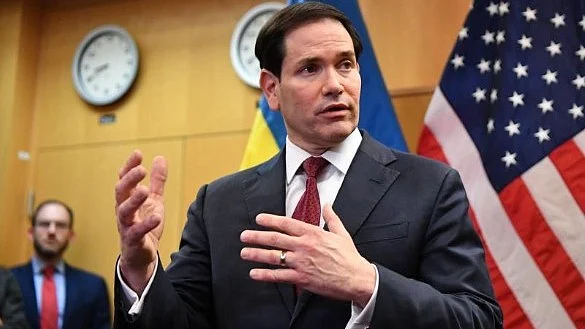


Secretary of state Marco Rubio has said the United States expects to achieve its military objectives against Iran “in weeks, not months”, outlining Washington’s conditions for ending the conflict while warning Tehran against attempts to control critical global waterways.
Speaking in an interview with the Al Jazeera on Monday, Rubio revealed that backchannel communication remains active despite ongoing hostilities. He noted that “messages and some direct talks” have taken place between the two sides, largely facilitated through intermediaries.
Reiterating Washington’s red lines, Rubio said the US position remains unchanged: Iran must never acquire nuclear weapons, halt its support for militant groups, and stop developing weapons systems that threaten regional stability. “The Iranian regime can never have nuclear weapons… and they need to stop sponsoring terrorism,” he said.
According to Rubio, US forces are “ahead of schedule” in degrading Iran’s military capabilities, claiming significant damage to the country’s air force and navy, along with a sharp reduction in its missile-launching capacity. “We will achieve those objectives… in weeks, not months,” he asserted, signalling confidence in the pace of the campaign.
A major point of concern, Rubio stressed, is the security of the Strait of Hormuz — a vital artery for global oil shipments. He warned that any Iranian attempt to control or restrict access to the strait would be unacceptable to the international community. “No one in the world can accept it,” he said, calling such a move illegal and dangerous.
“The United States will not accept that condition… the strait will be open one way or another,” Rubio added, suggesting that a multinational response could be mobilised if necessary.
The US secretary of state also accused Iran of targeting civilian and economic infrastructure across the region, including diplomatic missions, airports and energy facilities — actions he described as “unheard of”.
Portraying Iran as “weaker than it’s been in 10 years”, Rubio argued that the current military pressure is aimed at preventing future threats by dismantling key capabilities now.
On the diplomatic front, Rubio indicated that any pathway to de-escalation would require verifiable steps by Tehran to abandon its nuclear ambitions, as well as its missile and drone programmes. “If they do that, then Iran’s future can be bright,” he said, while noting that such opportunities had been repeatedly rejected in the past.
Rubio also voiced frustration with some allies within NATO, criticising restrictions on airspace access and basing rights during the operation. He suggested that such constraints could prompt a reassessment of alliance dynamics. “That’s not a very good arrangement,” he remarked.
While clarifying that regime change is not an official US objective, Rubio acknowledged that Washington would not oppose leadership change in Iran if it were to occur. “That was not the objective of this operation,” he said, underscoring that the focus remains on military and strategic goals rather than political transformation.
With IANS inputs
Join our official telegram channel (@nationalherald) and stay updated with the latest headlines