


US calls Pakistan an important partner amid push on minerals and security ties
Washington signals deeper economic and counterterrorism cooperation as lawmakers warn of rising regional tensions in South Asia
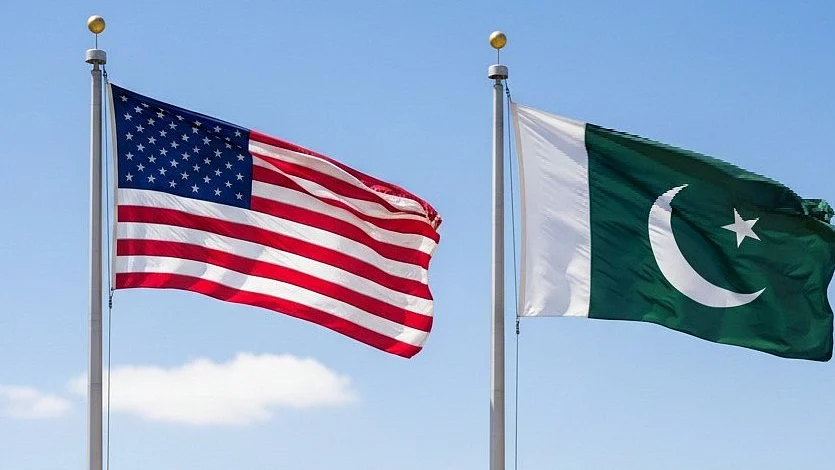


The United States has described Pakistan as an “important partner” in South Asia, signalling plans to deepen cooperation on critical minerals, trade and counterterrorism, even as American lawmakers voiced concern over regional instability.
Speaking before a House subcommittee hearing on US policy in South and Central Asia on Wednesday, Assistant Secretary of State for South and Central Asian Affairs Paul Kapur outlined Washington’s efforts to strengthen both economic and security engagement with Islamabad.
“Pakistan is another important partner in the region,” Kapur told legislators, pointing to joint initiatives aimed at developing Pakistan’s mineral resources. He said the US is combining government-backed seed funding with private sector expertise to unlock the country’s critical mineral potential, in a move intended to benefit both economies.
Kapur noted that commercial links are also broadening. Trade, energy and agricultural cooperation between the two countries are growing, he said, framing the relationship as part of a wider US strategy to bolster regional resilience.
“This will require us to help our partners build strategic capacity, enabling them to integrate into the world economy, preserve their autonomy, and contribute to a free and open region,” he told the hearing.
Security collaboration remains a core pillar of the relationship. Kapur said ongoing counterterrorism coordination supports Pakistan’s efforts to tackle internal militant threats while addressing transnational risks.
Reflecting on Pakistan’s complex history with armed groups, Kapur referred to his previous academic research examining Islamabad’s past interactions with militant organisations. He acknowledged the inherent difficulties in combating extremist networks, noting that small cells often blend into civilian populations, making detection and prevention challenging.
Lawmakers used the session to underline the fragile security environment in South Asia. Democratic Representative Sydney Kamlager-Dove highlighted the recent escalation between India and Pakistan, describing it as the most serious military confrontation between the two nuclear-armed neighbours in decades.
She warned that the episode underscored the continuing importance of US diplomacy in a region home to around two billion people.
While Kapur did not provide detail on the current state of India–Pakistan relations, he stressed that US engagement across South Asia is intended to prevent any single power from dominating the region.
Earlier in the hearing, he cautioned that control of South Asia by a hostile actor could translate into coercive influence over the global economy.
The renewed emphasis on Pakistan’s mineral wealth comes as Washington seeks to diversify supply chains and reduce reliance on China in strategically sensitive sectors.
The testimony suggests that Pakistan continues to hold strategic relevance for the United States — as a security partner, a prospective source of critical minerals and a pivotal player in a region where instability can have far-reaching global consequences.
Relations between Washington and Islamabad have shifted repeatedly over the past two decades, shaped by counterterrorism cooperation, friction over Afghanistan and concerns surrounding extremist groups.
With IANS inputs
Join our official telegram channel (@nationalherald) and stay updated with the latest headlines