


US proposes ending 60-day grace period for H-1B workers after job loss
Proposed rule will require affected foreign workers to leave the country immediately unless they have separate authorisation to remain
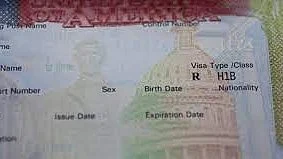


The United States has proposed abolishing the discretionary 60-day period that allows H-1B visa holders and certain other foreign workers to remain in the country after their employment ends, a move likely to have a significant impact on Indian technology professionals.
The proposed regulation, titled “Eliminating the Discretionary 60-day Grace Period”, is scheduled to be published in the Federal Register on Friday. The Department of Homeland Security (DHS) has opened a 60-day period for public comments.
If finalised, the measure would require affected foreign nationals to leave the US immediately after losing or leaving their jobs unless they have another valid authorisation to remain in the country.
“This proposal restores a direct relationship between an alien’s nonimmigrant status and the specific employment or activity that formed the basis of his or her admission or grant of status in the United States and reduces administrative burden,” the DHS said.
The change would cover workers in the E-1, E-2, E-3, H-1B, H-1B1, L-1, O-1 and TN non-immigrant categories, as well as their dependants.
The H-1B programme permits US companies to employ foreign professionals in specialised roles requiring theoretical or technical expertise. Technology companies use the programme extensively to recruit skilled employees from countries including India and China.
The grace period was introduced through regulations issued in 2016 during the Obama administration. It sought to improve job mobility and provide greater stability and flexibility to highly skilled foreign workers.
Under the existing arrangement, eligible workers whose employment ends voluntarily or involuntarily may remain in the US for up to 60 days. During that period, they can seek another employer, apply to change their immigration status or prepare to leave the country.
Removing the provision would leave displaced workers with considerably less time to make alternative arrangements. Those who receive a new employment offer may have to leave the US and submit a fresh application through an American embassy or consulate before returning.
Immigration law firm Fragomen said the DHS had acknowledged that eliminating the grace period could result in some affected foreign nationals receiving Notices to Appear, the first formal step in initiating deportation proceedings.
The possibility could be greater for visa categories in which employers are required to notify the government immediately when a foreign employee’s service ends. These include the H-1B, O-1 and P classifications.
According to DHS estimates, 65,752 principal beneficiaries either stopped working or voluntarily changed employers in 2025. The number reached a five-year high of 80,034 in the 2023 financial year and a low of 40,959 in 2021.
Between the 2021 and 2025 financial years, only 5.77 per cent of the 328,758 principal beneficiaries who lost their jobs or changed employers had a new non-immigrant worker petition submitted by another employer, according to the department.
The proposed change could create particular uncertainty for Indian technology workers, many of whom depend on employer sponsorship to maintain their legal status in the US.
Federal law currently allows the issuance of 65,000 H-1B visas annually, with another 20,000 places reserved for applicants holding advanced degrees from US higher education institutions.
The proposal is the latest move by President Donald Trump’s administration to tighten legal immigration rules since he returned to office in January 2025.
With PTI inputs
Join our official telegram channel (@nationalherald) and stay updated with the latest headlines