


US ship carrying LPG reaches India amid West Asia crisis
A Russian crude tanker also reached Mangalore, highlighting India’s diversified sourcing strategy
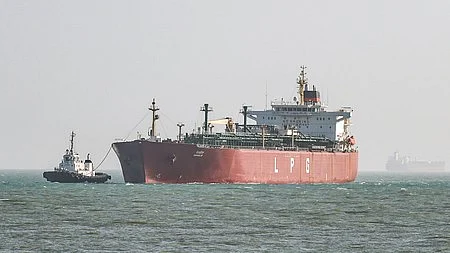


Amid a deepening global supply chain strain and mounting turbulence in energy markets, India received a crucial boost to its fuel supplies as a large cargo vessel carrying liquefied petroleum gas (LPG) from the United States docked at Mangalore Port.
The vessel, Pyxis Pioneer, sailing from the US state of Texas, berthed successfully at the port, marking a significant addition to India’s energy inflows at a time of heightened uncertainty. Its arrival follows closely on the heels of another ship, Aqua Titan, underscoring a steady stream of transcontinental shipments aimed at cushioning supply disruptions.
In parallel, a tanker laden with Russian crude oil also reached Mangalore, highlighting India’s diversified sourcing strategy in a volatile geopolitical climate. The vessel remained stationed nearly 18 nautical miles offshore, where a single-point mooring system is being deployed to transfer the crude into pipelines feeding the Mangalore Refinery and Petrochemicals Limited (MRPL).
This inflow of Russian crude comes in the wake of a temporary general license issued by the United States, allowing the sale of Russian oil that had been stranded at sea since 12 March — a move widely seen as an attempt to stabilise global fuel prices amid escalating tensions in West Asia.
India, navigating the shifting currents of global energy geopolitics, has sharply ramped up its purchases of Russian oil. The surge reflects a calculated effort to secure supplies and mitigate the impact of disruptions in Middle Eastern exports linked to the ongoing conflict involving Iran.
Earlier in the week, the Indian-flagged LPG tanker Nanda Devi docked at Vadinar Port, shortly after Shivalik reached Mundra Port — together delivering critical fuel cargoes to the country’s western coast. Their journeys, however, were anything but routine. Both vessels traversed the tense waters of the Strait of Hormuz, where maritime traffic has been rattled by the ongoing conflict involving Iran, the United States and Israel.
Even as these shipments arrive, concern lingers over the safety of Indian maritime assets in the region. As many as 22 Indian-flagged vessels, carrying 611 seafarers, remain in the western Persian Gulf. Authorities, including the Directorate General of Shipping, are closely monitoring the situation in coordination with ship owners, recruitment agencies, and Indian missions abroad.
Together, these movements paint a vivid picture of a nation navigating the crosswinds of conflict and commerce — securing its energy lifelines while the waters of the Gulf remain fraught with uncertainty.
With IANS inputs
Join our official telegram channel (@nationalherald) and stay updated with the latest headlines