


US strikes Iran in response to drone attack, Tehran denies ceasefire violation
Tehran denies violating week-old truce as renewed military action raises fears for shipping and peace talks
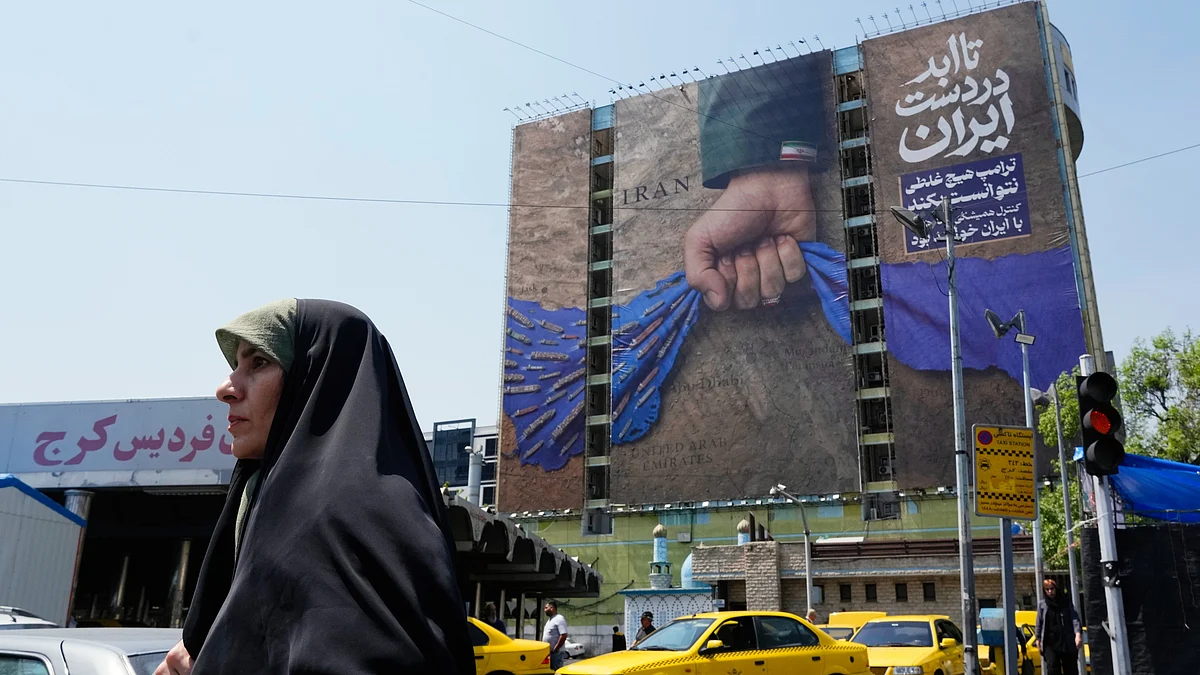


The fragile ceasefire between the United States and Iran came under its most serious strain yet on Friday, 26 June after Washington launched what it claimed were "retaliatory strikes" against Iranian military targets, accusing Tehran of violating the week-old truce with a drone attack on a cargo vessel in the Strait of Hormuz.
Iran swiftly rejected the accusation, insisting the incident did not amount to a breach of the ceasefire. Ebrahim Azizi, chairman of the Iranian parliament's national security commission, said, "The Strait of Hormuz is governed by Iran, so: Respect the rules" and urged the US to "not mistake control for escalation".
'This is not a violation of the ceasefire; it is ceasefire management,' Azizi wrote.
The US military said it targeted Iranian missile and drone launch sites as well as coastal radar installations after a commercial ship was struck a day earlier in the strategic waterway, an incident that has reignited concerns over the security of one of the world's busiest energy corridors.
US President Donald Trump said the drone attack violated the ceasefire that Washington and Tehran agreed to last week as part of an interim understanding aimed at ending months of hostilities and reopening the Strait of Hormuz to commercial shipping.
"I don't like the fact that they took a shot yesterday, actually four of them," Trump told reporters at the White House shortly before the strikes. Asked whether the US would retaliate despite ongoing negotiations with Tehran, he replied, "They're a little bit different," before abruptly ending the briefing.
US Central Command later confirmed that it had struck missile and drone facilities along with coastal radar sites in Iran. A US official with knowledge of the operation told The Associated Press that the strikes concluded about an hour after they began.
The exchange marks the first major military confrontation since the US and Iran agreed to a 60-day framework to negotiate a permanent end to the conflict. The interim understanding also envisaged restoring freedom of navigation through the Strait of Hormuz, through which around one-fifth of the world's energy supplies pass, making the latest flare-up a significant test of the agreement's durability.
The latest incident followed Thursday's attack on a container ship off the coast of Oman. The British military said the vessel was struck by a projectile hours after Iran warned ships against using certain routes through the strait. The United Kingdom Maritime Trade Operations centre said no injuries were reported.
The attack came as the International Maritime Organisation (IMO) had begun moving stranded vessels out of the strait using an alternative corridor close to Oman's coastline instead of the central shipping lane.
Following the attack, the IMO suspended the operation, saying evacuations would not resume until there were guarantees that commercial vessels would not be targeted. IMO secretary-general Arsenio Dominguez said around 115 ships had managed to leave the strait in recent days, but about 500 vessels remained in the area awaiting safe passage.
The reopening of the alternative route had been expected to ease pressure on global energy markets while reducing one of Iran's key sources of leverage in negotiations with Washington.
The two countries continue to negotiate a broader agreement covering freedom of navigation through the Strait of Hormuz and the future of Iran's stockpile of highly enriched uranium. Under the interim deal, both sides have 60 days to finalise the terms of a permanent settlement.
Shipping analysts said Thursday's attack had interrupted the gradual return of confidence among commercial operators.
Marine intelligence firm Windward said the drone strike represented the first significant test of the ceasefire. While the strait remained operational, with 43 vessels transiting after the incident, "the pace of normalisation has slowed," it said.
Traffic had briefly shown signs of recovery, with 78 vessels passing through the strait on Wednesday — the highest daily figure since the conflict began, though still well below the pre-war average of more than 130 transits.
According to Lloyd's List Intelligence, at least two oil tankers reversed course after Iran insisted vessels use only Tehran-approved routes through the waterway. More than two dozen ships, however, continued sailing via the UN-backed southern corridor after the attack.
Even as tensions escalated between Washington and Tehran, there was cautious diplomatic progress elsewhere in the region.
Israel and Lebanon on Friday announced a framework agreement aimed at reducing tensions after months of cross-border fighting involving Hezbollah.
Lebanon's ambassador to the United States, Nada Hamadeh, described the framework as a step towards "enabling our people to go back to their land and allowing all Lebanese to live in peace, security, and prosperity".
Israeli Prime Minister Benjamin Netanyahu called the agreement "a great achievement" but said Israeli forces would remain in a security zone in southern Lebanon until Hezbollah was disarmed and no longer posed a threat to Israel.
With AP/PTI inputs
Join our official telegram channel (@nationalherald) and stay updated with the latest headlines