


US–Iran talks in Oman set amid White House push for ‘zero nuclear capability’
Karoline Leavitt says Steve Witkoff and Jared Kushner will travel to Oman for talks after plans to hold them in Turkey were shelved
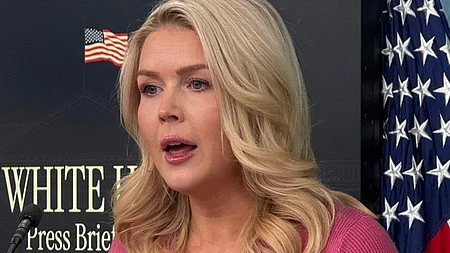


The White House on Thursday confirmed that upcoming US–Iran talks will be held in Oman, casting the sultanate once again in its familiar role as a discreet diplomatic bridge, even as President Donald Trump’s administration sharpened its insistence that Tehran accept nothing short of “zero nuclear capability”.
Announcing the venue, press secretary Karoline Leavitt said special envoy Steve Witkoff and Jared Kushner would travel to Oman “tomorrow” for the discussions, after plans for talks in Turkey were quietly shelved. While Leavitt offered no detailed explanation for the change, she framed it as consistent with the president’s broader worldview — one that places diplomacy at the forefront, even when adversaries are involved.
“Look, the president — diplomacy is always his first option when it comes to dealing with countries all around the world, whether it’s our allies or our adversaries,” she said, underscoring Trump’s preference for engagement before escalation.
Yet the message from the podium blended openness with unmistakable firmness. When asked about the agenda, Leavitt pointed squarely to Trump’s red line. “The president has obviously been quite clear in his demands of the Iranian regime,” she said. “Zero nuclear capability is something he’s been very explicit about, and he wants to see if a deal can be struck.”
As negotiations loom, the White House also struck a cautionary note. Leavitt reminded Tehran that diplomacy, while preferred, is not the administration’s only tool. “While these negotiations are taking place, I would remind the Iranian regime that the president has many options at his disposal aside from diplomacy,” she said, invoking Trump’s role as commander in chief of what she called “the most powerful military in the history of the world.”
The comments reflected a carefully calibrated posture — willingness to talk paired with an unyielding stance on nuclear limits. Leavitt said Trump was “standing by for an update” from his envoys once the Oman talks conclude, but she offered no hints of concessions, timelines or confidence in a breakthrough.
Instead, she returned repeatedly to the administration’s guiding principle: diplomacy, but not at any price. “The president is always willing to engage in diplomacy,” she said, responding to a separate foreign policy question, “but he has been very clear about his expectations.”
Washington and Tehran have long moved through cycles of engagement and estrangement, often relying on intermediaries and neutral venues across the Gulf as direct channels waxed and waned. At the heart of the standoff lie familiar fault lines — Iran’s nuclear ambitions, sanctions relief, and regional security.
In that landscape, Oman’s re-emergence as host is hardly accidental. The country has a quiet history of facilitating back-channel dialogue between the two sides, even when formal negotiations faltered elsewhere—once again offering a subdued stage for high-stakes diplomacy shadowed by deep mistrust.
With IANS inputs
Join our official telegram channel (@nationalherald) and stay updated with the latest headlines