


Vast winter storm set to sweep across eastern United States
Rare alignment of deep cold air and moisture threatens ice, heavy snow and widespread disruption from Texas to New England
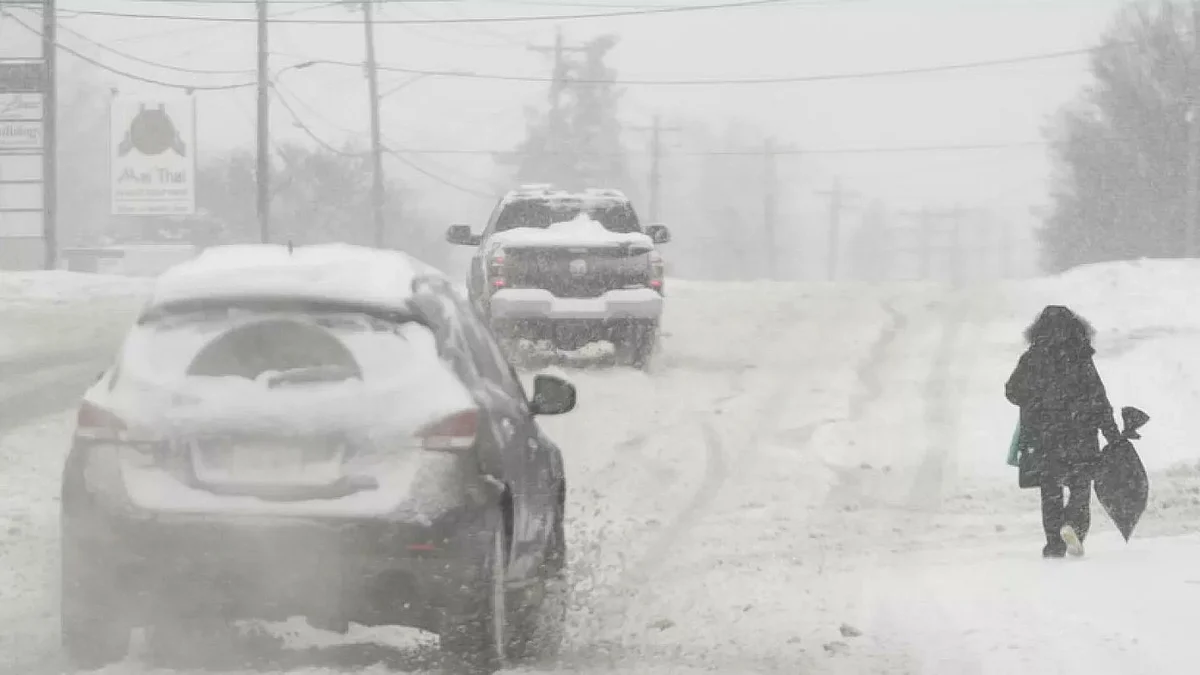


A powerful winter storm is forecast to affect much of the eastern two-thirds of the United States, with snow, sleet and ice expected to spread across thousands of miles in what meteorologists describe as an unusually expansive weather event.
While the US has experienced severe winter conditions in recent years, from California’s atmospheric river flooding to Texas’s deadly deep freeze in 2021, forecasters say the sheer geographic reach of this system sets it apart. The storm is expected to impact dozens of states, stretching from New Mexico in the southwest to Maine in the northeast.
The first key driver is an extensive surge of cold air caused by a pronounced dip in the jet stream. This atmospheric feature, which typically flows west to east, has swung sharply southwards, allowing frigid air from Alaska to plunge across large parts of the country. Known as a trough, this shift is set to push temperatures well below seasonal norms.
“The scale of this pattern means the cold will be widespread and persistent, rather than a brief snap,” said Andrea Lopez Lang, an atmospheric scientist at the University of Wisconsin–Madison.
With freezing temperatures in place, the second crucial ingredient—moisture—is expected to arrive via a weather system moving in from near Baja California. Though smaller in scale, scientists say it could act as a powerful catalyst if it aligns with the cold air.
“If these two elements come together just right, that’s when you get the conditions for a major storm,” said Curtis Walker, a researcher at the US National Science Foundation’s National Center for Atmospheric Research.
Texas is preparing for hazardous conditions and possible power outages, prompting comparisons with the 2021 freeze that killed dozens and left millions without electricity. Forecasters caution, however, that while the upcoming storm may be shorter in duration, its reach will be broader. This time, heavy icing is expected to extend beyond Texas, increasing the risk of power failures caused by damaged transmission lines rather than frozen gas infrastructure.
Lopez Lang pointed to the 1998 ice storm that struck parts of Canada and the US Northeast as a useful comparison. That event caused an estimated $2.7 billion in damage in the US alone, devastating power grids and forests.
The forecast ice and snow are also expected to hit regions less accustomed to severe winter weather, while major transport hubs such as Dallas–Fort Worth, Atlanta and Charlotte could face significant disruption. In the Northeast, more than a foot of snow is predicted in parts of the region, including New York, potentially making it the most significant snowfall since a major storm in 1993, according to Rob Carolan, chief executive of Hometown Forecast Services.
Thousands of miles of interstate highways are likely to be affected, creating what Walker described as a “unique challenge” for emergency and repair crews.
Although the worst of the storm is expected to move out by Monday, freezing temperatures are forecast to linger. The persistence is linked to the size of the atmospheric trough and the continued flow of cold air from the north, keeping large parts of the country locked in winter conditions even after the snow and ice subside.
With agency inputs
Join our official telegram channel (@nationalherald) and stay updated with the latest headlines