


Venezuela quake death toll climbs to 1,430 as aftershocks hamper rescue efforts
National Assembly president Jorge Rodriguez says 3,238 people have been injured, while 3,142 families have been affected by the disaster
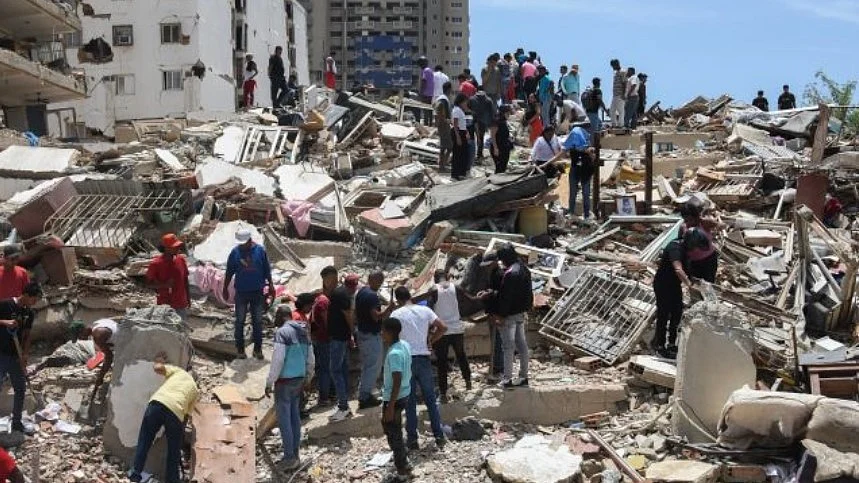


The death toll from the powerful earthquakes that struck Venezuela on Wednesday has risen to 1,430, as hundreds of aftershocks continue to rattle the country and complicate rescue operations, National Assembly president Jorge Rodriguez said on Saturday.
Addressing the nation on state television, Rodriguez said 3,238 people have been injured, while 3,142 families have been affected by the disaster. He added that authorities have recorded 430 light to moderate aftershocks since the twin earthquakes of magnitude 7.2 and 7.5, which triggered widespread devastation across central and coastal regions.
"On behalf of the Venezuelan authorities, I extend my deepest condolences to the thousands of victims of this tragedy," Rodriguez said, adding that tens of thousands of emergency personnel, soldiers and volunteers are working around the clock to search for survivors, clear debris and deliver aid to affected communities.
The latest government update came as the Venezuelan Foundation for Seismological Research (Funvisis) reported another magnitude-4.1 earthquake on Saturday, heightening fears among residents already shaken by this week's catastrophic quakes.
According to Funvisis, the tremor struck at a shallow depth of 5 km, with its epicentre located about 35 km west of La Guaira, the heavily damaged port city that has been declared a disaster zone. Shallow earthquakes tend to produce stronger ground shaking and pose a greater risk of structural damage.
Residents in Caracas and neighbouring areas said they felt the tremor, prompting many to rush out of homes and offices amid fears of further collapses.
The earthquakes on Wednesday caused widespread destruction, flattening buildings, triggering landslides and damaging critical infrastructure across several regions. Rescue teams continue to battle unstable terrain and damaged roads as they race to reach people trapped in remote coastal and mountainous communities.
Funvisis said it is maintaining round-the-clock monitoring of seismic activity and urged the public to rely only on official information while warning against the spread of unverified reports that could fuel panic.
Authorities have not ruled out further aftershocks as relief and recovery operations continue across the country.
With IANS inputs
Join our official telegram channel (@nationalherald) and stay updated with the latest headlines