


Zelenskyy says US peace plan ‘looks better’ with revisions but work continues
Zelenskyy’s Paris visit comes after “productive” high-level talks between Ukrainian and US officials, according to Secretary of State Marco Rubio
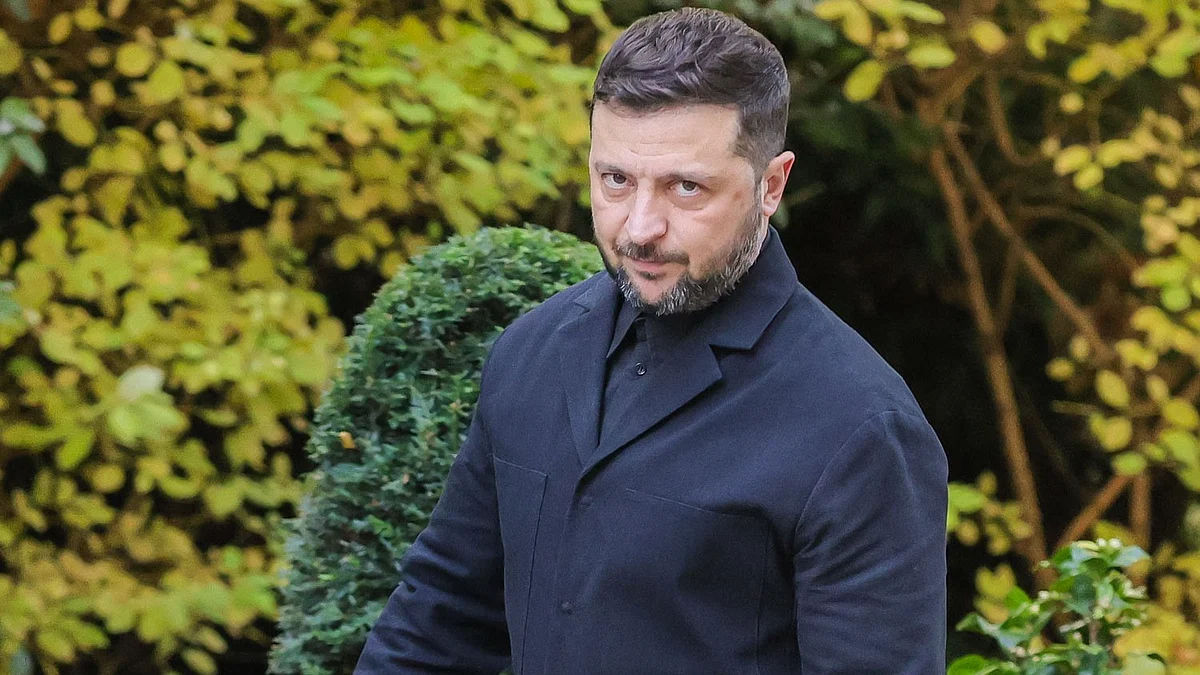


Ukraine’s President Volodymyr Zelenskyy struck a rare note of guarded optimism on Monday, suggesting that the revisions to the Trump administration’s peace plan “look better” as diplomatic efforts to end Russia’s nearly four-year war gathered fresh momentum. Speaking in Paris after talks with French President Emmanuel Macron, Zelenskyy said negotiations were inching forward, even as the battlefield continued to convulse with violence.
The optimism in Paris contrasted sharply with developments elsewhere. In Moscow, Kremlin spokesperson Dmitry Peskov confirmed that Russian President Vladimir Putin would meet US special envoy Steve Witkoff on Tuesday — a meeting shadowed by recent revelations that Witkoff allegedly coached Putin’s top foreign policy aide on how to pitch the peace plan directly to Donald Trump.
Zelenskyy’s Paris visit followed high-level discussions a day earlier between Ukrainian and US officials, which Secretary of State Marco Rubio described as “productive”. Both sides have been scrambling to reshape the US-drafted peace proposal — a framework widely criticised for leaning dangerously toward Russian demands. The original plan, floated by the Trump administration, envisioned a cap on Ukraine’s military strength, barred NATO membership, and required Kyiv to cede territory.
Macron, acutely aware of European anxieties, called the moment “a possible turning point” but warned that peace could not be forged without Europe firmly at the table. The French leader, who has urged allies to bring “rock-solid” security guarantees to any ceasefire, has promoted the idea of a multinational “reassurance force” deployed across land, sea and air to safeguard Ukraine’s future.
But diplomatic advances were shadowed by fresh claims from Moscow. Late Monday, the Kremlin triumphantly declared that Russian troops had captured the key city of Pokrovsk in Donetsk — part of the heavily fortified “fortress belt” guarding eastern Ukraine. Yet Zelenskyy, speaking in Paris, insisted the battle for Pokrovsk was still raging. The fog of war only deepened as Russian generals briefed Putin, dressed in military fatigues at an undisclosed command post, promising full control not only of Pokrovsk but also Vovchansk in Kharkiv. Ukraine offered no immediate confirmation.
Zelenskyy dismissed Russia’s earlier boast of seizing Kupiansk, saying Ukrainian troops had “cleared out almost all” Russian forces there.
European unease was palpable. EU foreign policy chief Kaja Kallas warned that the US–Russia talks risked placing the burden of compromise squarely on Ukraine. “I’m afraid all the pressure will be put on the victim,” she said, capturing the anxiety simmering across European capitals.
Macron’s office said the Paris talks extended to a constellation of leaders — from Britain, Germany and Italy to Finland, Denmark and the Netherlands — as well as EU heads Antonio Costa and Ursula von der Leyen and NATO secretary-general Mark Rutte. The diplomatic web widened further through calls with Witkoff, who now stands at the centre of an unfolding geopolitical drama.
While diplomats attempted to shape a future peace, the war continued to scorch the present.
The Kremlin fumed over Ukrainian strikes on Russian oil infrastructure over the weekend — including a hit on a major Caspian Pipeline Consortium terminal near Novorossiysk and a naval drone attack on two tankers of Russia’s shadow fleet. Moscow called the strikes “outrageous,” noting the CPC terminal’s international status. Ukraine confirmed both operations.
Russia’s Ministry of Defense claimed its forces shot down 32 Ukrainian drones overnight across 11 regions and above the Sea of Azov. In Dagestan’s coastal city of Kaspiysk, an apartment block was damaged in an incoming Ukrainian attack — an assault that landed more than 1,000 kilometres from the nearest front line.
Meanwhile, Ukraine suffered fresh devastation. A midday Russian missile strike tore through central Dnipro, killing four people and injuring 40 more — 11 critically. The blast ripped through apartment blocks, an educational facility and a humanitarian aid warehouse, leaving rescue crews sifting through rubble deep into the evening.
Ukraine’s Air Force said Russia unleashed 89 strike and decoy drones the previous night, 63 of which were intercepted or jammed. Their monthly report painted a grim picture: in November alone, Russia fired 100 missiles and nearly 9,600 reconnaissance and strike drones at Ukrainian territory.
And as diplomats negotiate, generals maneuver, and civilians brace for another night of sirens, the war continues to grind on — suspended somewhere between fragile hope and relentless violence.
With inputs from AP
Join our official telegram channel (@nationalherald) and stay updated with the latest headlines