


WHO warns of regional risk as DR Congo Ebola deaths top 100
DR Congo reports 35 new Ebola cases and 10 deaths, raising the total to 550 infections and 101 fatalities
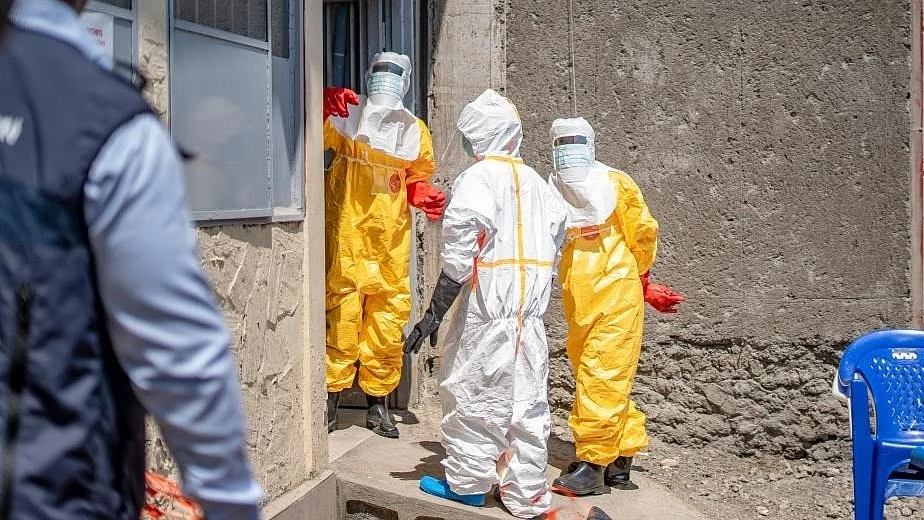


The Ebola outbreak in the Democratic Republic of the Congo (DRC) continues to intensify, with confirmed cases rising to 550 and the death toll crossing 100, prompting fresh warnings from health authorities and the World Health Organisation (WHO) about the risk of further regional spread.
According to the latest update from Congolese health authorities, 35 new confirmed cases and 10 additional deaths were recorded on Sunday alone in the eastern provinces of Ituri and North Kivu, bringing the total number of confirmed infections to 550 and fatalities to 101.
Seven more patients recovered, raising the total number of recoveries to 19.
Health officials cautioned that the outbreak remains on an upward trajectory despite a slight recent dip in reported cases.
"The outbreak is still on an upward weekly trend, and the recent decline reflected in the epidemic curve may be due to delayed laboratory updates rather than a genuine slowdown in transmission," the update said.
As of Sunday, 309 people were either hospitalised or in isolation, including 116 confirmed Ebola patients and 193 suspected cases.
Contact tracing efforts have improved but remain below target. Authorities reported that 5,418 contacts were under monitoring across the affected provinces, with 3,489 successfully followed up, translating to a contact-tracing rate of 64.4 per cent — well short of the 95 per cent benchmark considered necessary to contain transmission.
The response has also been hampered by laboratory bottlenecks. In North Kivu alone, 183 test results remain pending due to shortages of critical reagents, raising concerns about delays in identifying and isolating infected individuals.
The outbreak, caused by the Bundibugyo strain of the Ebola virus, was officially declared on 15 May and has spread across Ituri, North Kivu and South Kivu — provinces that together are home to nearly 15 million people and are characterised by large-scale population displacement and frequent cross-border movement.
The WHO has warned that the outbreak is expanding geographically and has already spread beyond the DRC's borders into neighbouring Uganda.
Uganda has reported 19 confirmed cases, including two deaths and one probable fatal case. According to the WHO, all Ugandan infections remain epidemiologically linked to the outbreak in the DRC, with evidence of both imported cases and secondary transmission among contacts and healthcare workers.
The UN health agency currently assesses the risk as "very high" within the DRC and "high" for Uganda and neighbouring countries sharing land borders with affected areas. The risk remains low for the wider African region and globally.
In response, national authorities, the WHO and international partners have intensified containment measures. On June 5, the WHO and the Africa Centres for Disease Control and Prevention launched a joint continental preparedness and response plan, seeking USD 518 million to help African countries prepare for, detect and respond to the outbreak.
Bundibugyo virus disease, a less common form of Ebola than the Zaire strain responsible for several previous outbreaks, can still cause severe illness and death. The virus is believed to originate in fruit bats and spreads through direct contact with infected animals or the bodily fluids of infected individuals.
The incubation period ranges from two to 21 days, and infected people are not contagious until symptoms begin to appear.
First identified in 1976 during simultaneous outbreaks in what is now the DRC and South Sudan, Ebola remains one of the world's deadliest viral diseases, with health officials racing to contain the latest outbreak before it gains a broader regional foothold.
With IANS inputs
Join our official telegram channel (@nationalherald) and stay updated with the latest headlines