


Xi warns Trump on Taiwan, says mishandling issue could trigger conflict
US and China agree on keeping Strait of Hormuz open, preventing Iran from acquiring nuclear weapons
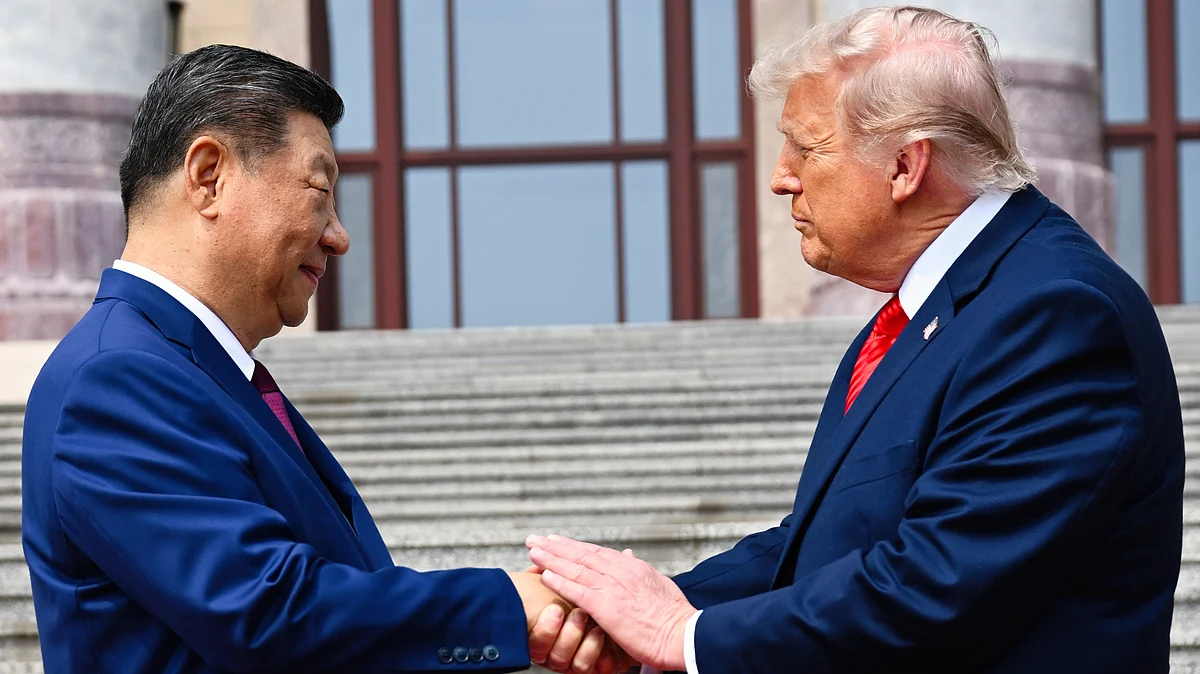


Chinese President Xi Jinping warned US President Donald Trump on Thursday, 14 May that mishandling the Taiwan issue could lead to “clashes and even conflicts” between the two countries, as the two leaders held extensive talks in Beijing covering the Iran war, trade, energy security and strategic ties.
The first round of talks between the two leaders lasted around two hours, following which Trump invited Xi and his wife to the White House on 24 September. Both sides also agreed that the Strait of Hormuz must remain open to ensure the free flow of global energy supplies.
Xi said China and the US had agreed on a “new vision” to build constructive bilateral ties based on strategic stability. “I have agreed with President Trump on a new vision of building a constructive China-US relationship of strategic stability,” Xi said, according to Chinese state media.
He said the vision would provide strategic guidance for ties between the two countries “over the next three years and beyond” and would be welcomed by people in both nations as well as the wider international community.
At the same time, Xi stressed that Taiwan remained the most sensitive and important issue in China-US relations. If handled properly, he said, bilateral ties could maintain “overall stability”. Otherwise, the two sides could face “clashes and even conflicts”, putting relations in serious jeopardy, according to state-run Xinhua news agency.
Also Read: China holds the aces in Trump–Xi meet
Xi urged Washington to exercise “extra caution” on Taiwan. China considers self-ruled Taiwan a renegade province that must eventually be reunified with the mainland, by force if necessary. Beijing opposes formal diplomatic relations between Taipei and countries that officially recognise China.
Since establishing diplomatic ties with Beijing in 1979, the US has maintained unofficial relations with Taiwan and continued supplying arms to the island, while formally acknowledging China’s position that Taiwan is part of China without explicitly endorsing it.
According to statements issued by the White House, the leaders also discussed expanding economic cooperation, ensuring stability in the Strait of Hormuz and preventing Iran from acquiring nuclear weapons.
The two sides explored measures to improve market access for American firms in China and increase Chinese investments in US industries. Senior executives from several major American companies attended part of the meeting, the White House said.
The leaders also reviewed efforts to curb the flow of fentanyl precursors into the US and discussed increasing Chinese imports of American agricultural products.
“The two sides agreed that the Strait of Hormuz must remain open to support the free flow of energy,” the White House said, adding that Xi “made clear China’s opposition to the militarisation of the Strait and any effort to charge a toll for its use”.
According to the White House, Xi also expressed interest in purchasing more American oil to reduce China’s dependence on the strait in the future. “Both countries agreed that Iran can never have a nuclear weapon,” the White House statement said.
The Strait of Hormuz, through which nearly one-fifth of the world’s energy supplies pass, and Iran’s nuclear programme remain the central sticking points in ongoing US-Iran peace negotiations.
Ahead of the talks, Trump described the summit as “maybe the biggest summit ever” and said the US and China would have a “fantastic future together”. Calling Xi a “great leader”, Trump said discussions covered the Iran conflict, tariffs, trade tensions, technology and Taiwan.
Trump, who arrived in Beijing on Wednesday, was accompanied by several prominent American business leaders, including Jensen Huang, Tim Cook, Elon Musk and Larry Fink. This marks the first visit to China by a US president in nine years. Trump was also the last American president to visit the country, during his first term in 2017.
The meeting comes amid heightened geopolitical tensions over the Iran conflict, renewed tariff disputes, export controls, rare earth supply chains and continued US arms sales to Taiwan.
With AP/PTI inputs
Join our official telegram channel (@nationalherald) and stay updated with the latest headlines