


A year after Red Fort blast, survivors struggle to rebuild lives amid debt and trauma
Small traders who survived the 10 November 2025 blast have returned to their shops in Old Delhi
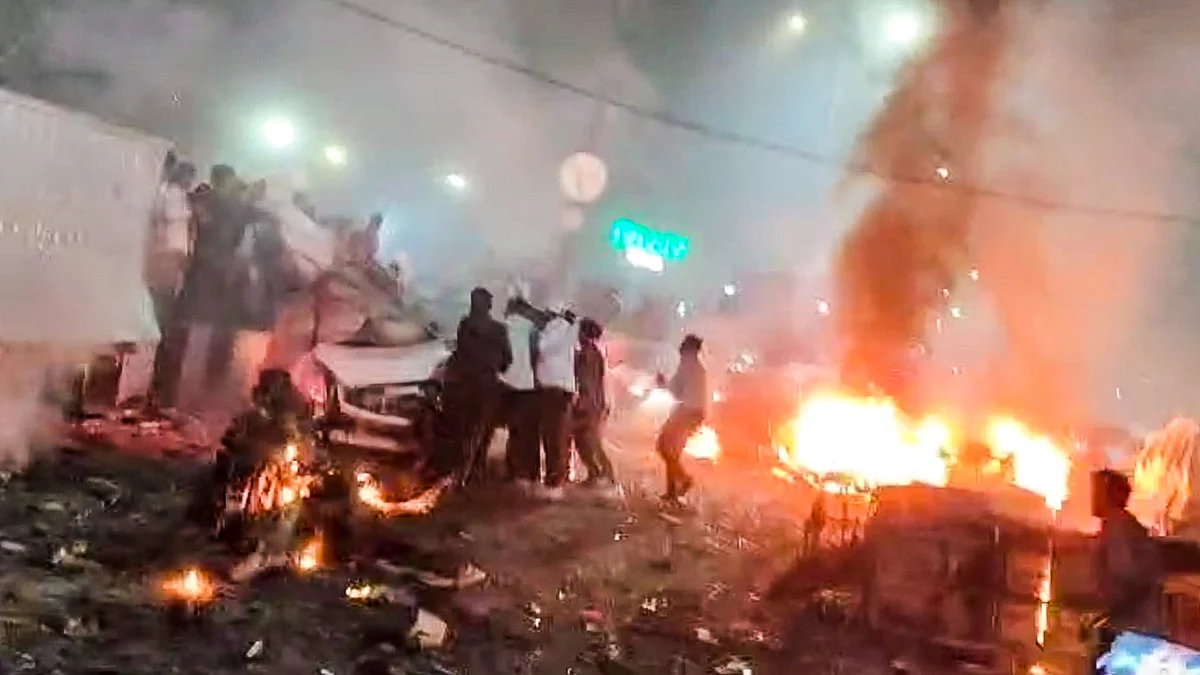


The shops have reopened, the familiar bustle has returned to Old Delhi and Chandni Chowk continues to draw shoppers and visitors. But a year after the deadly bombing near the Red Fort, some survivors are still struggling to overcome the trauma, debts and loss of livelihood caused by the attack.
On 10 November 2025, at around 6.52 pm, a car laden with explosives exploded at a busy traffic signal near the 17th-century Red Fort. The driver, identified as Dr Umar Un Nabi, an assistant professor at Al Falah University in Faridabad, Haryana, was the suicide bomber and died in the explosion.
The blast killed 15 people and injured several others, turning a busy evening in the national capital into a scene of devastation.
Among those caught in the explosion was 50-year-old Bhola Chaudhary, a physically challenged man who runs a small tobacco shop. He was parked near the Lal Quila police booth, barely 50 metres from the car, when the explosion occurred.
Recalling the incident to PTI, Chaudhary said something struck his shoulder with tremendous force. Unable to run because of his physical condition, he folded his hands and prayed for his life.
“I couldn't run. I was shivering. I just prayed to God to save me. Some time later, when police personnel came, they saw me and pushed my cart to Jain Mandir where I stayed for some days,” he said.
Chaudhary, who had been earning his livelihood in the area for 25 years, said the blast left him physically shaken and unable to work for several months.
He eventually returned to his native village in Madhepura, Bihar, to be with his family. The disruption meant losing his only source of income for nine months.
“I couldn't work for nine months. I have taken debt to restart this shop. I wish the government would have looked after people like us also,” he said.
Even after reopening his shop, Chaudhary continues to deal with the financial burden of the months he spent away from work.
Another survivor, 50-year-old Vijay Yadav, who runs a water and soda shop, was barely 20 metres from the car when it exploded. He believes a momentary movement saved his life.
“I was lucky that I didn't die since I had bent to take out water. Still, glass shards pierced my cart and my hand,” he recalled.
Yadav said he initially failed to comprehend what had happened and attempted to move his cart. But as vehicles caught fire and authorities began clearing the area, he ran towards the metro station and noticed that he was bleeding.
He went to a government hospital the following morning but claimed that he was refused admission. He subsequently returned to his home in Saharsa, Bihar, where he underwent an operation.
“I had to spend Rs 50,000 to Rs 60,000 for this treatment. I want the government to do something for us,” he said.
For small vendors dependent on daily earnings, months away from their shops have meant mounting debts and uncertainty even as they attempt to rebuild their lives.
The devastation also remains etched in the memories of those who witnessed the aftermath without being directly injured.
Shrikant Gupta, a guard at the Jain Mandir, recalled the scenes immediately after the explosion, saying the sky appeared to turn black before people saw bodies scattered across the road.
“Chitdre ud gaye the (Bodies were blown to pieces),” he said.
A year later, Chandni Chowk has largely returned to its familiar rhythm. Shoppers continue to throng its markets for traditional clothes, devotees visit places of worship and the narrow lanes remain crowded with shopkeepers and visitors.
The area's food stalls continue to draw customers, while the sounds of traders calling out to shoppers fill its busy streets.
But for survivors such as Chaudhary and Yadav, the return to normal life has not erased the physical, emotional and financial consequences of the attack.
The shops may have reopened, but the memories of that evening remain vivid for those who witnessed the explosion and struggled to rebuild their lives in its aftermath.