


Ahmedabad plane crash: Six months on, shattered hostel still stands silent
The crash site is strewn with haunting remnants of interrupted lives — burnt vehicles, twisted beds, shattered furniture, and singed books and belongings
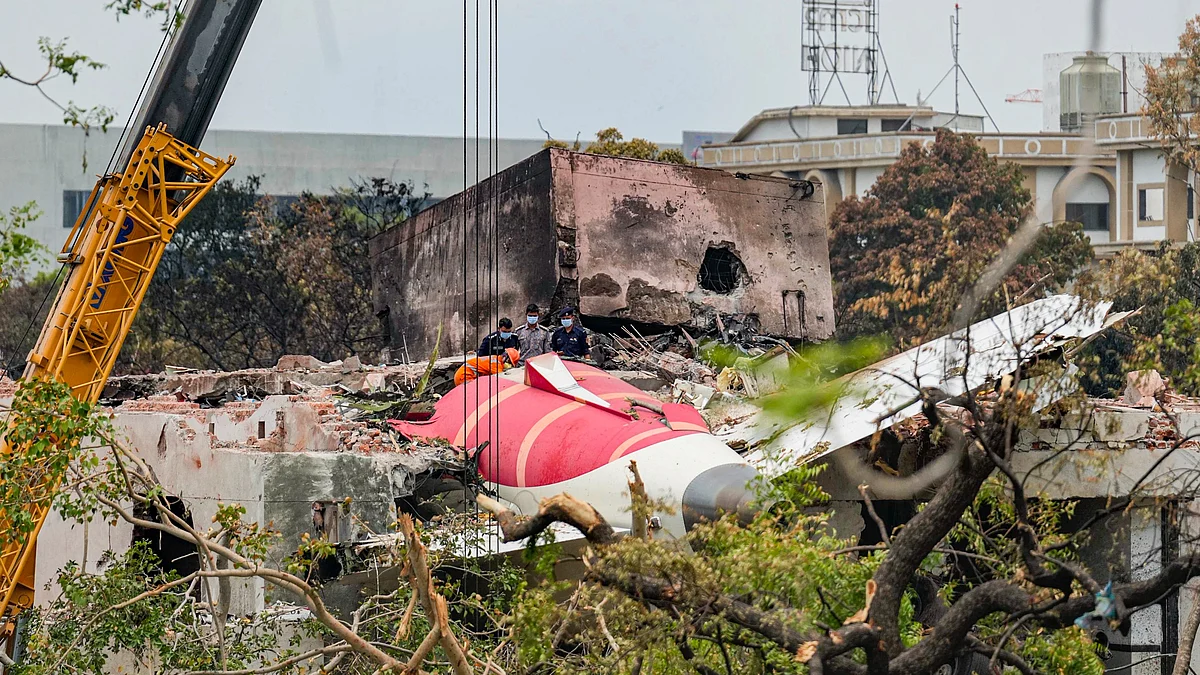


Six months after Air India flight AI-171 tore through the skyline of Ahmedabad, the B.J. Medical College hostel complex remains frozen in grief — a silent monument to a tragedy that refuses to fade.
Where laughter and late-night conversations once echoed, there is now an unsettling stillness. Charred walls stand scorched by fire, blackened trees loom like sentinels of sorrow, and the familiar bustle of student life has been replaced by an eerie quiet broken only by the occasional chirp of birds.
Across the crash site lie haunting fragments of interrupted lives: burnt cars and motorcycles, twisted beds and broken furniture, singed books, clothes and personal belongings scattered like memories no one can reclaim. The Atulyam-4 hostel building and its adjoining canteen complex stand abandoned, sealed off and forbidden, as if the wounds they bear are still too raw to confront.
For residents of Meghaninagar, the disaster is not a closed chapter but a lingering shadow. Many admit that the fear has followed them into daily life — a reflexive glance skyward whenever an aircraft passes overhead, a reminder of the day the sky itself seemed to fall.
On 12 June, Air India’s London-bound Boeing 787-8 Dreamliner crashed moments after take-off from the Sardar Vallabhbhai Patel International Airport, killing 260 people. The aircraft slammed into the BJ Medical College hostel complex, transforming a vibrant student neighbourhood into a landscape of ruin and mourning.
“The area is now completely silent. Only a few birds chirp here,” said Sanjaybhai, a security guard posted at the premises to prevent trespassing. His words echo the emptiness that now defines the site.
Mahendrasingh Jadeja, a 60-year-old shopkeeper whose general store stands barely 50 metres from the impact point, still struggles to comprehend the scale of the calamity. “In all my years, I have never seen anything like this,” he said, pointing to a tree behind his shop where the aircraft struck first.
“It was a scorching summer afternoon. When I heard the crash, I ran out. We were all terrified,” he recalled. “Even today, we look up instinctively whenever a plane flies over.”
Manubhai Rajput, who lives just 200 metres from the site, witnessed the horror unfold. “The plane was flying unusually low. Before I could understand what was happening, there was thick black smoke and a deafening crash,” he said.
For more than three decades, Rajput and his neighbours had lived near the airport without fear. “We never looked up at the sky. But that day is etched in my mind forever,” he said.
Residents remember how hundreds of locals rushed to the scene even before police, fire services or the Army arrived, driven by instinct and shock.
Tinaben, another local, said the tragedy shattered a long-held sense of safety. “Despite being close to the airport, this area always felt secure,” she said. As an aircraft roared overhead mid-conversation, she paused, glanced nervously upward and whispered, “It’s still scary.”
Meanwhile, the future of the devastated site remains uncertain. A senior official of Civil Hospital Ahmedabad said the state government has yet to decide what will be done with the damaged complex. Investigations continue, and the area remains strictly out of bounds — a scarred space suspended between memory, mourning and unanswered questions.
With PTI inputs
Join our official telegram channel (@nationalherald) and stay updated with the latest headlines