


AI must strengthen, not override judiciary: CJI Surya Kant
AI should function only as a tool or pathway, while the direction must always be determined by human intellect, says CJI
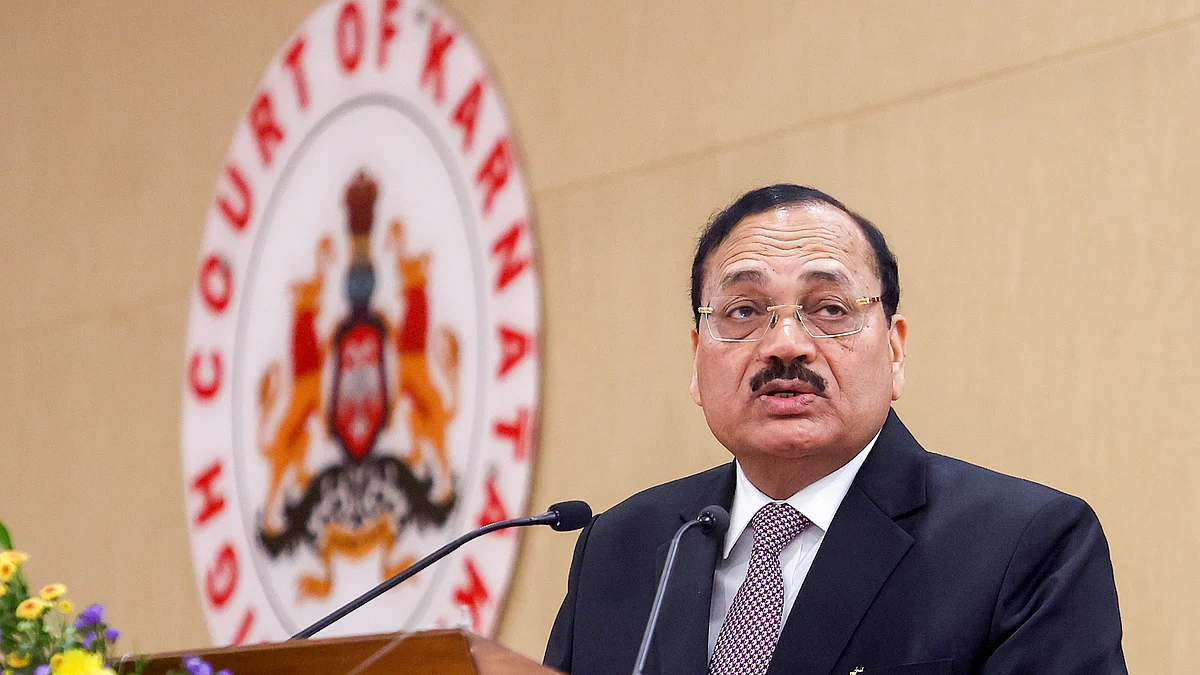


In a nuanced and forward-looking address, Surya Kant underscored the transformative potential of artificial intelligence while firmly cautioning against its overreach within the judicial system. Speaking at a one-day seminar titled “Artificial Intelligence – Prevention and Resolution of Disputes” at the Karnataka Judicial Academy, he called for a calibrated integration of AI that strengthens the institution without diluting its foundational principles.
“AI should assist in handling large volumes of data and records, identifying patterns, and reducing procedural delays,” he said, outlining the technology’s capacity to ease the burden on courts grappling with massive caseloads. However, he drew a clear red line: “It must not encroach upon the core judicial function of delivering judgments.”
Emphasising the primacy of human reasoning, the CJI stressed that the ultimate responsibility of adjudication must remain with judges. “The final stage of the judicial process — the pronouncement of judgments — must remain firmly in human hands,” he said, adding that judicial outcomes must continue to be shaped by experience, analytical rigour and a deep understanding of the law, rather than algorithmic outputs.
Framing AI as an enabler rather than a decision-maker, he remarked, “AI should function only as a tool or pathway, while the direction must always be determined by human intellect.” He also warned that excessive reliance on automated systems could undermine transparency and accountability — cornerstones of the justice delivery system.
The seminar, organised in collaboration with the UIA India Chapter, the Bar Association of India and the National Law School of India University, brought together jurists and legal experts to deliberate on the evolving interface between technology and law.
Adding to the discussion, Vibhu Bakhru raised pertinent questions about the future trajectory of AI in the judiciary. He cautioned that while AI holds promise in enhancing efficiency — through predictive analysis of disputes and enabling online dispute resolution — there remains a risk of it transitioning from an aid to a substitute, potentially diminishing the role of judges.
Bakhru stressed the need for robust safeguards, asserting that judicial independence, transparency and legality must remain paramount. The deployment of AI, he said, must be governed by clearly defined principles to ensure it complements rather than compromises the justice system.
Highlighting the technology’s inclusive potential, Prashant Kumar noted that AI-driven tools have already enabled rapid translation of court judgments into local languages. This, he said, has significantly improved accessibility for litigants in rural areas and helped lawyers communicate more effectively with their clients.
The deliberations reflected a broader consensus: while artificial intelligence can serve as a powerful ally in modernising the judiciary, its role must remain carefully circumscribed — ensuring that justice, at its core, continues to be a profoundly human endeavour.
With PTI inputs
Join our official telegram channel (@nationalherald) and stay updated with the latest headlines