


Kejriwal refuses to appear before Justice Sharma in excise case, cites ‘satyagraha’
AAP leader says he and his lawyers to not attend Justice Swarna Kanta Sharma's court; to pursue legal remedies elsewhere
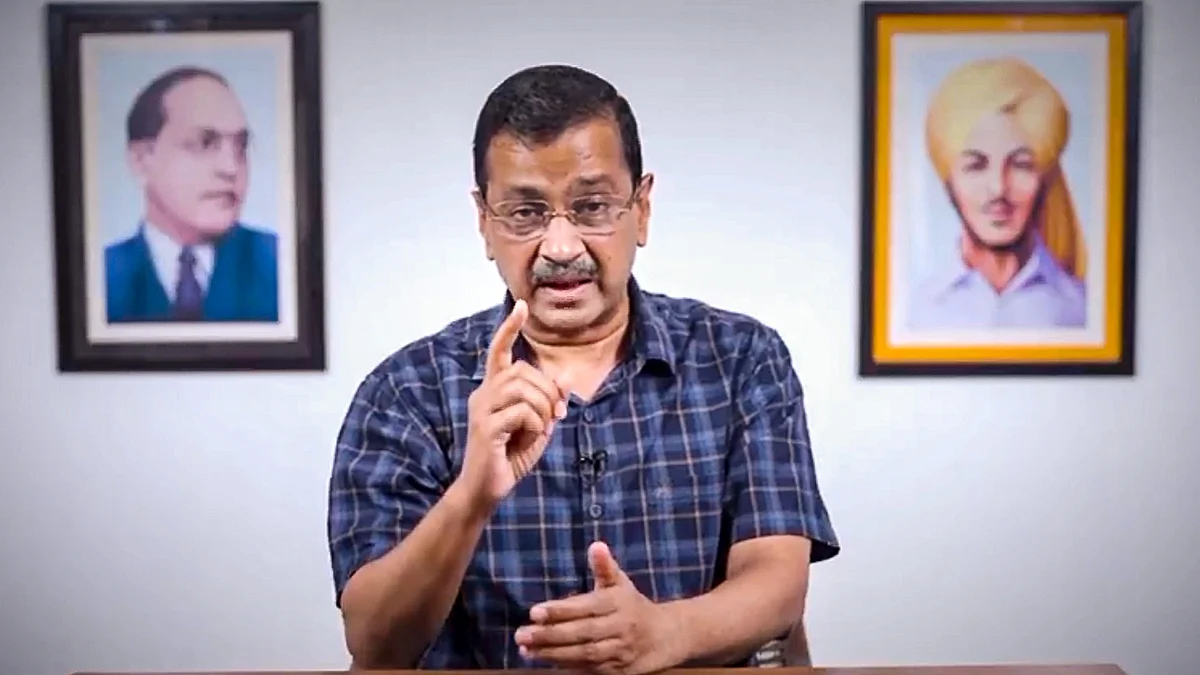


Aam Aadmi Party leader and former Delhi chief minister Arvind Kejriwal has said he will not appear before the court of Justice Swarna Kanta Sharma in the Delhi excise policy case, invoking Mahatma Gandhi’s principle of satyagraha. In a four-page letter shared on X, addressed to Justice Sharma, Kejriwal wrote that “following Gandhi’s principles of satyagraha, it will not be possible for me to appear in court, nor will my lawyers appear”.
Kejriwal and other AAP leaders had sought Justice Sharma’s recusal from the case, alleging doubts over her impartiality. In his letter, Kejriwal said, “My clear conclusion from the ongoing proceedings in Justice Sharma’s court is that justice must not only be done, but must also be seen to be done. My participation — whether personally or through counsel — will not lead to any meaningful outcome.”
He added that he would challenge Justice Sharma’s decision before the Supreme Court. Reacting to the development, Congress leader Udit Raj said on X that “Kejriwal now wants to be a judge everywhere and does not trust the judiciary”.
According to Live Law, Justice Sharma on 20 April refused to recuse herself from the Delhi excise policy case and dismissed the plea filed by Kejriwal and others. She observed that “a litigant cannot be permitted to question a judge’s judicial competence without evidence, nor can a judge recuse merely on the basis of unfounded apprehensions”.
Earlier, on 27 February, a Delhi court had acquitted Kejriwal and 23 others in the case. The Central Bureau of Investigation (CBI) challenged the acquittal before the Delhi High Court, where the first hearing took place on 9 March. The court declined to stay the trial court’s order and issued notices to all parties, seeking responses within a week.
Subsequent hearings saw Kejriwal repeatedly press for a change of bench. His plea was rejected by Delhi High Court chief justice Devendra Kumar Upadhyay, and later by the Supreme Court as well.
During hearings on 16 March and 6 April, Justice Sharma granted time to Kejriwal, Manish Sisodia and other accused to respond to the CBI’s petition. On 13 April, Kejriwal advanced 10 arguments alleging a pattern in which the court accepted submissions by the Enforcement Directorate and the CBI.
He also alleged that Justice Sharma had attended events organised by the Advocates’ Council on multiple occasions, and filed an additional affidavit claiming that her children work under solicitor-general Tushar Mehta, who represents the CBI in the case.
Responding on 20 April, Justice Sharma rejected these claims, stating that attending professional events cannot be construed as ideological bias and that her children have no connection with the excise case. “The court cannot be burdened by allegations and insinuations. Recusal in such circumstances would not be justice, but the managing of justice,” she said.
Join our official telegram channel (@nationalherald) and stay updated with the latest headlines