


Bareilly city magistrate resigns over ‘divisive’ policies, new UGC rules
Resignation of senior bureaucrat amplifies backlash against UGC’s new anti-discrimination framework
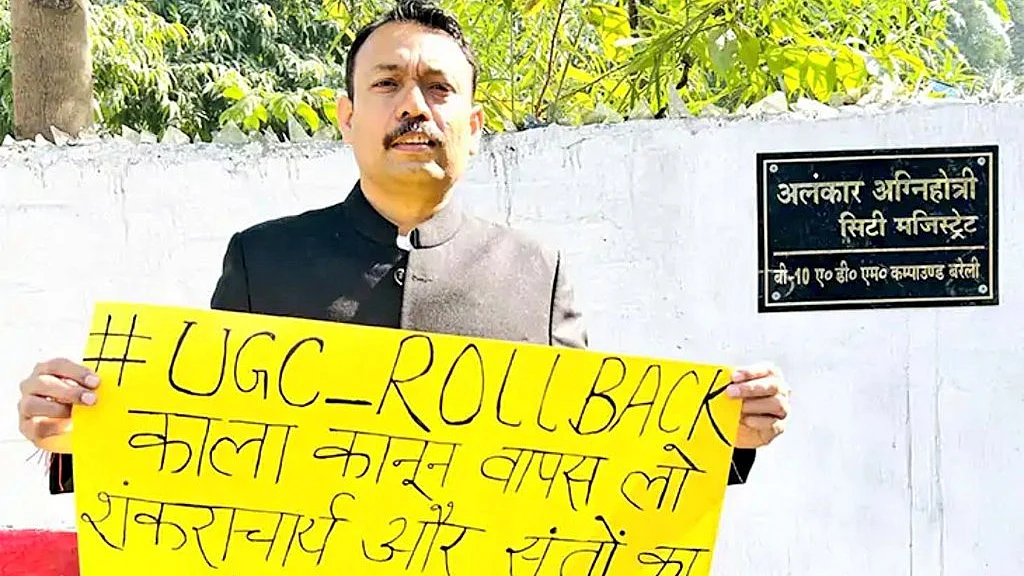


Bareilly city magistrate Alankar Agnihotri resigned from service on Monday, 26 January, citing deep disagreement with government policies — particularly the newly introduced University Grants Commission (UGC) regulations — officials said.
Agnihotri, a 2019-batch Uttar Pradesh Provincial Civil Service officer, e-mailed his resignation to the governor and to Bareilly district magistrate Avinash Singh. A native of Kanpur Nagar, Agnihotri has previously served as sub-divisional magistrate in Unnao, Balrampur and Lucknow, and was regarded in administrative circles as outspoken and strict in matters of work.
In his resignation note, Agnihotri wrote that when governments adopt policies which “divide society and the nation”, it becomes necessary to “awaken” them. He described the new UGC rules as a “black law”, claiming they were vitiating the academic climate in colleges and must be rolled back immediately.
The regulations in question — formally titled the UGC Promotion of Equity in Higher Education Institutions Regulations, 2026, notified on 13 January — require universities and colleges to establish equity committees, helplines and monitoring systems to address caste-based discrimination. According to the UGC, the objective is to create safer and more inclusive campuses for Scheduled Caste (SC), Scheduled Tribe (ST) and Other Backward Class (OBC) students, following repeated reports of harassment and exclusion.
However, the rules have drawn strong pushback from sections of general category students and some academics who argue that the framework risks reverse discrimination, incentivises adversarial grievance processes, and burdens institutions with compliance obligations without clear evidentiary standards.
Political parties and student groups are engaged in heated debate over the regulations’ constitutional grounding, making higher education a fresh flashpoint in an already polarised environment.
Speaking to reporters after attending Republic Day celebrations in Bareilly, Agnihotri escalated his criticism, alleging that the UGC rules would lead to “atrocities on Brahmins” and could fuel “social unrest” and “internal discontent”. He also pointed to a recent religious controversy in Prayagraj, questioning the role of administrative authorities.
The dispute he referred to involves Swami Avimukteshwaranand Saraswati, who remains at his Magh Mela camp in Prayagraj, where he has been engaged in a sit-in protest after being stopped from taking a holy dip at the Triveni Sangam during Mauni Amavasya.
The mela administration has issued multiple notices to the outspoken Swami, including one questioning his use of the 'Shankaracharya' title — a matter currently intertwined with legal disputes and tradition. The impasse has led to heightened security, reports of tensions outside his camp, and concerns about the seer’s health due to prolonged protest.
Supporters have framed the episode as bureaucratic overreach into religious tradition, while critics argue that administrative protocols must be upheld, turning the dispute into a wider debate over religious authority, state power and heritage.
Claiming that democratic and republican values were eroding, Agnihotri declared that he could no longer be part of the system. An alumnus of Banaras Hindu University with degrees in B.Tech and LLB, he has also worked in the United States. Officials noted that his resignation on Republic Day has intensified scrutiny over government policies and the broader direction of governance.
With PTI inputs
Join our official telegram channel (@nationalherald) and stay updated with the latest headlines