


CBI detains retired judge Giribala Singh in Twisha Sharma death case
Action follows high court order cancelling anticipatory bail and raising concerns over injuries found on victim’s body
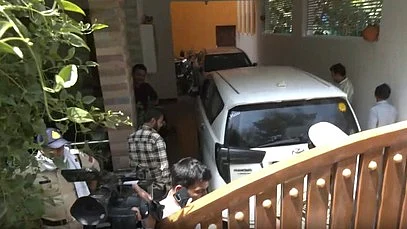


The Central Bureau of Investigation (CBI) on Thursday detained retired district judge Giribala Singh from her residence in Bhopal in connection with the alleged dowry death of her daughter-in-law, Twisha Sharma.
A CBI team, accompanied by a large police contingent, arrived at Singh’s residence in the Katara Hills area early in the morning. Authorities barricaded the locality and restricted movement during the operation.
The development came a day after the Madhya Pradesh High Court cancelled the anticipatory bail earlier granted to Giribala Singh.
Twisha Sharma was found dead at her matrimonial home on 12 May, barely five months after her marriage to Singh’s son, Samarth Singh, in December 2025.
Soon after the incident, Giribala Singh moved a Bhopal sessions court seeking anticipatory bail. The 10th Additional Sessions Judge granted relief on 15 May, citing her age and certain financial transfers made to the deceased.
However, the High Court overturned the order in a detailed 17-page judgment delivered by vacation judge Devnarayan Mishra, observing that the trial court had failed to adequately consider crucial evidence and material facts.
The court noted that WhatsApp conversations and statements recorded from Twisha’s family suggested that allegations of harassment and cruelty were not confined solely to her husband.
“From the WhatsApp chats also, it cannot be said that the allegations are only against Samarth Singh,” the court observed.
The High Court said the matter required deeper examination under provisions of the Bharatiya Nyaya Sanhita (BNS) related to dowry death and cruelty, along with Sections 3 and 4 of the Dowry Prohibition Act.
Twisha’s family has alleged that both her husband and mother-in-law subjected her to harassment and pressured her to terminate her pregnancy. The court observed that it was an admitted fact that Twisha had undergone termination of pregnancy.
While the post-mortem report listed the cause of death as antemortem hanging, the high court also took note of six to seven additional injuries found on Twisha’s body, including marks on her arm, finger and head.
A subsequent medical clarification reportedly stated that these injuries could not have been caused during removal of the body or while transporting it to hospital.
Counsel appearing for Twisha’s father argued before the court that Giribala Singh, being a former judicial officer trained in cyber forensics and crime scene management, may have used her expertise to tamper with evidence at the scene.
Madhya Pradesh advocate general Prashant Singh said the high court had considered the seriousness of the injuries and the alleged lack of cooperation with investigators while cancelling the bail.
“A detailed hearing was held yesterday in the matter. Seven antemortem injuries were found on Twisha Sharma’s body, which reflects the gravity of the case,” he told IANS.
He further stated that several notices had been issued during the investigation, but adequate cooperation had not been extended.
With IANS inputs
Join our official telegram channel (@nationalherald) and stay updated with the latest headlines