


Chief Justice of India should visit Jantar Mantar and speak to protesters
Colin Gonsalves says CJI Surya Kant missed chance to inspire Gen Z by refusing to hear pleas against police action on Parliament march
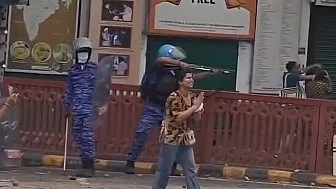


The Jantar Mantar protest site in New Delhi is about three kilometres from the Supreme Court of India and can be reached in less than 15 minutes. Senior advocate Colin Gonsalves believes Chief Justice of India Surya Kant should have stepped out of the court and visited the protest site to hear first-hand the experiences of at least some of the protesters. By not doing so, he told India Today TV's Rajdeep Sardesai during his programme, the CJI missed a historic opportunity to place the Indian judiciary on the right side of history.
The senior lawyer was reacting to Chief Justice of India Surya Kant's refusal on Wednesday, 22 July, to urgently list a petition alleging police excesses during the youth protest and march to Parliament on Monday. "Don't waste our time, and don't waste your time," the CJI told the petitioners' lawyer, declining to hear the matter further.
The CJI's bench also comprised justice Joymalya Bagchi and justice V. Mohan. When the lawyer persisted, saying he had compiled photographs and videos allegedly showing police excesses, the CJI ended the exchange, saying tersely, "We are not interested in videos. We don't have time to watch videos."
One of the ‘cockroaches’ at the protest site was not amused. She suggested that cockroaches may have to request comedian Samay Raina to shoot one of his videos at Jantar Mantar, which then can be produced before the CJI.
The jibe was an allusion to the CJI’s bench reportedly having watched an allegedly offensive video produced by Raina and fining him for making humiliating and disparaging comments on the physically disabled. The CJI may like comedy more, the protester stated, than watching videos of Delhi Police beating up peaceful protesters.
The CJI’s refusal to entertain the petition against the excesses of Delhi police has upset several members of the legal fraternity. Even the former additional solicitor general Indira Jaising felt that the apex court abdicated its responsibility by not standing by the protesters. Gonsalves also felt that the CJI should not only have admitted the petition but should also have devoted sufficient time to hear petitioners and see the evidence.
What lent an additional edge to the controversy is the CJI’s role in triggering the protest in the first place. A dismissive oral observation by justice Surya Kant who described, he later claimed, a section of young lawyers as ‘cockroaches’ was seen as a comment on the youth and the unemployed.
A social media post in agreement stating that the youth in India were indeed being treated as ‘cockroaches’ struck a raw nerve and received overwhelming response on the platforms. The response led Abhijeet Dipke, who was then studying Public Relations in the US, to float a satirical ‘Cockroach Janata Party’ on social media.
What, however, began as a joke has now taken a life of its own. The CJP began the protest on 20 June against repeated leaks of question papers and demanding the resignation of the education minister Dharmendra Pradhan. The protest has now drawn lakhs of people, among them students, parents and young professionals who say they want a change for the better. Delhi Police has been accused of using pellet guns, stun guns and batons against the unarmed and largely peaceful protesters.
“I am shocked,” said Gonsalves, adding that in 30 years of practising in the Supreme Court, he has never seen a more insensitive Chief Justice of India. The way the CJI speaks, the vehemence with which he speaks betray his insensitivity, Gonsalves added saying, “he does not seem to be inspired by anything”. The police crackdown was an opportunity for the CJI to visit the site, talk to the protesters and inspire Gen Z. ‘They are making history and they need to be reassured that Indian judiciary is on the right side of history,” he said.
Gonsalves recalled that he himself had visited the site and marched with the protesters on Monday, 20 July. “I saw school students in school uniform beaten black and blue before my eyes,” he recalled. The general nature of the march was peaceful, he insisted and said that 99 per cent of the protesters were young and innocent. The police, he alleged, did not appear to have come out of its colonial hangover.
Join our official telegram channel (@nationalherald) and stay updated with the latest headlines