


Delayed crop loss survey keeps Cauvery delta farmers in limbo
Nearly 90,000 hectares of samba and thalady crops are submerged, raising fears for the next cultivation cycle
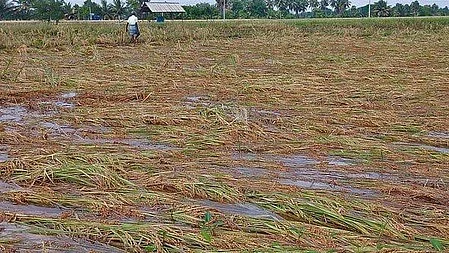


Farmers in the Cauvery delta of Tamil Nadu remain in a state of uncertainty as delays persist in assessing crop losses caused by the northeast monsoon and Cyclone Ditwah, weeks after extensive damage was first reported.
Large tracts of standing crops were destroyed following heavy rainfall across the delta districts, but farmers say the slow pace of official damage assessment has left them anxious about compensation and unsure when they can safely resume agricultural work.
The state government’s recent decision to withdraw the app-based GPS verification system and return to the traditional manual method was welcomed after sustained protests by farmers. However, there is growing scepticism on the ground about whether the revised process will be completed in time and relief released without further setbacks.
According to official estimates, nearly 90,000 hectares — about 2.22 lakh acres — of samba and thalady paddy were affected by flooding. In several areas, water remained stagnant for more than a week, leading to crop rot and raising doubts about the viability of fields for the next cultivation cycle.
The assessment exercise had initially begun in the last week of October using an upgraded digital verification system. Farmers and field staff, however, complained of network failures and operational difficulties, which significantly slowed surveys during critical post-disaster weeks.
As frustration mounted, farmer groups across the delta demanded a complete rollback of the digital process, arguing that technology-heavy methods were impractical during widespread flooding. The government eventually reverted to manual enumeration, while retaining a minimum requirement of 10 per cent app-based verification in each district.
Despite this change, farmers say progress remains uneven. Many are reluctant to begin land preparation, fearing that early reworking could affect damage verification and their eligibility for compensation. At the same time, prolonged delays risk further soil degradation and disruption of the upcoming farming season.
Staff shortages have added to the problem. Assistant agriculture officers tasked with surveys have reportedly been assigned multiple revenue villages, limiting the speed and accuracy of assessments. Farmers argue that the workload is unmanageable, particularly during a calamity affecting several districts simultaneously.
The damage spans Nagapattinam, Tiruvarur, Mayiladuthurai, Thanjavur, and parts of Pudukkottai and Tiruchy. Nagapattinam was among the worst affected, recording nearly 300 mm of rainfall within 36 hours.
In many locations, tender samba and thalady crops that were barely two weeks old were completely submerged.
Agriculture department officials say steps are being taken to accelerate the process. Additional Assistant Agriculture Officers have been deployed from non-delta districts, and surveys are now being conducted on an intensive basis.
Officials maintain that a substantial portion of the assessment has already been completed and that the remaining work will be wrapped up shortly, allowing compensation procedures to begin and farmers to prepare their fields for the next agricultural cycle.
With IANS inputs
Join our official telegram channel (@nationalherald) and stay updated with the latest headlines