


Cab, auto strike: Transport disruptions as over 68 unions join protest
Amid rising fuel prices, commercial vehicle drivers’ unions have called a strike from 21 to 23 May, seeking a fare revision
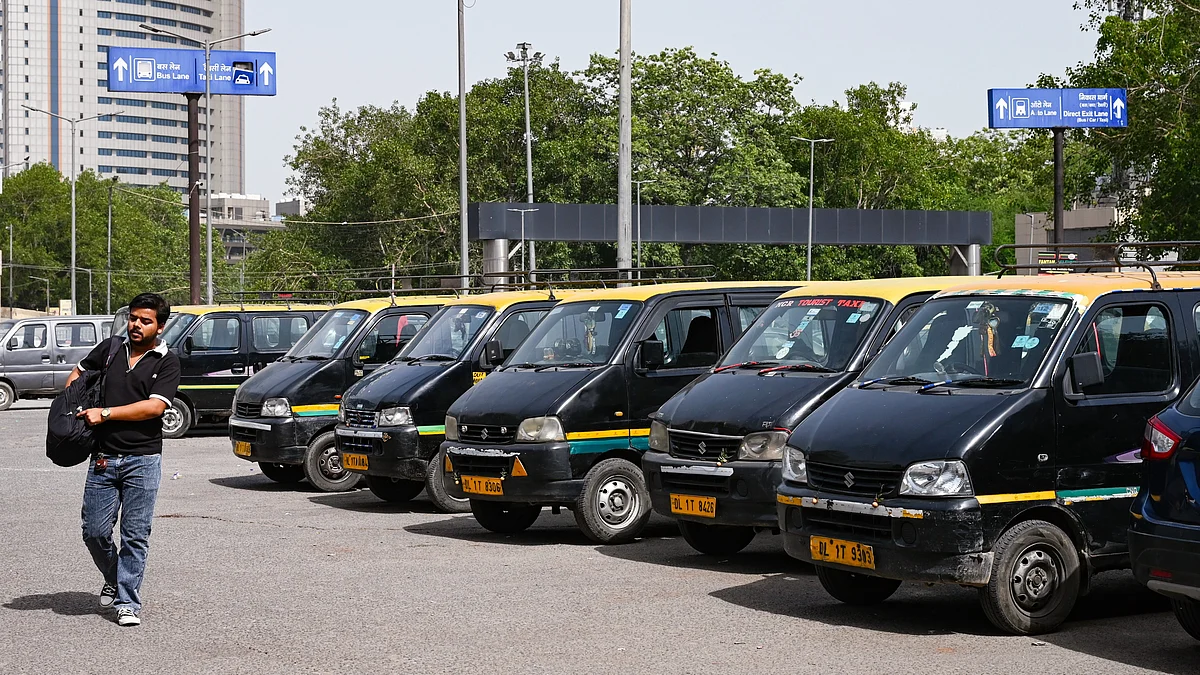


Amid a deepening fuel crisis, with several petrol pumps across the country reportedly running dry, a 'chakka jam' called by unions has disrupted traffic and transport services across Delhi-NCR.
Commercial vehicle unions in the region began a three-day strike on Thursday, 21 May, to continue until Saturday, protesting the Delhi government’s decision to hike the environment compensation cess (ECC) on commercial vehicles.
The cess on light commercial vehicles and two-axle trucks has been raised from Rs 1,400 to Rs 2,000, while charges for three-axle and heavier vehicles have increased from Rs 2,600 to Rs 4,000.
More than 68 transport unions, under the banner of the AIMTC and the United Front of All Transport Associations (UFTA), have extended support to the protest. The AIMTC, an apex body representing truckers, private bus operators, and taxi and maxi cab drivers, held a meeting in Delhi on Tuesday where concerns over the cess hike were discussed.
In a statement, the AIMTC said, 'More than 68 transport associations and unions across Delhi-NCR have come together under our banner and decided to suspend operations from May 21 to May 23 against the unjust and unfair policies imposed by the Commission for Air Quality Management (CAQM), courts, and the Delhi government.'
Commercial vehicle drivers’ unions have also backed the strike, demanding a revision in taxi and auto fares in view of rising fuel costs. They argue that fares in Delhi-NCR have not been revised for nearly 15 years despite sharp increases in petrol, diesel, and CNG prices.
Another major concern is the CAQM’s proposal to ban BS-IV and older commercial vehicles from entering Delhi-NCR from 1 November 2026 as part of pollution control measures.
Anuj Kumar Rathore, vice-president of the Chaalak Shakti Union, said that rising fuel prices have severely impacted drivers’ livelihoods. “Due to the continuous increase in CNG, petrol and diesel prices, middle-class drivers are struggling to support their families. In coordination with other organisations, we have called for a ‘chakka jam’ and appealed to drivers to suspend operations from 21 to 23 May,” he told PTI.
The strike call has been issued by multiple commercial vehicle unions, including the Chaalak Shakti Union, which has written to the Delhi lieutenant-governor, chief minister, transport minister, and police commissioner informing them of the agitation. The union said the protest was being organised in solidarity with a nationwide agitation announced by the AIMTC.
The strike by auto and cab unions has caused significant inconvenience to the public, but it has also sent a clear signal to the ruling establishment. If not addressed in time, the unrest risks snowballing into a larger movement.
A day earlier, a nationwide strike by chemists and druggists over the alleged illegal and unregulated online sale of medicines disrupted services in several cities. The call was given by the All India Organisation of Chemists and Druggists (AIOCD), which claims a membership of over 12 lakh.
In its memorandum, the organisation said over 12.40 lakh chemists and druggists participated after due notice, citing long-standing concerns over the rampant and illegal online sale of medicines.
Coming close on the heels of industrial workers’ protests in Noida, the strikes by transport unions and chemists suggest a broader pattern of the rising discontent discontent in the society.
Join our official telegram channel (@nationalherald) and stay updated with the latest headlines