


Delhi court grants interim bail to Umar Khalid to attend sister's wedding
Khalid to be released on personal bond of Rs 20,000 alongside two sureties of the same amount
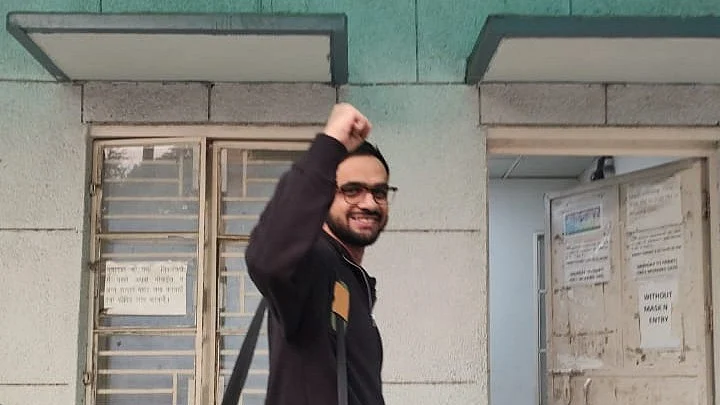


A Delhi court on Thursday granted interim bail to former Jawaharlal Nehru University (JNU) student leader Umar Khalid to attend his sister’s wedding later this month, offering temporary relief amid his ongoing legal battles in the long-running 2020 Delhi riots conspiracy case.
Additional sessions judge Sameer Bajpai ruled that Khalid will be released on interim bail from 16-29 December, on condition that he furnishes a personal bond of Rs 20,000 alongside two sureties of the same amount.
The court also imposed strict restrictions: Khalid must not use social media during the bail period and is permitted to meet only family members, relatives and friends. He is required to remain at home or at the specified wedding venues and must provide his mobile phone number to the investigating officer. The judge further directed him not to contact any prosecution witness, and to surrender to prison authorities on the evening of 29 December.
Khalid’s return to the spotlight comes amid a lengthy and fraught legal journey that has seen him in custody for more than five years in connection with the so-called “larger conspiracy” behind the February 2020 Northeast Delhi riots — a period of communal violence that left 53 people dead, most of them Muslim, and hundreds injured.
The former JNU activist was arrested by the Delhi Police’s Special Cell on 14 September 2020, and charged under multiple provisions of the draconian Unlawful Activities (Prevention) Act (UAPA), along with sections of the Indian Penal Code and the Arms Act.
Police allege that Khalid played a central role in a conspiracy that spurred the riots, including through speeches and association with other activists, though his trial has yet to begin.
Khalid’s attempts to secure bail have been repeatedly rebuffed. In March 2022, a Delhi sessions court denied his bail plea, holding that the prosecution had made out a prima facie case of his involvement in a pre-meditated conspiracy. In October 2022 and again in September 2025, the Delhi High Court dismissed his appeals for bail along with those of co-accused such as fellow activist Sharjeel Imam and others named in the case. The high court’s decisions left Khalid to pursue relief at the Supreme Court.
In parallel with these denials, Khalid has occasionally secured short periods of interim bail for personal reasons. Last year, he was granted a seven-day interim release to attend a family wedding, and he has sought similar relief on other occasions.
Supporters of Khalid argue that his prolonged imprisonment without a concluded trial highlights broader concerns over civil liberties and the use of the UAPA, which makes obtaining bail exceptionally difficult. Human rights advocates have characterised his detention as part of a shrinking space for dissent in India, noting that the law allows suspects to be held for extended periods without stringent judicial oversight.
As Khalid prepares to attend his sister’s wedding under court-mandated restrictions, his legal team continues to pursue broader relief, including ongoing hearings before higher courts.
With PTI inputs
Join our official telegram channel (@nationalherald) and stay updated with the latest headlines