


Delhi records wettest day in over 2 yrs as heavy rain triggers waterlogging
Safdarjung records 99.1 mm rainfall in 24 hours; August total crosses 350 mm for third consecutive year
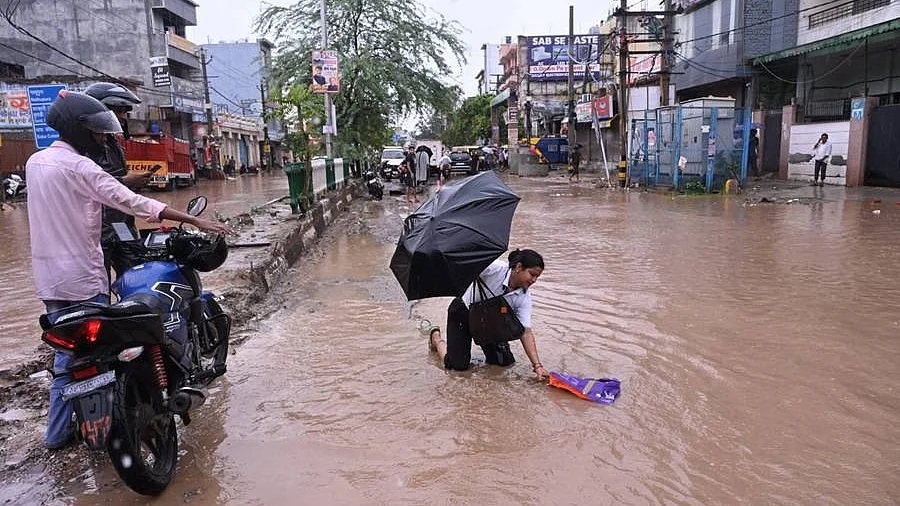


Delhi recorded its wettest day in more than two years on Tuesday, with the Safdarjung base observatory recording 99.1 mm of rainfall in the 24 hours ending at 8.30 am, as heavy showers caused waterlogging across several parts of the capital.
The rainfall was the highest recorded at Safdarjung across all months since August 1, 2024, when the observatory received 107.6 mm. It also narrowly exceeded the 98.7 mm recorded at the station on August 8 this year.
In 2025, Safdarjung's highest 24-hour rainfall was 80.4 mm, recorded on August 15.
Widespread heavy rainfall
The downpour was widespread, with several weather stations recording around 100 mm or more of rain.
Delhi University recorded the highest rainfall at 104 mm, followed by Ayanagar at 101.9 mm and the Ridge at 100.4 mm.
Lodhi Road received 98.3 mm, while Janakpuri recorded 76 mm and Palam 68 mm during the 24-hour period.
Palam had earlier recorded 104.6 mm on August 8.
The intense spell pushed Safdarjung's cumulative rainfall for August to 354.1 mm, significantly above the long-period average of 226.8 mm for the entire month.
This is the third consecutive August in which Safdarjung has recorded more than 350 mm of rainfall. The observatory recorded 390.3 mm in August 2024 and 400.1 mm in August 2025.
Monsoon rainfall already above seasonal normal
The heavy rain has also pushed Delhi's monsoon rainfall well above the seasonal average.
As of 8.30 am on August 26, Safdarjung had recorded 653.9 mm of rainfall since the start of the monsoon season on June 1. The figure has already crossed the full June-September seasonal normal of 640.4 mm.
Safdarjung's seasonal rainfall is currently 35 per cent above normal.
Other stations have recorded even higher departures. The Ridge has received 692.3 mm, which is 64 per cent above normal, while Ayanagar has recorded 672.8 mm, 60 per cent above normal.
Lodhi Road has received 648.2 mm, 34 per cent above normal, while Palam has recorded 533.2 mm, 15 per cent above normal.
Heavy rain exposes waterlogging problems
The intensity of Tuesday's rainfall caused waterlogging in several parts of the capital, including areas under the New Delhi Municipal Council (NDMC).
NDMC chairperson Manoj Dwivedi apologised on Wednesday for the difficulties faced by residents and commuters, saying the civic body generally clears waterlogging within 15-20 minutes.
However, he acknowledged that some areas took considerably longer to drain.
“There was more than 72 mm rainfall in less than 2 hours and this was quite unexpected. But this cannot be an excuse and we will have to strengthen our systems to deal with such situations in future,” Dwivedi said in a post on X.
He said water was completely drained from at least three to four areas only after more than an hour.
Dwivedi said the civic body would undertake both short- and long-term measures to make the NDMC area “fully water logging free” and invited suggestions to improve its response to heavy rainfall.
Rain brings temperatures down
The rainfall also brought down temperatures across the capital.
Safdarjung recorded a minimum temperature of 23.5°C, which was 2.9 degrees below normal. The maximum temperature was recorded at 33.4°C.
The latest spell follows several episodes of heavy rainfall during the current monsoon.
Safdarjung's highest 24-hour rainfall in July was 72.6 mm on July 9. In August, the station recorded 98.7 mm on August 8 before Tuesday's 99.1 mm rainfall.
The repeated spells of intense rainfall have pushed Delhi's monthly and seasonal totals well above normal, while also placing pressure on the city's drainage infrastructure and exposing persistent waterlogging problems in several areas.
Join our official telegram channel (@nationalherald) and stay updated with the latest headlines